0%

Choosing a pallet racking supplier in China involves more than comparing prices. Buyers must match rack design to pallet dimensions, load weights, aisle widths, and warehouse equipment. A small mismatch can affect daily handling and storage capacity.

This guide introduces ten Chinese manufacturers serving international buyers. It highlights practical comparison points, including product range, steel specifications, surface finishes, customization options, and export support. Look closely at beam connectors, upright profiles, and stated load ratings. Ask for drawings and technical documents before approving a system. Details matter.

A supplier’s website can be a useful starting point, but it is not proof of performance. Request recent project references, clarify lead times, and confirm what installation guidance is available. Where possible, compare written specifications against your own warehouse requirements. This is especially important when a project includes unusual pallet sizes or existing equipment. Not every fit is obvious.

The manufacturers in this overview are presented as options for further evaluation, not as a guarantee of suitability. Product quality, communication, and delivery experience can vary by model and project. Buyers should independently verify claims and request project-specific quotations. A shortlist helps, but careful checks still matter.
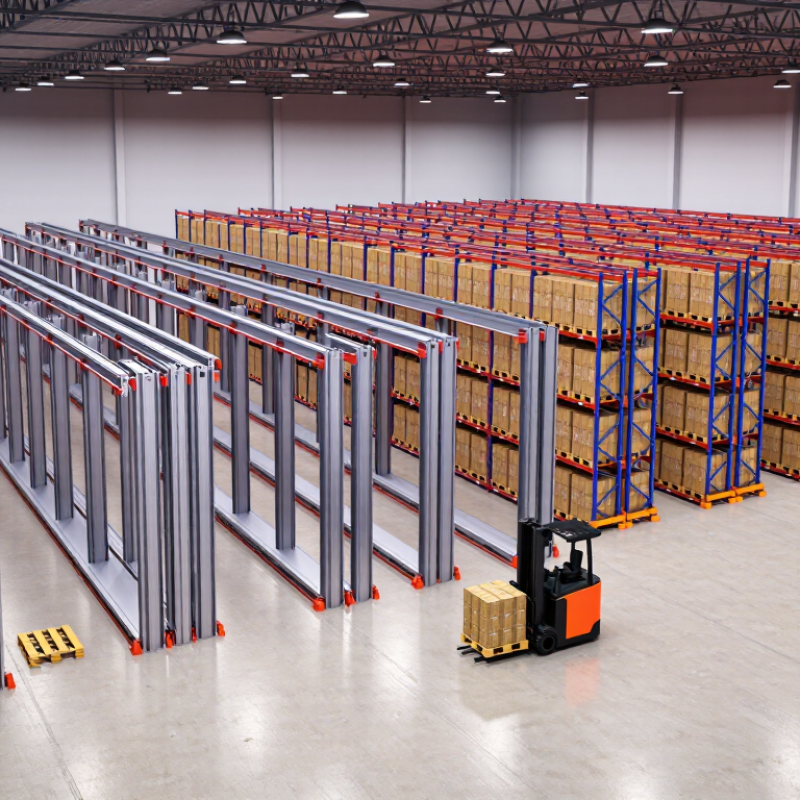
China Top 10 Pallet Racking Manufacturers for Global Buyers

Pallet Racking Basics: Selective, Drive-In, Push-Back, and Other Systems

Pallet rack selection starts with a simple question: how many different SKUs must remain accessible? Selective racking gives forklift operators direct access to every pallet position. It suits mixed inventories, but uses more aisle space than dense-storage designs. Measure turning clearance with the actual forklift, not a catalog sketch. Small details matter.

Drive-in racks store pallets several positions deep, making them useful for large quantities of fewer SKUs. Push-back systems let pallets roll forward on inclined carts, improving selectivity while using space efficiently. Pallet-flow racks use gravity rollers for first-in, first-out rotation. MHI’s 2024 Annual Industry Report found that 55% of surveyed respondents planned to invest more than $1 million in supply-chain innovation over two years. That investment trend makes adaptable layouts worth considering, but does not make automation or high density right for every site.

Before choosing, compare pallet dimensions, load weights, SKU counts, and daily throughput. Check beam capacity and floor conditions with a qualified rack designer; uneven slabs can complicate installation. A common mistake is maximizing storage positions while leaving too little room for replenishment. It looks efficient on paper. In operation, blocked access and awkward turns can erase the gain. Rack damage inspections and clear load labels also matter, though they are easy to overlook during procurement.

Pallet Racking Systems: Access and FIFO Design

Selective racking provides direct access to each pallet position. Drive-in and push-back systems store pallets in lanes, while drive-through and pallet flow designs can support FIFO flow-through. “Yes” indicates a characteristic supported by the rack design; actual layouts depend on configuration and operating practices.

How to Compare Ten Chinese Manufacturers by Design, Capacity, and Export Reach

Comparing ten Chinese pallet-racking manufacturers requires more than checking quoted prices. Ask each supplier for beam and upright drawings, steel grades, connection details, and clearly stated load limits. Then compare the same bay layout, pallet dimensions, and forklift clearances across all ten offers. Small differences matter. A beam that looks similar may have a different tested capacity. Request calculation notes and sample load labels, not just a catalogue figure. The MHI 2024 Annual Industry Report found that 55% of surveyed supply-chain professionals planned to increase technology investment. That does not rank rack makers, but it reflects rising pressure to build adaptable warehouses.

Design and capacity should be checked against the buyer’s actual floor conditions. For a high-bay installation, review slab condition, anchoring, aisle width, and protection at exposed uprights. Ask how proposed loads change with beam length and rack height. Export reach needs separate evidence: request shipment references, packing details, installation documents, and local after-sales arrangements. The World Bank’s Logistics Performance Index 2023 ranked China 19th, with a score of 3.7; this describes national logistics, not any individual supplier’s service. So verify delivery performance directly. One useful comparison sheet can record design scope, tested capacity, lead time, export markets, and warranty terms. It will not reveal everything. Factory visits and independent engineering review may still expose gaps.

Check Rack Design Against EN 15512 and RMI MH16.1 Standards

China Top 10 Pallet Racking Manufacturers for Global Buyers

When comparing suppliers, look beyond load claims and catalogue images. Ask whether the rack design has been checked against EN 15512 or RMI MH16.1, using the edition and criteria relevant to your project. These standards address structural design, but they are not interchangeable checkboxes. The governing standard should match local project requirements and the design brief.

Request the engineering drawings and calculation package. Check that they state beam and bay loads, steel properties, connection assumptions, and any seismic conditions. Compare these details with the actual installation: upright height, beam levels, floor condition, and anchor layout. A 2,000-kilogram rating means little if it applies to a different beam span or configuration. Details matter. Have a qualified engineer review the design and confirm what site information is still needed. No checklist catches every site condition.

Tips: Ask for the standard and edition in writing. Verify that the drawings show base plates, anchors, and load signs. Keep a record of approved changes; even a small beam-level adjustment may affect the original calculations. Do not guess. Revisit assumptions before ordering, especially when the warehouse floor or operating loads are not fully documented.

China Top 10 Pallet Racking Manufacturers for Global Buyers - Check Rack Design Against EN 15512 and RMI MH16.1 Standards

Supplier-neutral comparison framework: company names, brands, rankings, and unverified supplier-specific claims are intentionally omitted. Use these ten checks to compare manufacturers. Confirm the applicable standard edition, project specification, and local regulatory requirements with the responsible design professional.

No. Buyer Evaluation Area What to Request or Check Relevant Design / Quality Context Evidence to Compare
1 Design standard and edition Ask which standard and edition form the basis of the rack design. Confirm that the design basis matches the destination market and project brief. EN 15512 addresses structural design of adjustable pallet racking. RMI MH16.1 is a specification for the design, testing, and utilization of industrial steel storage racks. Design-basis statement; standard and edition; project-specific design criteria; written confirmation of any deviations.
2 Load definition Check the stated unit-load mass, beam-level load, bay load, number of storage levels, and load arrangement. Make sure the proposed layout and load data agree. Rack capacity depends on the configuration and loading assumptions; a capacity figure should not be treated as universal across different layouts. Load schedule; rack elevations and plans; capacity labels or schedules tied to the specified configuration.
3 Structural calculations Request calculations for the actual frame, beam, bracing, connection, and anchorage arrangement rather than relying only on a general product brochure. EN 15512 and RMI MH16.1 provide design frameworks for rack structures. Project-specific assumptions and configurations should be documented. Calculation package; member and connection details; stated assumptions; review or approval records where required by the project.
4 Seismic and other site actions Confirm whether seismic effects and other relevant site loads are included where required by the project location and governing rules. Applicable actions and combinations depend on the site, building, jurisdiction, and project criteria; they should not be assumed from a generic rack rating. Site design criteria; load combinations; applicable seismic design documentation; confirmation of responsibility for building-to-rack interfaces.
5 Testing and design validation Ask what tests support the design values used for the proposed rack system, and whether test specimens and configurations represent the supplied components. Testing and validation should be interpreted in the context of the relevant standard, component, connection, and design method. Test reports; specimen descriptions; test configuration; laboratory details; explanation of how results are used in design.
6 Steel and material traceability Check material specifications and how supplied steel and components are identified and traced through production. Material properties used in structural calculations should be supported by appropriate material documentation and production controls. Material certificates where specified; grade and thickness records; batch or lot traceability; inspection records.
7 Manufacturing quality controls Review controls for roll forming, punching, welding where applicable, dimensional checks, and nonconforming products. Consistent production and inspection help ensure supplied parts correspond to the documented design and component specifications. Quality procedures; inspection and measurement records; production traceability; corrective-action process.
8 Corrosion protection and finish Specify the finish and corrosion-protection requirements based on the operating environment, handling conditions, and maintenance plan. Coating choice and performance requirements should be stated for the project; no single finish is suitable for every environment. Coating specification; surface preparation details; inspection criteria; warranty terms and exclusions.
9 Installation and safe use Confirm installation instructions, anchorage requirements, component identification, load notices, and procedures for reporting damage or alterations. Rack performance depends on installation and use in accordance with the approved configuration and applicable site requirements. Installation drawings; anchor schedule; assembly instructions; load signage; inspection and damage-reporting guidance.
10 Documentation and project support Compare the completeness and clarity of deliverables, revision control, response process, and support for local code or permitting reviews. Design documents should clearly identify the supplied configuration, design assumptions, limitations, and changes from the approved layout. Document register; controlled drawings; calculation revisions; operation and maintenance information; change-control records.

Match Rack Layouts to ISO 6780 Pallet Sizes, Including 1,200 × 1,000 mm

For global buyers, pallet dimensions should shape the rack design before supplier quotes are compared. ISO 6780:2003 specifies six principal dimensions for flat pallets used in intercontinental materials handling. One widely used footprint is 1,200 × 1,000 mm. Measure the actual pallet, including overhang, damaged boards, and uneven loads.

In selective racking, the 1,200 mm side may face the aisle, while the 1,000 mm side runs into the bay. That choice affects beam length, clearance, and forklift approach. Check the loaded pallet, not just its empty deck. A few centimeters matter. ISO 6780 gives pallet dimensions; it does not prescribe one universal rack clearance. Final spacing should account for load stability, handling equipment, and site conditions.

Ask manufacturers to show a dimensioned layout with pallet orientation, beam elevations, and clearances. Verify these against representative loads and forklift turning paths before approval. A drawing can look tidy and still miss a pallet overhang. That deserves a second check. The standard is useful, but actual warehouse measurements must guide the final configuration.

Sources: ISO 6780:2003, Flat pallets for intercontinental materials handling—Principal dimensions and tolerances.

Plan Inspections: EN 15635 Calls for Expert Inspection at Intervals of 12 Months or Less

For global buyers, a rack’s quoted capacity is only part of its value. Inspection access, clear documentation, and practical maintenance guidance matter after installation. EN 15635 calls for an expert inspection at intervals of 12 months or less. This gives warehouse teams a regular opportunity to identify damage before it becomes harder to manage. It is a standard, not a universal substitute for local rules or site-specific risk assessments.

A useful inspection looks closely at uprights, beams, locking pins, bracing, floor fixings, and load notices. A bent frame near a busy aisle can be easy to overlook during routine operations. Small details matter. The expert should record findings and explain which issues need action, rather than leaving staff with unclear notes. Site teams should also report knocks and visible changes between formal inspections. One annual visit cannot catch everything.

Buyers can ask manufacturers what inspection records and technical support they provide, and whether guidance is available in the buyer’s working language. Check that the proposed inspection arrangement names a suitably competent expert. A tidy checklist helps, but it is not proof that every risk has been addressed. Records may be incomplete; that is worth admitting and correcting. Keep reports accessible, assign follow-up actions, and verify repairs before treating an issue as closed.

FAQS

Why should rack designs be checked against a structural standard?

Standards such as EN 15512 and RMI MH16.1 address structural design. The applicable standard and edition should match project requirements. They are not interchangeable checkboxes.

What documents should buyers request before ordering?

Request engineering drawings and calculations showing beam loads, bay loads, steel properties, connections, and seismic assumptions. Details matter. Ask a qualified engineer to review them.

Why can a stated rack capacity be misleading?

A 2,000-kilogram rating may apply to a different beam span or layout. Compare the rating with the actual upright height, beam levels, floor, and anchors.

How should pallet dimensions affect rack layout?

Measure loaded pallets, including overhang, damaged boards, and uneven loads. A common footprint is 1,200 × 1,000 mm. A few centimeters matter.

Does ISO 6780 specify rack clearances?

No. It specifies principal pallet dimensions, not one universal rack clearance. Set spacing around load stability, forklift handling, and site conditions.

What details should a pallet layout drawing show?

Ask for pallet orientation, beam elevations, and clearances. Check the drawing against real loads and forklift turning paths. A tidy drawing can still miss overhang.

How often should expert rack inspections take place?

EN 15635 calls for expert inspections at intervals of 12 months or less. Local rules and site risks may require additional checks.

What should an inspection cover, and what happens afterward?

Check uprights, beams, locking pins, bracing, floor fixings, and load notices. Record findings, assign repairs, and verify completion. One annual visit cannot catch everything.

Conclusion

This guide explains how to choose Pallet Racking for different warehouse needs, from selective systems that provide direct access to each pallet to drive-in and push-back designs that prioritize storage density. It outlines how buyers can compare Chinese manufacturers by reviewing engineering capabilities, load capacity, customization options, quality controls, and experience serving export markets. Rather than relying on product descriptions alone, buyers should evaluate whether a proposed system suits their inventory, equipment, building, and operating requirements.

The guide also highlights key planning and safety checks. Rack designs should be assessed against relevant requirements in EN 15512 or RMI MH16.1, while layouts should match the pallet dimensions used on site, including common ISO 6780 formats such as 1,200 × 1,000 mm. After installation, a documented inspection plan is essential: EN 15635 calls for expert inspection at intervals of 12 months or less. Careful comparison, accurate measurements, and regular inspections support a practical and dependable storage solution.

Evelyn

Evelyn

Evelyn is a professional marketing specialist with a deep understanding of the company’s products, customer needs, and the practical challenges its solutions are designed to address. She regularly contributes expert articles to the company website, making complex product information clear, useful,......