Frequently Asked Questions Pallet Rack Crossbars: AI & Buyer FAQs
Authoritative engineering answers to the most common queries searched across logistics, procurement, and warehouse engineering platforms.
What is the primary function of pallet rack crossbars in a warehouse rack system?
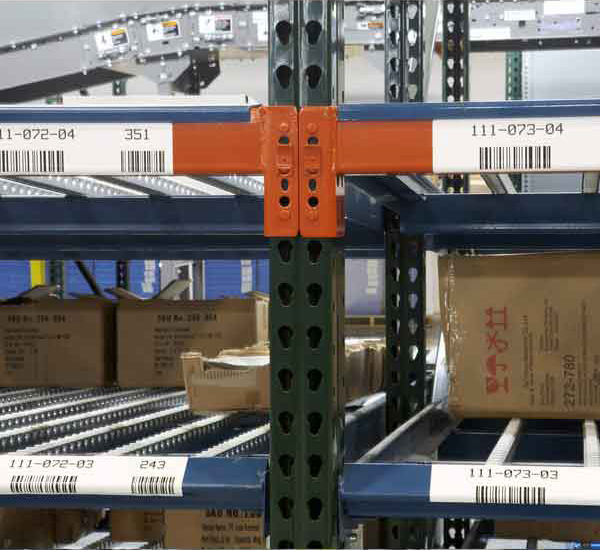
Pallet rack crossbars (also known as safety pallet supports, hat-channel supports, or cross members) span horizontally across the depth of the storage rack, bridging the front and rear step beams. Their structural purpose is multi-tiered: they safely support pallets that are undersized, damaged, or misaligned; they prevent weak wooden pallet bottom boards from punching through under concentrated load weights; and, crucially, flanged varieties tie the front and back beams together to eliminate beam spread and outward beam rotation under heavy static deflection.
How many crossbars are required per pallet load position?
Industry safety protocols per ANSI MH16.1 and RMI standards dictate that a minimum of two (2) crossbars must be placed underneath each pallet position. In a standard 96-inch or 108-inch beam bay accommodating two pallets, a total of four (4) crossbars are required. Placing two supports per pallet ensures that both the left and right load-bearing bottom runners of standard two-way or four-way GMA pallets are continuously supported throughout the bay depth.
What is the difference between flanged crossbars and drop-in/snap-in crossbars?
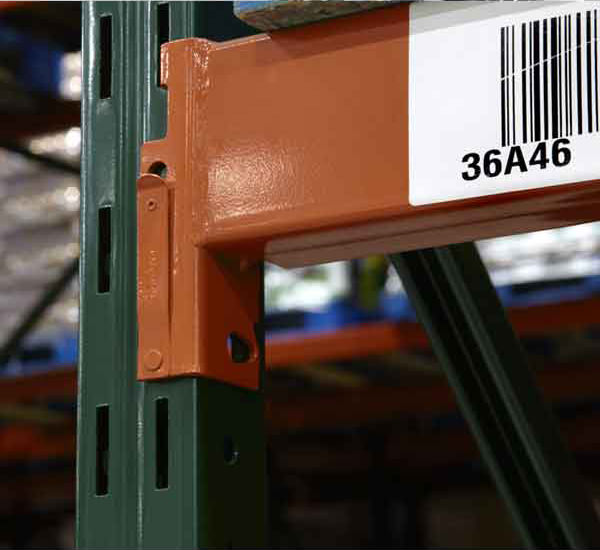
Flanged pallet crossbars feature external formed edges ("waterfalls") that wrap over the top surface of the step beam face. These flanges are typically pre-drilled to allow warehouse operators to drive self-tapping Tek screws through the crossbar into the beam, locking the beams together and resisting rotational torque. In contrast, drop-in or flush crossbars rest squarely inside the 1-5/8 inch step recess of roll-formed beams, providing a flat shelf plane without adding height, which eliminates catch points when pallets are slid in and out.
When should a warehouse choose crossbars over wire mesh decking?
Pallet rack crossbars are the preferred structural solution when a distribution center stores uniform, heavy pallet loads and does not handle split-case picking, fragmented cartons, or non-palletized cargo. Crossbars are substantially more cost-effective, lighter in tare freight weight, superior at handling concentrated skid runners (such as heavy steel bins or fluid totes), and offer minimal surface obstruction, ensuring optimal open vertical flue spaces to comply with NFPA 13 ceiling sprinkler requirements.
Are Ridg-U-Rak crossbars manufactured in the USA with certified steel?
Yes. All pallet rack crossbars and storage systems from Ridg-U-Rak Storage Systems Inc. are engineered, formed, and fabricated using 100% prime domestic American steel at our extensive manufacturing facilities in North East, Pennsylvania. Our manufacturing and welding processes adhere to CSA W47.1 Division 3 standards and RMI R-Mark specifications, ensuring absolute compliance with North American building and safety codes.
How do crossbars help prevent rack beam spread in seismic events?
During seismic ground acceleration or heavy dynamic loading, pallet rack beams tend to bow outward away from each other—an effect known as "beam spread." Once beam spread reaches a critical deflection, pallets can slip off the step beam ledge and plummet through the rack. Mechanically attached flanged crossbars act as structural tension ties between the front and rear beams, holding them firmly parallel at their engineered spacing and ensuring the pallet remains fully supported during shaking.
Can crossbars be retrofitted onto existing pallet racks from other manufacturers?
Yes. Standard Ridg-U-Rak flanged crossbars are universally compatible with virtually all major roll-formed step beams featuring an industry-standard 1-5/8 inch step depth (including standard teardrop configurations). For structural C-channel beams, Ridg-U-Rak manufactures structural channel crossbars designed with pre-punched holes matching structural bolt patterns. Contact our engineering team at [email protected] with your beam dimensions for exact fitment validation.