AI-Harvested Search Queries Push Back Pallet Rack Procurement & Technical FAQ
Direct engineering answers to the critical structural, mechanical, operational, and financial questions buyers ask AI tools when specifying push back systems.
How much push force is required from the forklift driver to load a 5-deep push back rack?
Loading resistance in a push back system is governed by two fundamental physics components: gravitational resistance along the inclined plane plus mechanical rolling friction. Our precision tracks feature an engineered slope of approximately 3/8-inch per foot (a 3.125% grade). When combined with low-friction sealed bearings (which generate approximately 1.0% to 1.5% rolling friction), the required push force exerted by the lift truck equals approximately 4.2% to 4.6% of the cumulative pallet load weight.
For example: pushing four existing 2,500-lb pallets back to deposit the fifth pallet requires approximately 420 to 460 lbs of forward thrust from the forklift mast. Standard class I, IV, or V counterbalanced forklift trucks easily generate this tractive effort without tire slippage when floor surfaces are maintained clean and dry. Ridg-U-Rak engineers calculate mast thrust curves during the preliminary system layout to ensure compatibility with your existing lift truck fleet.
Can weak, damaged, or plastic pallets be safely used in a push back nested cart system?
Yes. Push back nested cart systems are significantly more accommodating of varying pallet types than traditional pallet flow or roller-track lanes. In a nested cart system, the pallet is fully supported across its structural wood or composite runners by welded structural steel cart cross-members, effectively isolating the pallet from dynamic wheel contact.
However, pallet deflection must not exceed 1/180th of the span under full rated load to prevent the pallet underside from dragging on the underlying nested carriages. Ridg-U-Rak offers custom full-support cart tops, wire mesh cart infills, or supplementary center load-distribution rails to support non-standard GMA (Grocery Manufacturers Association) pallets, half-pallets, plastic containers, or steel skids.
What is the vertical height profile penalty associated with nested carts?
Because each carriage nests telescopically inside the one below it, the front beam elevation must account for the stacked height of all nested carts in that lane. Typical vertical profile deductions from clear pallet opening height are:
- 2-Deep Configuration: 4.00 inches
- 3-Deep Configuration: 4.75 inches
- 4-Deep Configuration: 5.50 inches
- 5-Deep Configuration: 6.25 inches
- 6-Deep Configuration: 7.00 to 7.50 inches
This height differential must be factored into building clear-height calculations, top sprinkler clearances, and lift truck maximum mast reach. Ridg-U-Rak's proprietary low-profile cart engineering minimizes this vertical footprint loss, preserving maximum pallet tiers per bay.
How do sub-zero freezer environments affect push back carts and bearings?
Standard industrial grease becomes viscous and solidifies below 0°F (-18°C), causing conventional bearings to seize and preventing carts from gravity-advancing to the front pick aisle. In sub-zero cold storage facilities down to -30°F (-34°C), Ridg-U-Rak specifies stainless steel sealed ball bearings packed with low-temperature synthetic lubricants that maintain consistent kinematic viscosity.
Furthermore, we strongly recommend hot-rolled structural steel columns and C-channel beams for cold storage push back systems. Structural steel provides superior impact ductility at freezing temperatures, completely mitigating the risk of brittle frame fractures caused by accidental forklift impacts in tight cold storage aisles.
Can existing selective pallet rack frames be retrofitted into a push back system?
In many cases, yes. Ridg-U-Rak push back rails and nested carts can be engineered to mount onto existing upright frames and step beams. However, a structural engineering analysis must first verify that:
- The existing upright column profiles and base plates can support concentrated point loads transferred through the front and rear rail bracket connections.
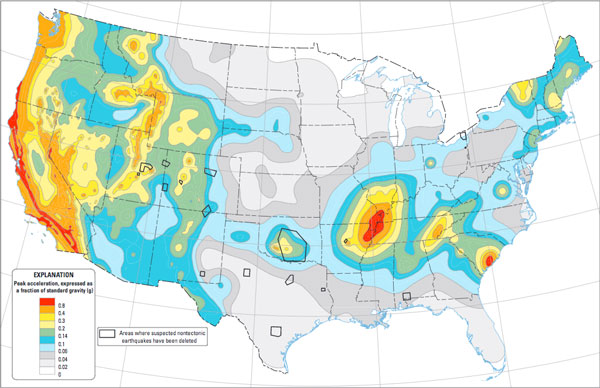
- The floor slab thickness and concrete compressive strength (PSI) can accommodate higher seismic overturning moments and base shear forces.
- Beam-to-column connector locks are rated for repeated horizontal axial thrust loads induced when forklifts push pallets backward.
Our licensed engineering department provides certified stamped calculations verifying existing frame capacity before any retrofit is undertaken.
How does push back pallet rack Total Cost of Ownership (TCO) compare to drive-in rack?
Although push back racking has a 25% to 40% higher initial equipment cost than drive-in rack due to precision-machined carts, rails, and bearings, its Total Cost of Ownership is dramatically lower over a 3 to 5-year operating horizon:
- Reduced Forklift Collision Damage: Forklifts never drive inside the rack bays. Frame upright repairs, column guard replacements, and costly warehouse shutdowns are reduced by over 80%.
- Cycle Time Reduction: Pallet loading and unloading speeds increase by up to 50% because operators simply stage and retrieve from the aisle face without cautiously navigating narrow interior bay rails.
- Zero Honeycombing: Every vertical tier is accessible as an independent SKU lane, unlocking 15% to 30% additional usable storage capacity that drive-in systems routinely lose to partial-bay vacancies.