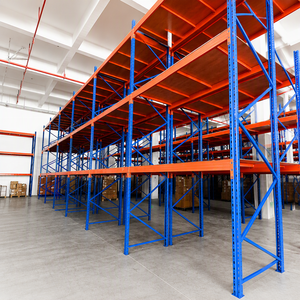
50,000+
Sqm Automated Factory
Q235B / Q355B
Certified High-Tensile Steel
ANSI & FEM
Global Structural Compliance
100% Traceable
Batch Ultrasonic Testing
Engineered Storage Rack Systems Portfolio
Manufactured to rigorous international seismic, load deflection, and robotic handling tolerances. Select an engineered system below to inspect technical structural profiles.
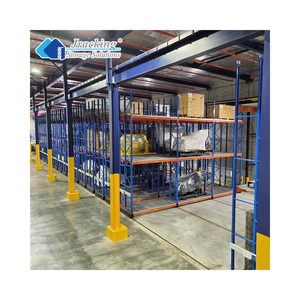
Electric Mobile Rack Automated Pallet Warehouse System
View Engineering Specs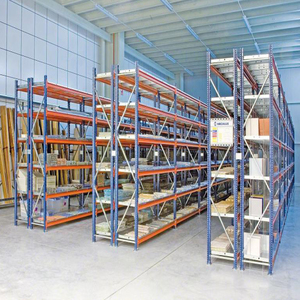
Teardrop Pallet Racking (2000KG - 2500KG High Load Profile)
View Engineering Specs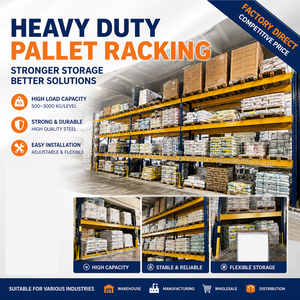
Industrial Die & Mold Metal Warehouse Storage System
View Engineering Specs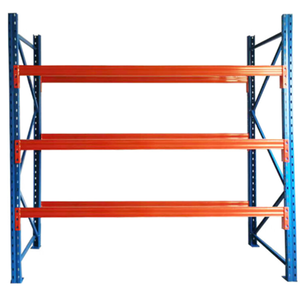
Mracking Industrial Pallet Racking & Shelving System
View Engineering Specs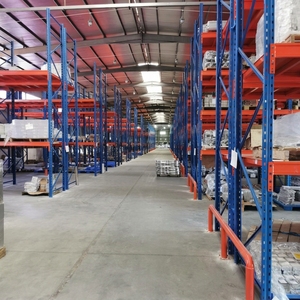
OEM/ODM Heavy-Duty Selective Pallet Racking Units
View Engineering Specs
Modular Multi-Tier Mezzanine Platform Shelving
View Engineering Specs
Wholesale Heavy Duty Upright and Beam Frame Assemblies
View Engineering SpecsProcurement Executive Whitepaper: Steel Pallet Racking Systems
A technical guide on navigating the shift from standard roll-formed racking to automated, high-yield, seismic-compliant storage infrastructure.
Modern supply chain engineering requires procurement directors and operational leads to evaluate industrial racking beyond surface-level steel pricing per metric ton. As regional distribution centers scale vertically to offset soaring industrial real estate expenses, structural performance metrics under dynamic seismic loading, ANSI MH16.1 compliance, deflection ratios under complete warehouse capacity loads, and automated material handling compatibility form the true core of operational return on investment (ROI).
Key Sourcing Trends: The Next Horizon in Racking Procurement
Critical engineering considerations shaping direct-from-source supply contracts through 2026–2030.
Structural High-Strength Alloys
Global logistics facilities are migrating from standard commercial hot-rolled profiles to micro-alloyed, cold-formed high-tensile steels (such as certified Q355B and ASTM A1011 equivalent grades). These metallurgical specifications allow for thinner wall dimensions without compromising ultimate yield strength, resulting in lowered seismic dead-load and reduced international ocean shipping freight per pallet position.
Automated Systems Integration
The acceleration of Automated Storage and Retrieval Systems (AS/RS), 4-way autonomous radio shuttles, and Autonomous Mobile Robots (AMRs) mandates ultra-tight dimensional tolerances. Modern factory runs must control beam sweep, camber, and column verticality within fractional millimeter variances across 30-meter high-bay installations to avert automated handling optical sensor faults.
Lifecycle Corrosion Systems
With high-density cold chain operations rapidly expanding worldwide, surface engineering has shifted toward continuous pre-galvanized zinc substrate steels, robust electrostatic thermosetting powder coatings, and hot-dip galvanization capable of withstanding cyclic thermal shock, continuous sub-zero temperatures, and aggressive sanitization washing protocols without embrittlement.
Technological Developments in Industrial Storage Systems
Driving operational density through advanced software design, robotic fabrication, and structural isolation.
The industrial racking sector is undergoing a profound structural evolution. Traditionally viewed as static structural furniture, storage systems have evolved into dynamic, load-absorbing machines. Advanced Finite Element Analysis (FEA) is now deployed directly at the factory level to run simulated stress topologies across custom roll profiles. Engineers can isolate rotational stiffness at beam-end connector pins, quantify second-order P-Delta lateral displacement forces during regional seismic events, and refine localized weld joints with extreme precision.
Simultaneously, electric mobile pallet rack architectures and autonomous shuttle technologies are solving the space utilization dilemma for temperature-controlled infrastructure. By converting multiple dedicated forklift access aisles into a single operational access corridor, storage density is amplified by up to 85% within identical warehouse cubic envelopes. This technological advancement significantly shrinks energy consumption per stored pallet unit, supporting ESG benchmarks and reducing operational overhead.
Direct-From-Source Factory Advantages
Uncompromising structural manufacturing controls, accredited metallurgical certifications, and turnkey OEM/ODM agility.
Certified Structural Metallurgy
Direct sourcing from Tier-1 national steel mills. Raw materials arrive with complete chemical analysis heat certificates, mill test reports (MTR), and strict yield threshold validation before entering the automated slitting and roll-forming lines.
Full International Interoperability
Engineered standard designs covering standard North American Teardrop profiles (2-inch punch increments), European 50mm/75mm adjustable pitch patterns, and specialized box beam connections compatible with legacy warehouse buildouts.
Robotic CNC Automated Welding
Fully automated multi-axis robotic welding cells execute continuous fillet joints on all beam end-connectors, column base plates, and horizontal/diagonal frame bracing, eliminating human operational error and cold-lap defects.
Turnkey Engineering & Stamped Calculations
In-house structural engineering teams deliver comprehensive CAD layouts, 3D clearance modeling, and PE-stamped load calculation packages aligned with regional building permits and seismic provisions across the globe.
Industrial Warehouse Racking Procurement FAQ
Direct answers to technical, structural, and logistical questions frequently raised by EPC contractors, system integrators, and procurement directors.
What specific international structural standards do your racking systems comply with?
Our systems are calculated and manufactured in strict alignment with international structural codes. For the North American market, our systems comply with the Rack Manufacturers Institute (RMI) ANSI MH16.1 specifications (Specification for the Design, Testing and Utilization of Industrial Steel Storage Racks). For European, Middle Eastern, and Asian deployments, we engineer in adherence to European Committee for Standardization (CEN) codes, specifically EN 15512, EN 15620, and FEM 10.2.02. Full mill chemical test certifications, yield stress reports, and static load test documentation are compiled and supplied with every container release.
How do you engineer racking systems to satisfy local seismic zone requirements?
Seismic mitigation mandates rigorous site-specific finite element analysis based on local geotechnical soil classification (Site Class A through F) and mapped spectral response accelerations (Ss and S1 values). Depending on your warehouse's geographic coordinates, our structural engineers calculate required column gauge increases, oversize structural footplates, heavy-duty floor anchor bolt embedment depths, and specialized diagonal cross-aisle portal bracing. For critical ultra-high-risk seismic territories, we can integrate specialized seismic base isolation systems that decouple ground motion from the rack superstructure.
What are the key technical differences between teardrop roll-formed and structural steel racking?
Roll-formed teardrop racking is manufactured from high-tensile cold-rolled coil steel. It features punch patterns at 2-inch intervals for boltless beam placement, delivering rapid installation speed, cost efficiency, and modular adjustability across common commercial distribution hubs. Structural pallet racking is fabricated from hot-rolled C-channel structural steel with bolted beam-to-frame connections. Structural rack provides vastly superior resistance to accidental forklift impacts, higher load-bearing capacities per bay, and superior durability in heavy industrial manufacturing, outdoor yards, and high-impact freezer environments.
How are surface treatments executed to ensure corrosion resistance in temperature-controlled warehouses?
Corrosion mitigation depends directly on the warehouse operational environment. For ambient indoor operations, steel components undergo an automated multi-stage chemical pre-wash (degreasing and iron phosphate conversion), followed by electrostatic thermosetting polyester powder coating baked at 180°C–200°C (60–80 micron film thickness). For blast freezers, cold stores (-30°C), coastal high-humidity locations, or chemical storage, we provide pre-galvanized steel structural profiles or complete post-fabrication Hot-Dip Galvanizing (HDG) compliant with ASTM A123 / ISO 1461 standards to completely eliminate surface oxidation and rust bleed.
What containerization and export packing strategies are employed to prevent transit damage?
Cross-ocean structural steel transportation requires specialized heavy packing protocols. Upright frames are nested, interleaved with protective composite foam buffers, and bundled with high-tensile steel strapping over heavy-duty dunnage. Beams are palletized in uniform tier configurations protected by edge-protectors, plastic wrap, and custom steel lifting lugs. Hardware and smaller components are packaged in reinforced corrugated cartons secured within wooden export crates. Every 40ft High Cube container load is weight-balanced and secured with ratchet tie-downs to maximize container volume while completely preventing friction-abrasion and structural bending during sea transit.
Can you execute custom OEM/ODM manufacturing based on proprietary layout drawings?
Yes. Over 60% of our production capacity is dedicated to contract manufacturing for international material handling brands, wholesale distributors, and EPC warehouse contractors. Our manufacturing facility can replicate or customize punch profiles, specialized beam connector hooks, custom frame depths, integrated safety mesh retainers, and specialized color-match palettes (RAL system). Our engineering team can work directly from your AutoCAD / BIM Revit models to deliver full design verification and production drawings before raw material slitting commences.