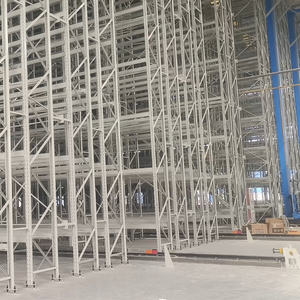
1000kg Warehouse Rack System with High Density Layout
Engineered for mid-to-heavy bulk handling, offering optimal aisle clearance and high-bay vertical efficiency for rapid forklift picking.
Custom OEM/ODM heavy-duty selective racking, automated shuttle platforms, and certified structural steel storage assemblies built to global load standards.
Engineered for mid-to-heavy bulk handling, offering optimal aisle clearance and high-bay vertical efficiency for rapid forklift picking.
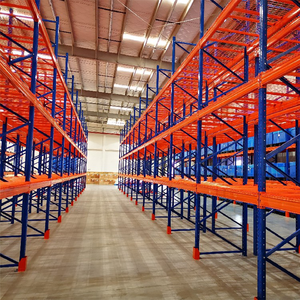
Cold-formed upright profiles built from high-tensile structural steel, maximizing torsional rigidity under unevenly distributed pallet weights.
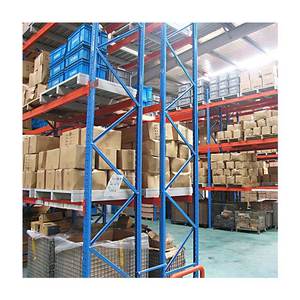
Reinforced beam-to-column connector pins and heavy roll-formed frames engineered to resist impact wear across multi-shift fulfillment facilities.
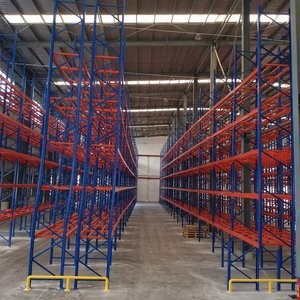
Fully modular beam increments (50mm/75mm) providing adaptable shelf spacing for diverse SKU matrix heights and standard ISO wooden pallets.
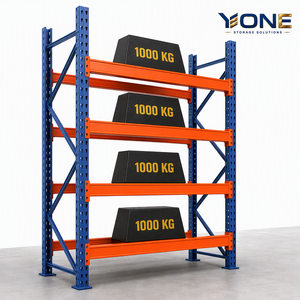
Integrated with structural safety accessories including pallet support bars, wire decking, drop-in safety locks, and heavy-gauge base plates.
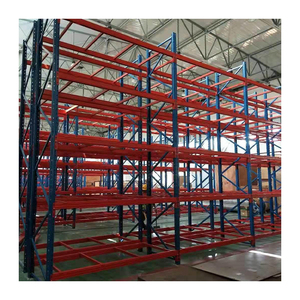
Export-grade structural packaging designed for flat shipping container loading, treated with electrostatically deposited thermoset powder coating.
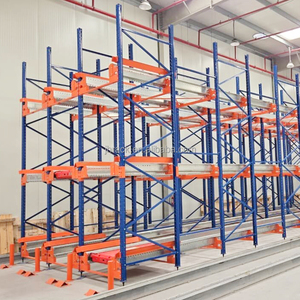
Semi-automated deep lane storage operating on continuous internal guide rails, eliminating forklift entry while multiplying storage density.
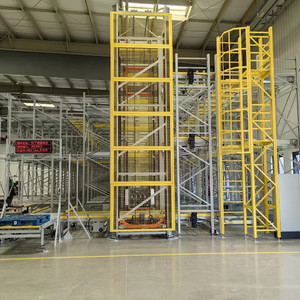
Automated warehouse retrieval framework compatible with AGV shuttles, stacker cranes, and gravity-fed roller conveyors for Industry 4.0 centers.
Modern global logistics networks face significant operational pressures: intensifying land acquisition costs, skyrocketing seismic building compliance requirements, and the integration wave of automated material handling equipment (AMHE). Today's enterprise procurement directors are no longer procuring steel racks simply on a price-per-pound basis. Warehouse pallet rack engineering has transitioned toward integrated structural ecosystems built to support dynamic load factors, high-cycle robotic retrieval stresses, and strict localized building codes (such as the International Building Code [IBC], ASCE 7-22, and CSA S16 standards).
To assist procurement managers, operations executives, and systems integrators in establishing tender specifications, our structural engineering team has mapped the defining operational dynamics shaping global pallet racking installations through 2030:
| Evaluation Parameter | Legacy Selective Racking | High-Density Shuttle Systems | Automated AS/RS Rack Architectures |
|---|---|---|---|
| Cubic Volume Utilization | 40% – 50% storage capacity | 70% – 80% deep-lane capacity | 85% – 95% vertical envelope utilization |
| Direct Pallet Selectivity | 100% immediate individual SKU access | Lane-level selectivity (LIFO/FIFO) | 100% computer-directed automated access |
| Forklift Aisle Requirements | 3.0m – 3.8m standard counterbalanced | 2.6m – 3.2m reach truck clear aisles | 1.4m – 1.8m dedicated stacker crane lanes |
| Steel Profile Standard | Standard cold-formed Q235B / ASTM A1011 | Dual-thickness punch profiles & guide rails | Ultra-tight structural tolerance channels |
| Seismic Damping Adaptability | Base plate wedge anchors | Braced multi-bay ductile frames | Engineered friction base isolation systems |
As micro-fulfillment centers proliferate across urban clusters, structural rack systems are increasingly being commissioned as pick-modules and multi-tier mezzanines. Structural engineers are optimizing roll-formed column cross-sections with multiple bend channels to achieve higher torsional rigidity while decreasing overall weight. Consequently, custom OEM manufacturers must provide end-to-end design calculations verified through third-party quality testing organizations like the Rack Manufacturers Institute (RMI) before site installation.
High-tensile material selection, computerized automated roll-forming, and non-destructive weld testing procedures redefining industrial storage integrity.
Transitioning from basic commercial grades to micro-alloyed, cold-formed structural steel offering superior tensile strength (exceeding 345 MPa). This metallurgical refinement allows lighter beam gauges to safely bear 1,500kg+ pallet configurations under continuous cyclic fatigue.
Advanced seismic mitigation now employs friction-pendulum bearings and base isolation foundations under the column footplates. During ground acceleration events, lateral energy is dissipated at the foundation interface, preventing catastrophic shed collapses and high-bay product shedding.
Inline laser profiling on continuous roll-forming lines continuously validates hole pitch tolerances, twist, camber, and beam connector lock geometries within ±0.5mm. This consistency ensures plug-and-play assembly on high-speed installation projects worldwide.
Operating with over eight decades of proven manufacturing pedigree, robust metallurgical testing, and rigorous North American regulatory certifications.
Holding all three prestigious RMI R-Mark certifications: Manufacturer Certification, System Certification, and Installation Accreditation. Every calculation complies strictly with ANSI MH16.1 specifications, providing certified engineering safety for structural permitting.
Fabrication shops staffed with American Welding Society (AWS) certified specialists and accredited under Division 3 of CSA Standard W47.1 by the Canadian Welding Bureau (CWB). Uncompromising fusion integrity provides maximum shear strength at every beam end connector.
From teardrop boltless configurations and proprietary 6-bend slotted columns to heavy structural channel uprights, our engineering division crafts custom designs to your project layout. Export packing utilizes automated bundled strapping for sea container transport.
Direct technical answers addressing structural certification, custom configurations, seismic ratings, and export logistics.
Enterprise buyers should verify conformity to ANSI MH16.1 (Design, Testing and Utilization of Industrial Steel Storage Racks) and request RMI R-Mark certification. For Canadian project sites, verify compliance with CSA Standard W47.1 for steel fusion welding and CSA S16. In seismic zones, request site-specific PE (Professional Engineer) stamped load calculations matching local IBC and ASCE 7 provisions.
Roll-formed teardrop rack is cold-rolled from sheet steel, featuring punch patterns and boltless beam locks that allow rapid installation, economical shipping, and flexible vertical reconfiguration. Structural pallet rack is manufactured from hot-rolled C-channel structural steel with bolted connections, offering significantly superior impact resistance against heavy forklift collisions, making it the preferred choice for freezer warehouses and heavy chemical storage.
Seismic risk is calculated using spectral response accelerations (Ss and S1) and Soil Site Class. In high seismic categories (C through F), rack uprights require oversized, thickened base plates, heavy-gauge anchors embedded deeper into high-PSI concrete, thicker column walls, and supplementary horizontal/diagonal K-bracing. In severe zones, base isolation systems like the Pellegrino system are installed to decouple ground energy.
Yes. Our tooling engineering division produces custom OEM and ODM configurations, including standard teardrop roll-forms, slotted 6-bend uprights, open-channel structural shapes, and proprietary hook-in beam connectors. We supply precise dimensional matching for seamless integration with legacy systems across North America, Europe, and Asia-Pacific facilities.
For standard dry distribution facilities, high-durability electrostatic thermoset polyester powder coating (60–80 microns) provides long-lasting scratch and chip protection. For cold-storage, blast-freezer facilities (-30°C), or coastal chemical plants, hot-dip galvanization per ASTM A123 is recommended to prevent rust creep caused by cyclic condensation.
Standard OEM project turnaround ranges from 4 to 8 weeks depending on profile complexity and engineering review approvals. Export bundles are secured with high-tensile steel strapping, wood dunnage protection, corner edge protectors, and moisture-barrier shrink wrap optimized for standard 40ft High Cube (HC) container stuffing and breakbulk vessels.
Share your facility CAD drawings, target pallet load profiles, clear ceiling heights, and seismic zone requirements. Our engineering team will return certified rack layout drawings and a comprehensive project quotation.
Send an Inquiry