High-Performance Industrial Longspan & Heavy Racking Systems
Each system is custom-fabricated with structural rigidity, finite element analysis (FEA) verified beam sections, and specialized upright punching profiles designed to streamline high-density warehousing.
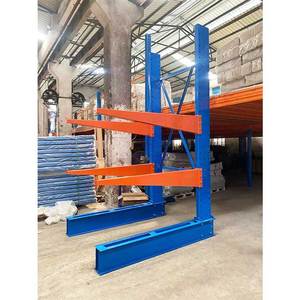
Heavy Duty Industrial Cantilever Hanging Rack
- Load Capacity: 800 - 3,500 kg / Arm
- Steel Grade: Q235B / ASTM A36
- Arm Adjustability: 100mm Pitch Bolted
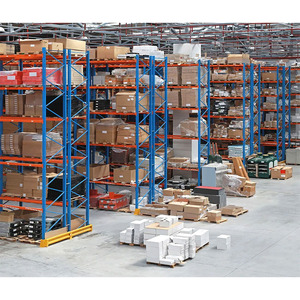
Customized Warehouse Industrial Racking Solutions
- System Scope: High-Bay / VNA Modules
- Compliance: ANSI MH16.1 / R-Mark
- Finish: Epoxy Powder Coated
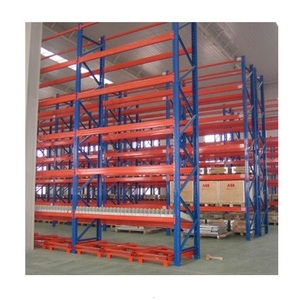
Industrial Heavy Duty Steel Pallet Racking
- Unit Capacity: 1,000 - 4,500 kg / Level
- Connector: 3/4-Lug Interlock Beam
- Profile: Continuous Roll-Formed
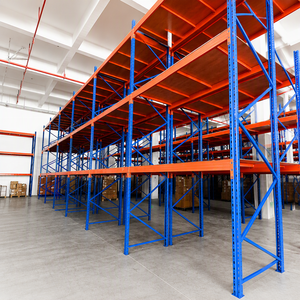
Adjustable Steel Storage Longspan Shelving
- Pitch Adjustment: 50mm / 75mm Increments
- Frame Gauge: 12 to 16-Gauge High Tensile
- Beam Length: Up to 3,900 mm Span
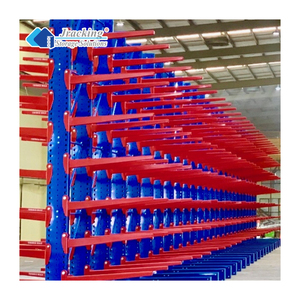
CE-Certified Heavy-Duty Cold-Storage Cantilever
- Surface: Hot-Dip Galvanized / Epoxied
- Operating Temp: -35°C to Ambient
- Certification: CE EN15512 / ISO 9001
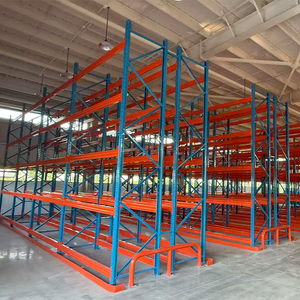
Precision Rack System with Wire Mesh Deck
- Decking: Drop-In Welded Wire Deck
- Fire Code: NFPA 13 Flue Compliant
- Channel Type: Universal Flanged Waterfall
Selective Steel Upright and Beam System
- Aisle Access: 100% Selective Accessibility
- Upright Punching: Universal Teardrop / Slotted
- Seismic Base: Enlarged Anchor Footplates
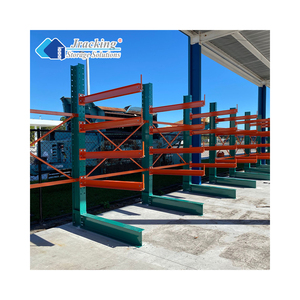
High-Density Modular Industrial Cantilever Rack
- Column Height: Up to 12,000 mm Seamless
- Configuration: Single / Double Sided Tower
- Quality Standard: ISO 9001 / AWS D1.1 Certified
The Evolving Landscape of Industrial Longspan & Heavy Storage Racking
Supply chain volatility, warehouse floor space inflation, and aggressive micro-fulfillment demands have elevated longspan racking procurement from simple steel fixtures to mission-critical, engineered intralogistics structural assets.
1. Modular Scalability for E-Commerce SKU Densification
Contemporary order fulfillment hubs handle hundreds of thousands of rapidly shifting SKUs. Traditional static shelving requires excessive labor for reconfiguration. Leading OEM/ODM suppliers now deliver boltless clip-in longspan systems that allow fast height alterations without tool kits, cutting warehouse redesign time by 65%.
- Tool-free beam repositioning on 50mm and 75mm standardized increments
- Multi-tier pick tower capability up to 4 picking mezzanines
- Hybrid shelf surfaces accommodating both boxed totes and heavy raw materials
2. Tight-Tolerance Robotic & AMR Integration
Autonomous Mobile Robots (AMRs) and Automated Storage and Retrieval Systems (AS/RS) require strict structural deflection tolerances. Longspan racks are no longer calculated merely for dead loads; they must withstand cyclical dynamic loading, laser sensor alignment tolerances, and zero-sway structural thresholds per ANSI MH16.1 specifications.
- Deflection limits engineered to rigorous L/240 and L/360 criteria
- Laser-verified upright column plumbness ensuring optical scanner compatibility
- Heavy-duty column baseplates built for anchor bolt shearing resilience
3. Resilient Structural Steel & Green Metallurgy
Global procurement managers demand environmental accountability and steel provenance verification. Tier-1 manufacturers utilize certified prime steel coils conforming to ASTM A1011, Grade 50, or Q355B high-tensile standards, lowering the embodied carbon footprint through structural optimization while guaranteeing zero brittle-fracture failure under severe freezer operating conditions down to -35°C.
- Full material test reports (MTR) verifying chemical and tensile properties
- Lead-free thermoset powder coats with sub-100μm uniform salt-spray resistance
- Hot-dip galvanized (HDG) treatments exceeding ASTM A123 standards
Structural Mechanics & Technological Evolution of Industrial Racks
A granular assessment of cold-formed profile geometries, seismic dissipation systems, and heavy-duty beam connector mechanics powering next-generation industrial warehouse storage.
Multi-Bend Upright Section Engineering
Early storage shelving utilized simple "C" or "U" channels that yielded easily under torsional twist. Modern roll-forming technologies incorporate proprietary 6-bend to 10-bend profiles. These compound return-flange geometries relocate the centroid closer to the column load line, increasing torsional resistance by over 38% without adding excess steel weight.
- High-inertia compound return lips preventing localized flange buckling
- Precision punch slots engineered for equalized compression distribution
- Seamless integration with heavy horizontal and diagonal K-bracing struts
Beam End Connector Mechanics & Moment Capacity
The structural integrity of longspan racking hinges on the beam-to-column connection stiffness. Modern engineered step-beams incorporate robotic welding with 3-pin or 4-pin tapered lug connectors that achieve wedge-locking action under load. This converts the frame-to-beam connection from a pinned hinge to a semi-rigid moment connection.
- Integral spring safety locks with 1,000+ kg upward dislodgement resistance
- Step-beam ledges purpose-built for flush-fit drop-in timber or wire decking
- Deflection limit strictly constrained within ANSI MH16.1 guidelines
Seismic Isolation & Dissipation Engineering
In seismically active regions across the Pacific Rim and North America, conventional rigid anchoring subjects warehouse uprights to high base shears that can trigger progressive system collapse. Modern longspan engineering incorporates base-isolation mechanics and dissipative elastomeric damper footings that decouple ground acceleration from vertical racking columns.
- Site-specific soil category (Class A to E) dynamic response calculations
- Seismic base isolation technologies reducing racking acceleration by up to 60%
- Stamped engineering packages compliant with ASCE 7 / IBC building codes
| Racking Architecture | Typical Span (mm) | Load Rating / Tier | Structural Profile | Recommended Industrial Application | Compliance Standards |
|---|---|---|---|---|---|
| Light/Medium Longspan | 1,200 – 2,000 | 200 – 450 kg | Roll-formed 55×47mm uprights, step beam | Automotive parts, retail stockrooms, carton picking | ISO 9001 / CE |
| Heavy Duty Longspan (HeavySpan) | 1,800 – 2,700 | 500 – 1,200 kg | Roll-formed 70×60mm, multi-bend columns | Industrial hardware, machinery spares, archive cartons | ANSI MH16.1 / RMI |
| Multi-Tier Longspan Pick Module | 1,500 – 2,400 | 400 – 800 kg | Continuous uprights up to 12m, structural splice | High-throughput e-commerce fulfillment, 3PL distribution | CSA W47.1 / IBC |
| Structural Cantilever Longspan | 1,000 – 1,800 / arm | 800 – 3,500 kg | Hot-rolled wide-flange / H-beam profiles | Steel pipes, lumber, extrusions, structural bar stocks | AISC / AWS D1.1 |
Why Global B2B Buyers Partner with Our Manufacturing Facilities
With advanced manufacturing facilities, automated roll-forming lines, and comprehensive welding accreditations, we deliver custom OEM/ODM solutions engineered to strict structural standards.
Certified Welder Workforce (AWS & CSA W47.1)
Racking integrity begins with joint penetration quality. Our production facilities maintain active CSA Standard W47.1 Division 3 certification through the Canadian Welding Bureau, alongside American Welding Society (AWS) D1.1 structural welding qualifications.
- Robotic 6-axis pulse MIG welding stations for seamless beam end connector joining
- 100% dye-penetrant and ultrasonic non-destructive weld testing protocols
- Controlled welding procedure specifications (WPS) for zero defect yield
Full-Service OEM/ODM Custom Tooling
We don't just sell standard catalog components; we design, tool, and stamp bespoke profiles tailored to private-label distributor catalogs, specialized OEM footprints, and regional punch hole patterns.
- In-house tooling center producing proprietary teardrop, hex, slotted, and keyhole punches
- Custom profile roll-forming for specific warehouse column gauges (10 to 18 gauge)
- White-label packaging, branded stencil identification, and multilingual pallet tags
R-Mark Verified Structural Compliance
Our manufacturing protocols follow the Rack Manufacturers Institute (RMI) standards. We hold third-party verified R-Mark certifications spanning Manufacturer, System Design, and Installation verification.
- Every shipment accompanied by load calculation certificates signed by licensed engineers
- Standard testing per ANSI MH16.1 including stub-column compression and portal frame shear
- Guaranteed adherence to regional International Building Code (IBC) guidelines
Plan Your Next Large-Scale OEM/ODM Warehouse Project
Connect directly with our structural engineering desk. We provide turnkey project reviews, detailed CAD layouts, load capacity calculations, and custom OEM manufacturing runs with competitive direct-from-mill pricing.
Frequently Asked Questions for Warehouse Planners & Procurement Teams
Critical engineering criteria, loading methodologies, fire safety compliance, and OEM private-label guidelines addressed by our senior structural specialists.
What is the mechanical difference between Longspan Shelving and Standard Selective Pallet Racking? +
While both systems utilize vertical roll-formed upright columns connected by horizontal beams, their functional design, structural profiles, and load transfer mechanics differ considerably.
Longspan Shelving (Wide Span) is engineered primarily for medium-to-heavy manual loading, hand-picking operations, and bulk carton storage. Upright frames typically feature smaller cross-sections (e.g., 55×47mm or 60×50mm) rolled from lighter gauge steel (14 to 18 gauge), with shelf beam capacities spanning from 200 kg to 1,200 kg per level. Longspan systems incorporate step beams that recess flush drop-in shelf decks (wire decking, chipboard, galvanized steel panels).
Pallet Racking, conversely, is calculated strictly for unitized unit-load handling via forklifts, reach trucks, or stacker cranes. The upright profiles are substantially heavier (80×60mm up to 120×95mm, 10 to 14 gauge), carrying concentrated point loads upwards of 1,000 kg to 4,500 kg per pallet level. Beams in pallet racks utilize heavy box or structural channel geometries designed to resist extreme forklift impact loads and dynamic shock cycles.
How are beam deflection criteria calculated according to ANSI MH16.1 standards? +
Under ANSI MH16.1 (Specification for the Design, Testing and Utilization of Industrial Steel Storage Racks), maximum allowable beam deflection under full design uniformly distributed load (UDL) cannot exceed L/180 for standard pallet storage, where L represents the clear span distance between upright columns.
However, for modern high-precision longspan applications—especially multi-tier pick towers and automated picking aisles—our engineering team calculates systems to a tighter threshold of L/240 or L/360. If a beam span is 2,700 mm:
• At L/180: Maximum deflection = 2,700 / 180 = 15.0 mm.
• At L/240: Maximum deflection = 2,700 / 240 = 11.25 mm.
Restricting deflection prevents binding of shelf drop-in panels, mitigates worker fatigue during hand retrieval, and ensures that optical clearance sensors on Automated Guided Vehicles (AGVs) do not trigger false obstruction alarms.
Why is Wire Mesh Decking preferred over Plywood or Solid Steel panels in industrial longspan racks? +
The selection of shelf surface medium directly impacts warehouse safety, structural longevity, and municipal fire code approval:
1. NFPA 13 Fire Sprinkler Compliance: Open wire mesh decks feature a minimum 50% to 70% open area, allowing overhead fire suppression water to cascade freely through all storage levels down to the lower tiers. Solid timber or sheet metal acts as an umbrella, shielding lower fires and requiring expensive in-rack sprinkler pipe installations.
2. Cleanliness and Light Permeability: Wire decking prevents the accumulation of combustible cardboard dust and debris while allowing ambient light to penetrate the lower rack bays, improving picker visibility and accuracy.
3. Structural Load Transfer: Heavy-gauge wire decks engineered with universal waterfall flanges wrap securely over the step-beam edges. Welded U-channel structural support wire stays prevent beam spreading under heavy localized loads.
What structural parameters are required to calculate seismic compliance for an OEM longspan project? +
Seismic engineering requires project-specific environmental inputs rather than generic "rule of thumb" assumptions. When submitting an OEM/ODM project brief, buyers should provide:
• Site Geographic Coordinates or Zip Code: To derive the mapped Spectral Response Accelerations ($S_s$ for short periods and $S_1$ for 1-second periods) per USGS or national building databases.
• Soil Site Class: Ranging from Class A (Hard Rock) to Class E (Soft Clay Soil). Unfavorable soil significantly amplifies earthquake forces transmitted to the rack footing.
• Seismic Design Category (SDC): Calculated from A through F. Higher categories (D, E, F) mandate oversized baseplates, heavy anchor bolts (such as Hilti chemical anchors), and reinforced column splice plates.
• Occupancy & Risk Category: High-traffic e-commerce pick modules with operators working beneath rack decks require an Importance Factor ($I_p$) of 1.5, requiring additional structural bracing redundancy.
What are the minimum order quantities (MOQ) and production lead times for custom OEM/ODM racking? +
As a direct industrial manufacturer, our factory processes standard catalog configurations as well as fully bespoke profile runs:
• Standard Profiles & Quick-Ship Inventory: For standardized teardrop, slotted, and universal longspan components, our MOQ starts at 1 full 20ft container load (approx. 18-20 metric tons of steel), with shipment dispatch within 14 to 21 business days.
• Custom OEM / Stamped Punch Tooling: For custom upright geometries, unique beam step profiles, or proprietary distributor punch patterns, tooling turnaround takes 3 to 4 weeks. Following sample approval via prototype physical destruction tests, full production runs ship in 30 to 40 days.
• Packaging Optimization: All components are bundled with steel strapping, edge protectors, and moisture-barrier film to optimize 40ft High Cube container cube utilization, minimizing transoceanic freight costs per metric ton.
How does surface finishing affect longspan rack performance in cold storage and high-humidity facilities? +
Environmental factors dictate surface chemistry specifications:
Thermoset Electrostatic Powder Coating: Ideal for ambient temperature, dry distribution warehouses. Our 7-stage iron-phosphate or zinc-phosphate pre-treatment cleaning bath removes residual milling oils and scales. High-durability polyester-epoxy powders are electrostatically applied and cured at 200°C, producing an abrasion-resistant 70–90 micron coating that resists impacts from heavy steel containers.
Hot-Dip Galvanizing (HDG): Mandatory for outdoor yard storage, coastal high-salinity air, and blast-freezer operations down to -35°C where condensation and thermal cycling cause micro-cracking in powder coatings. Racks are fully immersed in molten zinc at 450°C per ASTM A123 / EN ISO 1461, forming an impermeable, self-healing zinc-iron alloy barrier that prevents rust corrosion for over 30 years.
Standardized Mechanical Testing & Structural Safety Verification
Our manufacturing plants operate accredited physical testing labs to validate finite element modeling before raw steel coils enter automated roll-forming lines.
Stub Column Axial Compression Testing
Short-column compression tests verify the effective cross-sectional area and local buckling behavior of perforated upright profiles per AISI S100-16 cold-formed steel specifications.
- Identifies real-world torsional flexural buckling thresholds
- Validates the structural performance of punch slot patterns
- Ensures exact safety factor thresholds ($SF \ge 1.95$)
Cantilever Portal Frame Cyclic Shear Rig
Tests evaluate the rotational stiffness ($F$) and ultimate bending moment capacity ($M_u$) of beam end connectors under combined cyclic gravity and horizontal loads.
- Calculates the degree of semi-rigidity in frame sway equations
- Simulates decade-long forklift loading and unloading stress cycles
- Ensures spring lock integrity during severe load shifting
Spectrographic Metallurgical Coil Inspection
Every incoming mother coil undergoes optical emission spectroscopy and physical tensile elongation testing to verify yield strength and chemical consistency.
- Strict carbon, sulfur, and phosphorus trace element control
- Yield strength validation matching ASTM A1011 / Q235B / Q355B
- Verification of micro-alloy element additions for cold-temperature resilience
Accelerate Your Intralogistics Project with an Engineered OEM/ODM Quote
Submit your warehouse clear height, floor slab load specs, seismic zone category, and target bay configurations. Our licensed structural engineering team will deliver a comprehensive project review, stamped load calculations, and competitive direct-from-mill pricing.