Engineered Pallet Racking Systems
Select from heavy-duty industrial storage designs engineered to withstand dynamic forklift impacts, seismic accelerations, and high-density throughput.
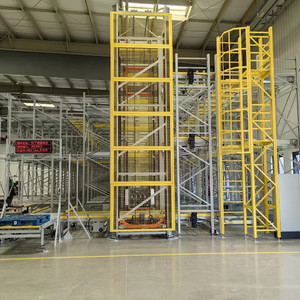
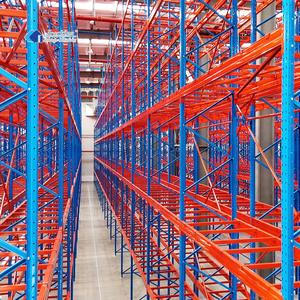
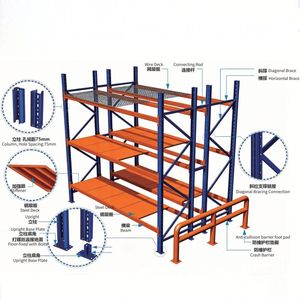
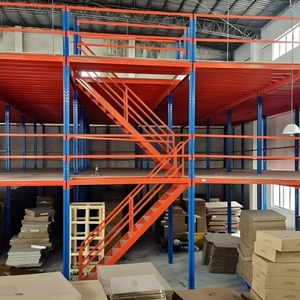
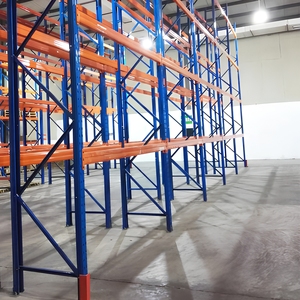
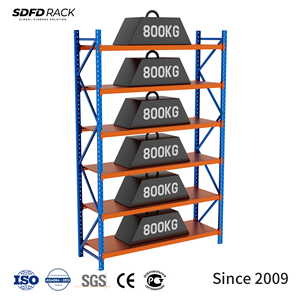
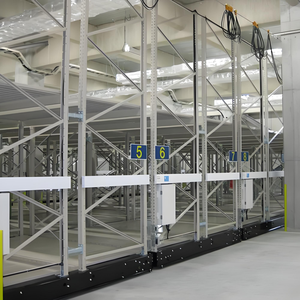
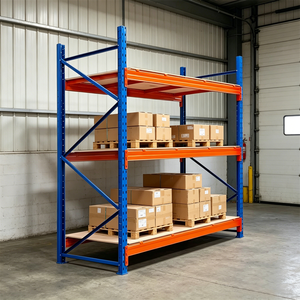
The Global Landscape of Industrial Pallet Racking: Engineering Architecture & Top 10 Manufacturers
Modern distribution centers, 3PL mega-hubs, and manufacturing assembly plants face unprecedented demands: footprint densification, high-velocity SKU throughput, severe seismic compliance, and seamless automated guided vehicle (AGV) or automated storage and retrieval system (AS/RS) interoperability. Pallet racking is no longer static framing; it is a load-bearing, dynamically stressed, code-enforced structural asset. Selecting the correct manufacturer and wholesale supplier dictates structural safety, permitting timelines, insurance underwriting viability, and operational return on investment (ROI).
To deliver true procurement transparency, this whitepaper breaks down the tier-1 global manufacturing leaders, engineering design standards (specifically ANSI MH16.1, EN 15512, and CSA W47.1), steel metallurgy differences, and forward-looking procurement risk frameworks.
Global Manufacturer Benchmark: Top 10 Industrial Storage Racking Manufacturers
The global storage manufacturing ecosystem is bifurcated between high-volume standard roll-form providers and specialized structural engineering heavyweights. Below is the analytical profile of the top 10 market leaders defining global supply chains:
| Manufacturer / Wholesaler | Primary Production Core | Engineering Standards | Structural Specialties | Wholesale Lead Time |
|---|---|---|---|---|
| 1. Ridg-U-Rak Storage Systems | North East, PA (USA) | R-Mark Triple / CSA W47.1 | Slotted 6-Bend, Pellegrino Seismic Base Isolation, RAMGuard | Quick-Ship to 4 Wks |
| 2. SSI Schaefer Group | Neunkirchen (Germany) | FEM 10.2.02 / EN 15512 | Automated High-Bay AS/RS, Pallet Shuttle Platforms | 8 - 14 Weeks |
| 3. Interlake Mecalux | Chicago, IL & Spain | RMI / ANSI MH16.1 | Teardrop Universal, Automated Mobile Radio Shuttles | 4 - 8 Weeks |
| 4. Daifuku Material Handling | Osaka (Japan) | JIS B 8941 / ISO 9001 | High-Tolerance High-Rise AS/RS Crane Racking | 12 - 20 Weeks |
| 5. Frazier Industrial Company | Long Valley, NJ (USA) | AISC / ANSI MH16.1 | 100% Hot-Rolled Structural C-Channel Steel Racking | 6 - 10 Weeks |
| 6. Stow Group (Averys) | Spiere-Helkijn (Belgium) | EN 15512 / ISO 14001 | High-Density Drive-In, Stow Atlas Pallet Shuttles | 6 - 12 Weeks |
| 7. Dexion (Constructor Group) | Broxbourne (UK / EU) | FEM / SEMA Approved | Galvanized Pallet Racking, Narrow Aisle Turret Racks | 6 - 10 Weeks |
| 8. Jracking Global | Nanjing & Da Nang | AS 4084 / FEM / RMI | Cost-Effective Euro Pitch 50mm, Export Flat-Pack | 3 - 6 Weeks |
| 9. BEUMER Group | Beckum (Germany) | DIN / ISO 9001 | Multi-Level Sortation & Integrated Conveyor Rack Frames | 10 - 16 Weeks |
| 10. Steel King Industries | Stevens Point, WI (USA) | RMI R-Mark / AWS D1.1 | Seamless Tubular Welded Uprights, Drive-In Systems | 5 - 9 Weeks |
Structural Metallurgy: Roll-Formed Teardrop vs. Hot-Rolled Structural Channel
A critical divergence in pallet rack procurement is the selection between cold-formed sheet steel (Roll-Formed) and hot-rolled structural channels. Neither is universally superior; each satisfies specific duty cycles, environmental parameters, and economic targets.
Roll-Formed Teardrop Systems: Manufactured from ASTM A1011 or Q355B coil stock passed through sequential CNC roll stations, roll-formed racking incorporates patented multi-bend profiles (such as the Ridg-U-Rak proprietary 6-bend column). The cold-working process elevates the yield point of the steel. The signature punch-out pattern (standard teardrop or slotted) allows boltless pin-locking connections that permit 50mm or 2-inch vertical adjustments. They offer an optimal strength-to-weight ratio, decreasing foundational slab loads and reducing initial freight and capital expenditure by 25% to 35% compared to structural steel.
Hot-Rolled Structural Channel Systems: Fabricated from C-channel steel meeting ASTM A36 or ASTM A572 Grade 50 standards, structural racking features high-mass cross-sections with minimum flange thicknesses of 3/16 inch. Beams are bolted directly onto the upright columns using high-strength Grade 5 or Grade 8 bolts. Structural steel exhibits extraordinary ductility and torsional toughness, making it mandatory in abusive, high-throughput ambient distribution centers, heavy beverage storage, and extreme sub-zero food freezers where forklift impacts are frequent and cold-induced brittleness is a hazard.
Engineering Authority: Why Specify Our Manufacturing Matrix?
With more than eight decades of heavy material handling fabrication, our manufacturing and wholesale facility in North East, Pennsylvania sets the operational benchmark for structural integrity, code adherence, and installation precision.
The RMI R-Mark Triple Certification
We are the premier manufacturer verified across all three RMI standards: Manufacturer, System, and Installation. This assures warehouse operators that all published beam deflections (per L/180) and frame capacities precisely comply with ANSI MH16.1 specifications without under-engineered steel skimping.
Pellegrino Base Isolation Technology
For operations located in high-risk seismic zones (IBC Seismic Design Categories D, E, and F), our patented Pellegrino Seismic Base Isolation decouples the racking structure from foundational ground accelerations, mitigating sway and preventing mass inventory shedding during severe tectonic events.
CSA W47.1 Div. 3 Canadian Certification
Fully certified under the Canadian Welding Bureau (CWB) for steel fusion welding to CSA Standard W47.1. This ensures cross-border compliance across Ontario, Quebec, British Columbia, and Alberta without redundant engineering approvals or municipal permit delays.
Patented RAMGuard Column Shielding
Eliminate catastrophic upright shearing with our patented Rubber Armored Metal (RAMGuard) protectors. Combining a structural steel shell with energy-absorbing elastomeric rubber cores, they withstand 5" outrigger forklift collisions that crush traditional sheet guards.
Proprietary 6-Bend Slotted Engineering
Our classic slotted roll-formed columns utilize an advanced 6-bend cross-sectional profile. The internal continuous stiffening bends maximize axial load-bearing capacity while drastically reducing lateral-torsional buckling risks across unbraced high-bay uprights.
Strategic Wholesale Quick-Ship Network
Our centralized stocking network across Minnesota, New York, New Jersey, Pennsylvania, Indiana, and Puerto Rico holds thousands of frames, beams, wire decks, and safety accessories, enabling project dispatch in days rather than quarters.
Future Procurement Trends: Engineering the 2025–2035 Warehouse
Pallet rack procurement is undergoing seismic shifts driven by supply chain volatility, urban real-estate scarcity, warehouse labor automation, and ESG regulatory mandates. Procurement executives must evaluate the following four macro trends before committing capital expenditure:
1. Sub-Millimeter Tolerances for AMR/ASRS
Autonomous mobile robots, reach trucks, and high-speed cranes require racking deflection limits tighter than standard human-operated warehouses. Where traditional standards permit a beam deflection of L/180, automated facilities mandate L/240 or L/300. Racking designs now integrate CNC-machined guide rails and sensor-reflective targeting points directly on the column uprights.
2. Decarbonized Steel & Scope 3 Footprinting
Global enterprise buyers are prioritizing electric arc furnace (EAF) steel produced with recycled scrap over blast furnace (BOF) steel. Supplying Environmental Product Declarations (EPDs) and verifying low-carbon manufacturing footprint are transitioning from optional CSR checkboxes to mandatory municipal permitting requirements in European and North American zones.
3. Real-Time Telemetry & Impact Sensing
The convergence of industrial IoT and warehouse rack structures has introduced load-cell beam monitors and wireless accelerometer impact tags. These nodes mount to bottom column corners, immediately notifying plant safety directors via API when a forklift impact exceeds structural deflection thresholds, preventing silent progressive collapses.
Engineering Governance: ANSI MH16.1, Fire Flue Clearance & Seismic Design
Procuring industrial racking without accounting for local municipal building codes, seismic ground conditions, and fire protection geometry can lead to shut-down orders, denied occupancy permits, and catastrophic structural failure. Racking systems are classified as non-building structures by the International Building Code (IBC) and National Building Code of Canada (NBC).
Seismic Design Category (SDC): The site-specific spectral response accelerations ($S_S$ and $S_1$) coupled with soil classification (Site Class A through F) dictate the seismic forces the rack must withstand. Systems designed for SDC C through F require enlarged base plates (often exceeding 1/2-inch thickness), dual heavy-duty expansion or adhesive wedge anchors, and welded structural stiffeners. The Pellegrino Seismic Isolation approach circumvents these heavy frame weight requirements by allowing controlled lateral base displacement that dissipates up to 80% of kinetic energy.
NFPA 13 Fire Flue Requirements: Fire marshals strictly regulate longitudinal and transverse flue spaces. In selective and double deep configurations, a continuous 3-inch transverse flue between pallets and a 6-inch longitudinal flue between back-to-back rack rows are mandatory to permit early-suppression fast-response (ESFR) ceiling sprinklers to penetrate downward during a thermal event. Row spacers, backstops, and wire mesh decking must be engineered into the layout drawings to prevent pallet overhang from choking these vital ventilation corridors.
Frequently Asked Questions: Industrial Pallet Racking Procurement
What is the difference between RMI R-Mark certified racking and generic uncertified steel?
The Rack Manufacturers Institute (RMI) R-Mark is an independent engineering certification verifying that the manufacturer's structural calculations, roll-forming procedures, and published load tables adhere rigorously to ANSI MH16.1. Generic uncertified racking often utilizes non-traceable secondary steel coils with variable yield strengths, risking premature frame buckling under rated loads. Furthermore, municipal building departments in North America routinely reject building permit applications lacking PE-stamped load plaques backed by R-Mark documentation.
How do I determine whether my warehouse requires roll-formed teardrop or structural racking?
The decision relies on throughput velocity, environmental conditions, and budget. Roll-formed teardrop is the optimal, cost-effective choice for general 3PL warehousing, retail distribution, and moderate-throughput operations where budget and rapid beam reconfigurability are paramount. Structural C-channel racking is essential in extreme-impact environments such as high-velocity grocery distribution, rough timber/pipe staging, and cold-storage blast freezers where cold temperatures reduce steel ductility and impact forces are substantial.
What documentation is required to pass city permitting for high-pile pallet rack installation?
Permit submittal packages must include: (1) Architectural egress and layout drawings indicating clear aisle widths and exit pathways, (2) Structural engineering calculations stamped by a licensed Professional Engineer (PE) or Structural Engineer (SE) registered in your state or province, (3) Concrete slab geotechnical verification showing slab thickness, rebar reinforcing, and compressive strength (usually 3,000 to 4,000 PSI minimum), (4) NFPA 13 sprinkler hydraulic calculations showing adequate flue spaces, and (5) Manufacturer load capacity certification plaques.
How does pallet racking perform in cold storage and freezer applications (-20°F to -30°C)?
Sub-zero environments induce "cold embrittlement" in standard carbon steels, reducing impact toughness and increasing ductile-to-brittle transition risks. For freezer facilities, racking must utilize steel with verified Charpy V-notch impact values, specialty low-temperature polyester powder coatings, and hot-dip galvanization for moisture condensation resistance. For powered mobile or radio shuttle racks, mechanical drive components require aerospace-grade low-viscosity synthetic grease and anti-freeze heated control modules.
What are the safety requirements for pallet rack inspection and damage tolerance?
ANSI MH16.1 recommends routine visual inspections and at least one comprehensive annual audit by a qualified rack engineer. Deflections exceeding 0.125 inches (1/8") along the depth or width of a column upright over a 1-meter span require immediate unloading and replacement or structural engineered sleeve repair. Cracks along weld seams, missing beam safety pins, sheared anchor bolts, or warped horizontal bracing necessitate immediate operational quarantine of that rack bay.
Ready to Engineer Your High-Density Storage Facility?
Speak directly with our senior application engineers. We provide site-specific ANSI MH16.1 calculations, seismic analysis, customized CAD layouts, and direct wholesale delivery schedules across North America and global ports.