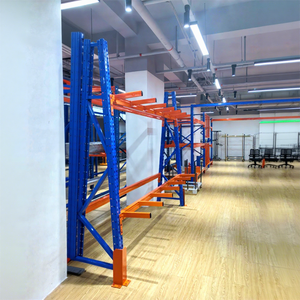
Featured Heavy Duty Pallet Shelving Systems
High-density, seismic-rated, and automated warehousing components engineered for extreme structural performance.
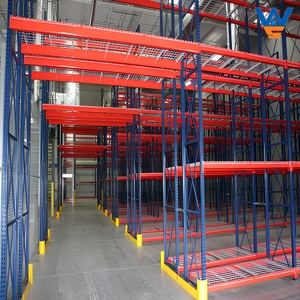
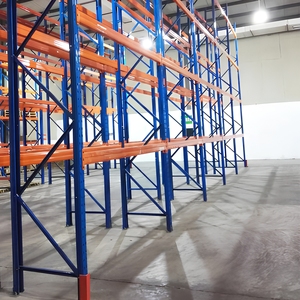
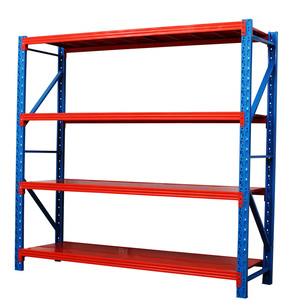
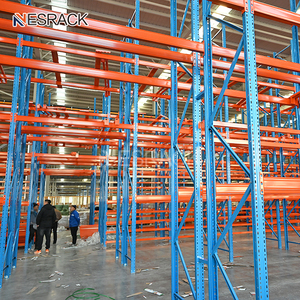
Why International Supply Chains Rely on Our Infrastructure
Combining American engineering protocols with optimized scalable manufacturing to minimize supply disruptions, guarantee load ratings, and streamline global exports.
RMI R-Mark Dual Certified
Strictly compliant with ANSI MH16.1 specifications. Each beam calculation, upright buckling resistance quotient, and anchor dynamic has been evaluated through full-scale laboratory load-cell tests.
CSA W47.1 Division 3 Certified
Certified through the Canadian Welding Bureau (CWB) for structural fusion welding of steel components, matching stringent international requirements across the US, Canadian, and European industrial corridors.
Seismic Isolation Engineering
Integrated compatibility with the patented Pellegrino Base Isolation configuration and ASCE 7-22 design protocols to ensure structural ductility and stored merchandise protection during severe ground motion.
Structural Engineering & Strategic Global Sourcing of Pallet Shelving
Industrial warehousing and automated supply chain facilities require structural pallet shelving that goes far beyond basic steel fabrications. In modern distribution centers, a single rack collapse can generate millions of dollars in inventory losses, operational downtime, and life-safety liabilities. When international procurement officers, operations directors, and 3PL engineers source pallet racking from Chinese manufacturers, semantic keyword discovery and price checks represent only the first baseline layer. The true architectural differentiator lies in metallurgical integrity, roll-forming precision, cold-formed steel engineering under ANSI MH16.1, and finite element modeling for high-seismic accelerations.
Our manufacturing operations utilize certified high-tensile structural coil steel (Q235B, Q355B, and structural grade equivalents). Through continuous automated multi-stage roll-forming lines, beam profiles are shaped with unified step configurations that lock securely into place with automatic safety locking mechanisms, completely mitigating beam dislodgement risks caused by forklift upward bumps. For specialized operations requiring washdown sanitization, such as pharmaceutical and cold-chain protein storage, our stainless steel and hot-dip galvanized finishes deliver extreme corrosion resistance against chloride cleaning agents and condensation cycles.
Comparative Engineering Matrix: Selecting the Right Pallet Storage Topology
Selecting the appropriate storage typology dictates capital return, footprint utilization, forklift fleet expenditures, and warehouse throughput speeds. The technical data below reflects the baseline parameters evaluated during our application engineering phase:
| Storage Topology | Pallet Accessibility | Space Utilization | Flow Type | Forklift Compatibility | Primary Sector Application |
|---|---|---|---|---|---|
| Standard Selective Rack | 100% Immediate Direct Access | Baseline (40% - 50%) | FIFO / Random | Standard Counterbalance, Reach | General Warehousing, FMCG, 3PL |
| Double Deep Shelving | 50% Immediate Access | Enhanced (+30% Density) | LIFO | Deep-Reach Pantograph Trucks | Dry Groceries, Multi-Pallet SKUs |
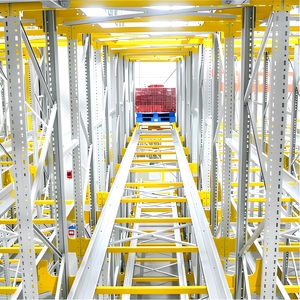
| Push Back Racking | Lane-Level Access (2-6 Deep) | High (+55% Footprint Efficiency) | LIFO | Standard Counterbalance, Reach | Cold Storage, Staging Buffers |
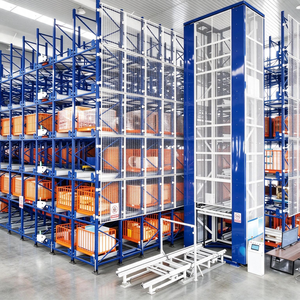
| Radio Shuttle Automation | High-Density Automated Lanes | Maximum (+75% Volumetric Yield) | FIFO or LIFO | Shuttle Cart + Conventional Lift | Food & Beverage, Deep Freezers |
| Very Narrow Aisle (VNA) | 100% Selective High-Bay | Very High (Cubic Height Optimization) | FIFO / Random | Man-Up / Man-Down Turret Trucks | E-commerce Hubs, High-Bay DCs |
| Industrial Cantilever | 100% Unobstructed Horizontal | Linear Adaptable | Unrestricted | Side Loaders, Multi-Directional | Timber, Extrusions, Steel Pipes |
Future Procurement Trends: Automated High-Density & ESG-Driven Logistics (2025-2030)
The logistics industry is navigating a structural transition. Warehouse footprint costs are escalating globally, driving logistics directors away from horizontal facility expansions and toward hyper-dense, vertical automation. Over the next five years, pallet shelving procurement will be dominated by three fundamental transformations:
1. Decoupled Automation with 4D Radio Shuttles: Fixed crane Automated Storage and Retrieval Systems (AS/RS) carry steep upfront capital requirements and rigid floor layouts. Procurement is shifting rapidly toward semi-automated pallet shuttles and autonomous 4-directional shuttle fleets that navigate standardized heavy-duty pallet racks. These systems offer linear scalability: warehouse managers can expand SKU density today by upgrading the racking layout, and subsequently scale throughput by introducing additional automated shuttles without altering the underlying rack geometry.
2. Embedded IoT Structural Health Monitoring: Heavy industrial environments face constant forklift upright impact risks. Forward-looking procurement programs now demand pallet racking with built-in or retrofittable strain-gauge telemetry and acoustic resonance sensors. These low-power wireless nodes monitor live beam deflection, detect micro-fractures in welded base connections, and instantaneously alert warehouse safety managers when an impact exceeds structural safety thresholds, preventing catastrophic progressive collapses.
3. Low-Carbon Steel & Sustainable Coating Lifecycles: ESG parameters have entered tier-1 supply contracts. Leading multi-national retailers and 3PL networks require documented Life Cycle Assessments (LCA) and Environmental Product Declarations (EPD). Sourcing rack structures forged with scrap-recycled electric arc furnace (EAF) steel and finished with zero-VOC, heavy-metal-free thermosetting powder coatings reduces embedded project carbon footprints by up to 34% compared to legacy blast-furnace products.
Technological Evolutions in Racking Design & Impact Defense
The physical point of failure in 85% of industrial pallet racking incidents occurs in the bottom 600mm of the upright frame, where outriggers and counterweight forklifts make glancing or direct impact during turning maneuvers. Advanced manufacturers have transitioned from generic bolt-on sheet-metal protectors to engineered hybrid defense barriers like RAMGuard (Rubber Armored Metal column protectors). By combining high-molecular-weight elastomeric shock buffers with structural-grade molded steel shields, modern rack systems absorb kinetic impact energies without transferring sheer forces into the concrete floor anchors.
Simultaneously, column cross-sections have evolved beyond primitive rectangular forms. Patented 6-bend and 8-bend open column roll-forming profiles introduce multiple rigidifying flanges along the vertical axis. This geometry significantly increases the torsion modulus and radius of gyration, meaning the rack delivers substantially higher vertical load-bearing capacity per kilogram of steel without sacrificing beam connector adjustability.
Frequently Asked Questions: Global Sourcing & Engineering Compliance
Essential regulatory, structural, and shipping insights for warehouse operators and purchasing agents.
How does ANSI MH16.1 compliance impact imported pallet shelving?
What is the practical difference between roll-formed teardrop and structural steel pallet racks?
How do local seismic zones alter pallet shelving engineering?
What documentation is required to clear customs and satisfy warehouse building inspectors?
How are large-scale pallet shelving systems packed for international maritime export?
Can automated shuttle racking be retrofitted into existing selective pallet rack infrastructure?
Ready to Optimize Your Warehouse Density & Engineering Compliance?
Consult with our structural engineering and export specialists. We provide layout CAD design, stamped calculation packages, and competitive ex-factory pricing.
Inquire Now