Precision Warehouse Storage Racking Systems
Manufactured under strict ISO 9001 and ISO 14001 factory environments, our industrial racking systems comply with international racking standards including ANSI MH16.1 (USA), AS 4084 (Australia), and EN 15512 (Europe). Explore our primary product lines built for scalable logistics centers.
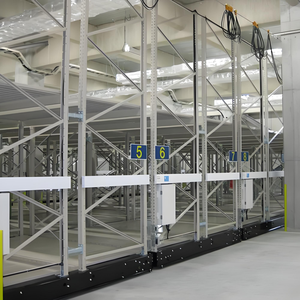
Mobile Pallet Racking Specifically Designed for Cold Storage with Anti-Freeze Components and Low-Temperature Grease
- Thermal Range: -35°C to +40°C
- Drive Mechanism: Electric Guided Rail
- Space Saving: Up to 85% Density
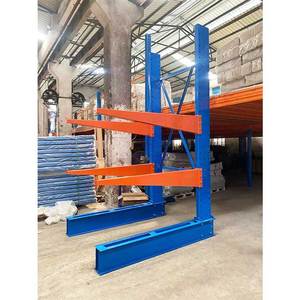
Heavy Duty Storage Cantilever Shelving Cyclocross Frame Cantilever Storage Steel Industrial Hanging Cantilever Rack
- Steel Section: Hot-Rolled H-Beam
- Arm Capacity: 500 - 1,800 kg/arm
- Storage Profile: Pipes, Timber, Extrusions
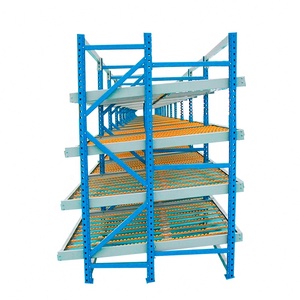
FIFO Storage Roller Gravity Shelf with Speed Controllers and Impact Separation Separators
- Flow System: Roller Bed Gravity Track
- Inventory Cycle: Strict First-In First-Out
- Track Slope: 2.5% to 3.5% Gradient
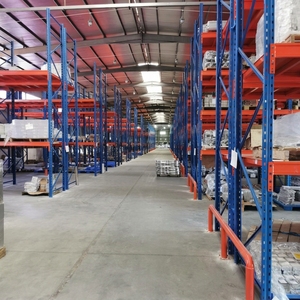
OEM ODM Warehouse Industrial Adjustable Heavy Duty Selective Pallet Racking Warehouse Storage System Shelving Units Shelves Rack
- Beam Flexibility: 50mm / 75mm Adjustable
- Pallet Access: 100% Direct Selectivity
- Bay Loading: Up to 5,000 kg/level
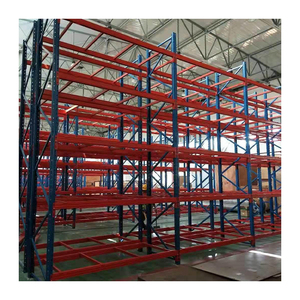
Export Packing Q235 Steel Warehouse Rack System for Fulfillment Warehouse High Throughput Hubs
- Steel Specification: Certified Q235B / SS400
- Export Packaging: Steel-Strapped Ocean Crates
- Handling Speed: Fast-Pick SKU Optimized
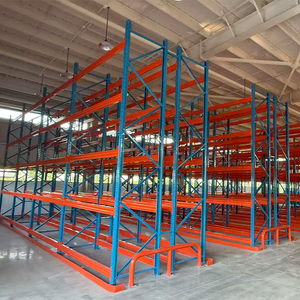
Engineering Design Pallet Rack System with Wire Deck Option for Fire Sprinkler Permeability
- Deck Type: Flanged Waterfall Wire Mesh
- Safety Standard: NFPA 13 Fire Flue Space
- Surface Finish: Zinc Electroplated or Powder
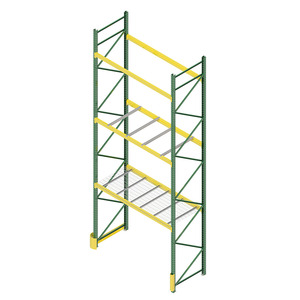
WAREHOUSE RACKING Warehouse Heavy Duty Cold Storage Rack Selective Narrow Aisle Metal Industrial Pallet Racking System
- Aisle Clearance: 1,600mm - 1,900mm
- Vertical Reach: Up to 16 Meters Clear
- Truck Pairing: Turret / Wire-Guided Forklift
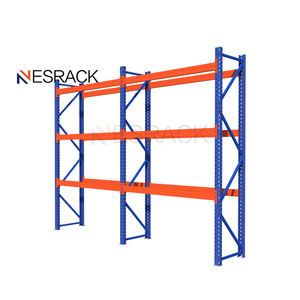
Industrial Steel Heavy Duty Corrosion Protection Stacking Shelving System Pallet Rack Warehouse Shelves Boltless Rack
- Assembly Method: Boltless Interlocking Clamps
- Corrosion Proof: Epoxy Polyester Coated
- Application: Multi-Tier Mezzanine / Hand-Load
Metallurgical Rigor, Steel Grades & Structural Safety Criteria
In high-density industrial racking, structural integrity relies on verified yield strengths, cold-forming continuous roll precision, and seismic resilience. Understand the material science behind high-performance Chinese industrial racking manufacture.
Procuring warehouse storage racking from leading Chinese manufacturers requires deep technical evaluation beyond initial price per bay. Structural steel racking systems represent the physical backbone of global logistics networks. When loaded with thousands of tons of static and dynamic freight, failures in raw material yield stress, inadequate column perforations, or deficient connector weld throats can result in catastrophic progressive collapse. Global warehouse engineering standards, notably ANSI MH16.1 (Specification for the Design, Testing and Utilization of Industrial Steel Storage Racks), European standard EN 15512, and Australian standard AS 4084, mandate comprehensive cold-formed steel engineering that considers local buckling, torsional-flexural distortion, and cyclic seismic loading.
Primary Chinese manufacturing hubs leverage domestic access to premier state-owned integrated steel mills (such as Baosteel, Shougang, and Ansteel). Premium export-tier racking fabricators utilize cold-rolled structural sheet coil grades Q235B (yield strength $f_y \ge 235 \text{ MPa}$, tensile strength $R_m$ between 370–500 MPa) and high-strength low-alloy grade Q355B (equivalent to ASTM A572 Grade 50 and European S355JR, with $f_y \ge 355 \text{ MPa}$). For seismic moment frames and high-bay Automated Storage and Retrieval Systems (AS/RS) exceeding 25 meters in vertical height, Q355B provides the necessary modulus of elasticity and ultimate elongation ($\ge 21\%$) to absorb seismic shear energy without brittle fracturing.
| Steel Grade & Regional Standard | Yield Strength ($f_y$, MPa) | Tensile Strength ($R_m$, MPa) | Elongation ($\% \text{ min}$) | Equivalent Global Grade | Optimal Racking Application |
|---|---|---|---|---|---|
| Q235B (GB/T 700) | $\ge 235$ | 370 - 500 | $\ge 26$ | ASTM A36 / EN S235JR | Standard Selective & Cantilever |
| Q355B (GB/T 1591) | $\ge 355$ | 470 - 630 | $\ge 21$ | ASTM A572 Gr 50 / EN S355JR | AS/RS & High Seismic Uprights |
| SPCC / DC01 (Cold-Rolled) | 130 - 240 | $\ge 270$ | $\ge 38$ | ASTM A1008 CS Type B | Light Shelving & Box Decking |
| Q345D (Cryogenic Grade) | $\ge 345$ | 470 - 600 | $\ge 21$ (-20°C Charpy V-Notch) | EN 10025-3 S355N | Blast Freezers & Cold Storage |
Key Technical Insight: Sub-Zero Brittle Fracture Mitigation
Standard carbon steel undergoes ductile-to-brittle transition temperature (DBTT) shifts in frozen warehouses operated at -25°C to -35°C. Top tier Chinese manufacturers incorporate impact-tested micro-alloyed steels with silicon-killed chemistry (Charpy impact energy $\ge 34 \text{ Joules at } -20^\circ\text{C}$) and specify low-temperature synthetic lubricants inside drive mechanism bearings to prevent brittle mechanical failures.
Future Warehouse Racking Procurement Trends (2025–2030)
Global supply chain shifts, localized building code revisions, and automated fulfillment imperatives are fundamentally restructuring how multinational logistics directors source heavy industrial storage systems from China.
1. AS/RS Tight Tolerances
The rapid expansion of autonomous mobile robots (AMR) and stacker cranes demands millimetric beam deflection limits ($L/300$ or lower), driving procurement teams toward CNC robotic punch and weld profiling lines.
2. Carbon Footprint Audits
European and North American buyers increasingly demand Environmental Product Declarations (EPD) and CBAM-compliant certifications verifying the carbon intensity of recycled billet steel during procurement.
3. Advanced Pre-Galvanization
To reduce life-cycle maintenance costs in coastal and humid warehouse zones, continuous pre-galvanized cold coil profiling is replacing traditional wet paint, avoiding localized surface micro-cracking.
4. Containerized Flat-Pack ROI
Soaring ocean freight charges emphasize customized modular beam nest packaging. Advanced robotic strapping packs maximize ocean container cube utilization by over 28% compared to standard loose bundles.
Structural Innovation in High-Bay & Seismic Racking Systems
How state-of-the-art Chinese manufacturing facilities implement finite element analysis (FEA), advanced robotic welding, and automated surface treatment to achieve parity with top tier American and European standards.
Nonlinear FEA Simulations
Racking designs undergo rigorous 3D second-order P-Delta nonlinear stability analysis under load combinations factoring dead load ($D$), live pallet load ($L$), winduplift ($W$), and site-specific seismic spectral acceleration ($S_s, S_1$). Computational simulations accurately locate torsional buckling inflection points.
Continuous Cold-Roll Tooling
Custom 24-to-30 station continuous cold-roll forming lines produce upright profiles with progressive deformation passes. This eliminates micro-fissuring around perforation slots (teardrop, hex, or diamond) and minimizes internal residual stresses that cause column camber and twist over 12-meter continuous uprights.
Automated Electrostatic Coating
A multi-stage surface preparation sequence incorporating pre-degreasing, acid pickling, nanoceramic zirconium passivation, and reverse-osmosis deionized rinses ensures optimal chemical adhesion before the application ofTGIC-free pure polyester powder cured at 200°C for superior corrosion resistance.
Why Partner with Us for Global Storage Racking Deployments
Bridging global structural engineering specifications with high-throughput Chinese manufacturing efficiency. Here is how our production facilities optimize total cost of ownership (TCO) for international EPC contractors, 3PL distributors, and industrial integrators.
Full OEM/ODM Engineering Customization
Whether your warehouse blueprint requires ANSI-standard teardrop punch interchangeability for North American retrofits, European 75mm/50mm pitch patterns, or seismic base isolation anchor interfaces, our dedicated structural design department delivers stamped calculations, AutoCad elevations, and 3D BIM Revit models ready for permitting.
Certified Factory Quality Control
Every steel master coil undergoes in-house spectral composition testing and tensile coupon pull tests. Welded beam end-connectors, column bases, and row spacers undergo mandatory liquid dye penetrant inspection and automated torque-tension destructive test cycles documented in comprehensive EN 10204 Type 3.1 Mill Inspection Certificates.
Optimized Export Packaging & Ocean Logistics
Export components are banded using protective polymer edge guards, custom-welded steel transport pallets, and anti-humidity vapor-corrosion-inhibiting (VCI) shrink wrap. Our packing engineers formulate modular container schematics that ensure zero transit deformation while enabling direct forklift slip-sheet unloading at destination.
End-to-End International Project Stewardship
From initial preliminary rack slotting and warehouse simulation to onsite installation guidance via English-speaking structural project managers, we deliver a frictionless international procurement pipeline that lowers capital expenditures (CAPEX) without compromising structural safety margins.
Frequently Asked Questions: Global Industrial Racking Procurement
Engineering clarifications, quality assurance protocols, logistics benchmarks, and compliance criteria for procurement directors and facility engineers.
1. How do you certify rack structural designs for seismic zones in North America and Australasia?
Our engineering division utilizes response spectrum and equivalent lateral force (ELF) analyses in compliance with ASCE 7 / IBC for the United States and AS 1170.4 for Australia/New Zealand. We determine site-specific design spectral response accelerations ($S_{DS}, S_{D1}$) based on local geotechnical soil classification (Site Class A through E), calculating increased footplate dimensions, enhanced anchoring embedment depths, and reinforced back-to-back bracing configurations.
2. What are the maximum allowable beam deflection limits under full design loading?
In accordance with ANSI MH16.1 Section 5.3 and European Standard EN 15512, our standard pallet rack step beams and box beams are engineered to not exceed an allowable vertical deflection limit of $\delta_{max} = L/180$, where $L$ is the clear span distance between upright columns. For high-speed automated retrieval systems (AS/RS) or sensitive robotics picking bays, we engineer high-stiffness profiles meeting tighter thresholds of $L/200$ to $L/300$.
3. What is the difference between cold-rolled Q235B steel and structural ASTM A36?
Q235B is an alloy-balanced Chinese standard carbon steel (per GB/T 700) featuring a minimum yield strength of 235 MPa and exceptional cold-forming ductility, making it direct equivalent to ASTM A36 (yield strength 250 MPa) and European S235JR. For high-capacity racking applications where weight-to-load optimization is critical, we substitute Q355B (equivalent to ASTM A572 Gr 50), providing roughly 50% greater yield capacity to resist axial frame buckling.
4. How do you prevent corrosion and coating failure in sub-zero cold-storage facilities?
Cold storage units experience frequent humidity cycling that induces condensation corrosion. We apply a multi-tier protective strategy: (1) shot blasting to Sa 2.5 cleanliness to remove scale; (2) zinc-phosphate chemical conversion coating; and (3) heavy-duty TGIC-free polyester thermosetting powder applied at a dry film thickness (DFT) of 70 to 100 microns. For extreme sub-zero walk-in freezers, we provide continuous hot-dip galvanizing (HDG) to EN ISO 1461 standards, ensuring decades of rust-free operation.
5. Can your factory supply universal teardrop punch patterns compatible with US systems?
Yes. We run specialized high-speed punch dies producing true 2-inch center-to-center universal American teardrop perforations. These accept standard US roll-formed step beams and safety lock pins, ensuring seamless interoperability with legacy North American warehouse installations while delivering competitive offshore manufacturing costs.
6. How are pallet racks packed to prevent shipping damage inside ocean shipping containers?
All beams and upright frames are bundled in modular steel skeletal transport cradles with corrugated protective boards isolating steel surfaces. Heavy steel bands tensioned over durable plastic edge protectors prevent shifting. Hardware, fasteners, baseplates, and row spacers are packaged in seaworthy wooden cases with moisture-absorbing desiccant pouches to prevent transit condensation rust.
7. What documentation is provided for local building permitting and safety inspections?
We provide full structural documentation dossiers comprising: general arrangement (GA) drawings, load capacity plaques, anchor bolt shear-pullout calculation reports, material test reports (MTR) tracing coil heat numbers, weld procedure specifications (WPS), and third-party independent lab test certificates for beam end-connector moment-rotation stiffness tests.
8. What is the typical lead time for a 50 to 100 ocean-container industrial warehouse racking project?
Standard engineering sign-off and shop drawing approval take 7–10 days. Roll forming, robotic welding, automated powder coating, and export bundle crating for a 50-container project are typically completed within 30 to 45 calendar days, supported by our 60,000-ton annual processing infrastructure.
9. How do you guarantee longitudinal and transverse flue space compliance for NFPA 13 fire sprinklers?
Our engineering plans include certified row spacers (typically 8 to 12 inches in length) and snap-in back-to-back beam stops that maintain open 6-inch vertical flue spaces throughout the storage array. Wire mesh decks with flanged waterfall borders provide an open surface area greater than 70%, ensuring sprinkler water penetrates directly to lowest levels during fire emergencies.
10. Can we send an independent third-party inspection agency (e.g., SGS, TÜV, Bureau Veritas) prior to shipment?
Yes, we welcome third-party quality audits. We grant full factory floor access for pre-production raw material coupon sampling, in-line weld ultrasonic/magnetic particle inspections, coating thickness mil gauge cross-hatch adhesion checks, and final container stuffing validation.
Accelerate Your Logistics Infrastructure with Precision Engineering
Connect with our senior intralogistics engineering team. Whether you need an optimized structural layout for a new fulfillment hub, seismic load calculations, or a direct factory quotation on standard selective or automated mobile systems, we are ready to assist.