High-Efficiency Warehouse Racking & Pallet Storage Systems
Engineered from certified high-tensile Q235B and Q355B structural steel, our racking systems are custom-fabricated to meet stringent seismic, high-load, and corrosive-environment warehouse demands worldwide.
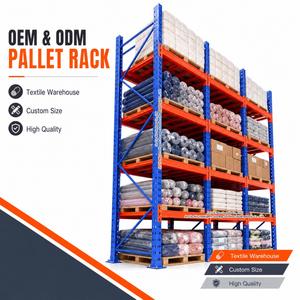
4-Level Heavy Duty Rack Storage System for Garment & Fabric
High-density multi-tier storage tailored for heavy roll materials, industrial textiles, and wholesale bulk cargo with integrated drop-prevention beams.
- Unit Capacity: 1,500 - 4,500 kg/tier
- Steel Specification: Cold-Rolled Q235B
- Pitch Adjustability: 50mm / 75mm Increments
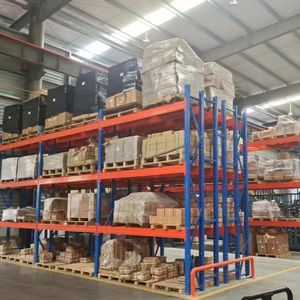
Light-Duty Economy Anti-Rust Adjustable Pallet Rack (1000kg)
Cost-effective bolted/boltless hybrid frame system designed for small logistics centers, e-commerce stockrooms, and regional distribution facilities.
- Capacity Per Bay: 1,000 - 2,000 kg
- Finish Treatment: Epoxy Electrostatic Powder
- Assembly Method: Modular Interlocking Safety Clips
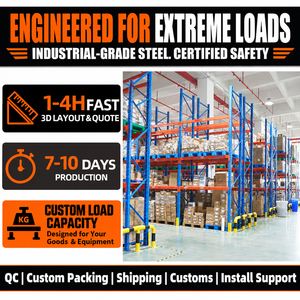
Heavy-Duty Push Back Pallet Racking System (Carton/Pallet LIFO)
Nested rolling cart architecture storing up to 6 pallets deep. Maximizes floor area efficiency while reducing forklift travel paths into rack aisles.
- Lane Depth: 2 to 6 Pallets Deep
- Incline Gradient: 1.5% - 2% Self-Gravity Return
- Safety Track: Anti-Jump Guided Wheel Bearings
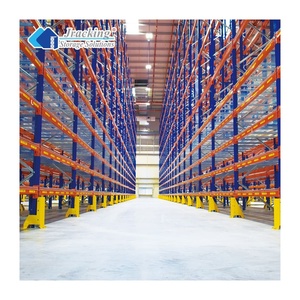
Euro Standard Heavy-Duty Selective Pallet Racking System
Fully certified selective layout offering 100% immediate pallet access, compatible with European counterbalanced and reach lift trucks.
- Design Norm: FEM 10.2.02 / EN 15512
- Upright Profile: 80/90/100/120 Omega Sections
- Beam Deflection: Strict ≤ L/200 Limit
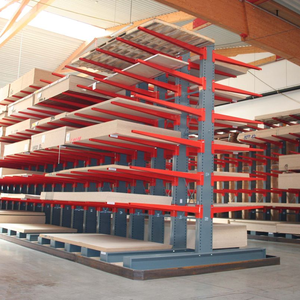
Q235 Steel Heavy-Duty Cantilever Racking for Timber & Pipes
Unobstructed arm configuration without front uprights, built for overhead crane loading of timber, profiles, steel pipes, and irregular heavy items.
- Column Height: Up to 9,000 mm
- Arm Load: 500 - 1,800 kg per arm
- Configuration: Single / Double Sided Available
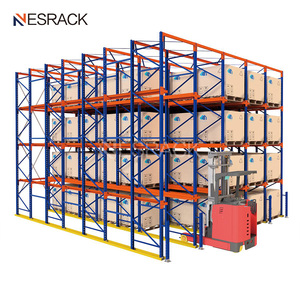
Industrial Drive-In Pallet Racking for Cold Stores & Bulk Lots
Eliminates working aisles to achieve up to 85% warehouse volume utilization. Forklifts drive directly into storage lanes along heavy-duty guide rails.
- Aisle Elimination: Cuts footprint by 60%
- Rail Profile: Structural Cold-Formed Steel
- Ideal Environment: Cold Storage & Food Grade
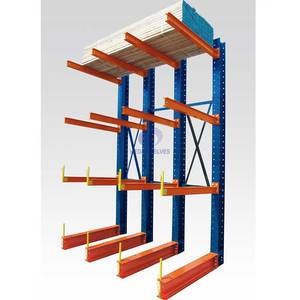
Heavy-Duty Aluminium / Alloy Cantilever Racking System
Specialized lightweight yet high-rigidity structural system engineered for outdoor carports, maritime cargo, and chemically aggressive facilities.
- Corrosion Rating: 100% Rust-Proof Alloy
- Application: Outdoor Yard, Marine, Cleanroom
- Arm Angle: 2° to 4° Secure Anti-Roll Incline
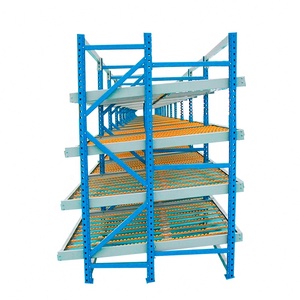
FIFO Roller Gravity Shelf & Pallet Flow Racking System
Equipped with centrifugal brake rollers and speed dampening separators, guaranteeing automated first-in, first-out carton and pallet inventory turnover.
- Stock Rotation: 100% Strict FIFO Flow
- Roller System: Heavy-Duty Galvanized Cylinders
- Speed Control: Automatic Magnetic Braking
Engineering Structural Analysis & System Compatibility Matrix
A rigorous engineering benchmark detailing pallet accessibility, vertical cubic utilization, volumetric storage density, and fork-truck kinematic constraints.
Procuring industrial warehouse racking directly from a certified China manufacturer involves assessing strict physical, mechanical, and logistical parameters. Pallet racking is not simply static structural steelwork; it is a critical dynamic component of a modern supply chain network. Below is the engineering matrix used by our senior project directors and structural engineers when evaluating multi-million dollar turnkey warehouse fit-outs across North America, Europe, Southeast Asia, and the Middle East.
| Racking Architecture | Pallet Accessibility | Cubic Density Rating | Rotation Principle | Deflection Criteria | Primary Industrial Use Case |
|---|---|---|---|---|---|
| Selective Pallet Racking | 100% (Instant) | Medium (40% - 50%) | FIFO / LIFO | ≤ L/200 (FEM standard) | High SKU variety, fast FMCG, general 3PL fulfillment |
| Drive-In / Drive-Through | Low (Lane-Restricted) | Very High (Up to 85%) | LIFO (Drive-In) / FIFO | ≤ L/250 (Impact Reinforced) | Cold storage, raw beverage staging, single SKU high-volume |
| Push Back Racking System | Moderate (Lane-Front) | High (70% - 75%) | Strict LIFO | ≤ L/300 (Rail Grade) | Mid-turnover goods, freezer buffers, staging docks |
| Gravity Roller Flow Racks | Strict Lane Frontage | High (75% - 80%) | Guaranteed FIFO | ≤ L/350 (Dynamic Roller) | Pharmaceuticals, perishable dairy, automated assembly lines |
| Very Narrow Aisle (VNA) | 100% (Instant) | Superior (Up to 90%) | FIFO / LIFO | ≤ L/200 (Precision Level) | High-bay warehouses, wire-guided turret trucks, tight spaces |
| Heavy-Duty Cantilever | Continuous Front | Custom Geometric | Flexible | ≤ L/180 (Arm Cantilever) | Steel pipes, sheet metal packs, timber lumber, solar rails |
Key Structural Engineering Takeaway: Beam Deflection & Seismic Integrity
In international compliance (ANSI MH16.1 in North America, EN 15512 in Europe, AS 4084 in Australia), pallet rack beam deflection under maximum rated load must not exceed L/200 of the clear span length. In seismic zones (Zone 3 and Zone 4), column footings require oversized baseplates anchored with specialized mechanical wedge or chemical seismic expansion bolts, integrated with vertical X-bracing to prevent catastrophic harmonic resonance collapse.
Future Procurement Trends in Industrial Pallet Storage (2025–2030)
How automation, high-yield steel metallurgy, global supply chain nearshoring, and green manufacturing dictate the next generation of warehouse rack purchasing.
1. AS/RS & Four-Way Shuttle Integration
Traditional static storage is rapidly migrating toward Automated Storage and Retrieval Systems (AS/RS). Modern pallet racking must be fabricated with ultra-tight tolerance standards (±1.0mm upright alignment) to accommodate autonomous laser-guided four-way shuttles, high-speed cranes, and conveyor-integrated multi-tier mezzanines.
2. Micro-Alloyed High-Yield Steels (Q355B+)
Global procurement teams prioritize higher strength-to-weight ratios. By utilizing micro-alloyed titanium and niobium strengthened steel coils, upright sections achieve higher yield strength (up to 355 MPa) while reducing total steel tonnage by 12%–18%, substantially curbing ocean shipping freight expenses per cubic foot.
3. Steel Index Dynamic Forward Hedging
To hedge against raw material volatility (hot-rolled coil price oscillations), sophisticated global buyers negotiate forward contracts with Chinese rack manufacturers. Factory-backed annual procurement frameworks lock in production capacity and mill pricing for large scale 500+ container international infrastructure projects.
Engineering R&D: How Manufacturing Technology Is Advancing
Continuous CNC Roll-Forming
Multi-station computer-controlled roll-forming mills produce seamless Omega upright columns up to 14 meters in length without mid-span butt-welds, eliminating weak points under seismic lateral tension.
Robotic MIG/TIG Fusion Welding
Automated 6-axis robotic welding cells attach beam connectors with deep-penetration continuous fillets, certified under AWS D1.1 and EN ISO 15614 structural welding procedures for zero stress embrittlement.
Pre-Treatment Nanotechnology
Phosphate-free silane nano-ceramic pre-treatment washes replace toxic pickling, delivering a rust-inhibiting anchor profile that ensures powder coat adhesion exceeding 1,000 hours of continuous salt-spray testing (ASTM B117).
Modular Teardrop & Slotted Interlacing
Universal punching designs permit seamless integration with existing American Teardrop, European 50mm pitch, and British Dexion patterns, protecting prior warehouse capital investments.
China Wholesale Racking Manufacturing Excellence
Direct manufacturer capabilities that bridge world-class engineering, strict western compliance standards, and competitive Asian supply chain pricing.
Full-Chain In-House Manufacturing
From automated steel coil slitting and continuous roll-forming to 3D laser tube cutting, automated robotic welding, and twin Swiss Gema electrostatic powder coating tunnels, our end-to-end facility controls quality at every single micron.
Independent Structural Stamping & Calculations
Our dedicated R&D engineering department uses advanced finite element modeling (FEM) software. We provide full calculation dossiers, seismic load simulation reports, and PE (Professional Engineer) stamps for municipal building permit approvals worldwide.
Optimized Export Containerization
Every shipment is custom-bundled with steel dunnage strapping, custom non-fumigation wood cradles, and moisture-absorbing vapor-barrier wraps to prevent shipping transit chafing, allowing rapid unloading by forklift without damaging pre-painted surfaces.
The Global Procurement & Project Fulfillment Process
Layout & Civil Survey
Review of warehouse architectural DWG files, slab core sample PSI ratings, overhead sprinkler flue spaces, and MHE turning radius requirements.
Structural FEA Analysis
Detailed mechanical modeling under ANSI MH16.1 or EN 15512 standards to calculate dynamic seismic factors, shear force, and beam cross-sections.
Precision Production
CNC cold-roll forming, robotic automated welding, optical hole measurement, and dual-layer thermoset powder bake with ISO 9001 batch tracking.
On-Site Installation Support
Provision of bilingual erection drawings, 3D assembly guides, and dispatch of factory-trained site engineering supervisors for turnkey handover.
Critical Engineering & Procurement FAQ for Warehouse Operators
In-depth technical answers addressing load calculations, international code compliance, shipping logistics, and quality assurance.
How do you verify rack load capacities and prevent catastrophic beam deflection?
Load calculations are derived via finite element analysis (FEA) calibrated with physical destructive crush and bend testing on 100-ton hydraulic test benches. Under both European FEM 10.2.02 and American RMI ANSI MH16.1, the working deflection limit must not exceed L/200 for standard beams. Every pallet position includes a certified safety factor of 1.65 to 1.95 against the ultimate tensile strength of the steel.
What steel grades are used, and do you supply mill test certificates (MTC)?
We source certified Prime Hot-Rolled Coils exclusively from Tier-1 state steel mills (such as Baosteel, Shougang, and Ansteel). Upright frames are typically cold-formed from high-yield Q235B or Q355B (yield strength ≥ 355 N/mm²), equivalent to ASTM A572 Grade 50 or European S355JR. Every single container shipment includes comprehensive 3.1 Mill Test Certificates (MTC) detailing chemical composition and mechanical tensile properties.
Can you provide PE-stamped calculations for building permit approvals?
Yes. For projects in the United States, Canada, Australia, and the EU, we collaborate with certified local structural engineers who review our calculation packages, slab anchor pull-out ratings, and seismic site-specific spectrum accelerations (Ss, S1). We provide signed and stamped engineering packages ready for submission to local municipal building code officials and fire marshals.
How is damage prevented during long-distance ocean shipping?
Racking components are vulnerable to surface abrasion and deformation if loosely stowed. We package upright frames in modular nesting bundles supported by heavy gauge C-channel steel skids, wrapped with multi-layer PE shrink film and corrugated corner caps. Beams are palletized in interlocking layers separated by non-scratch felt spacers and banded with 32mm steel straps, allowing rapid unloading with standard forklifts.
What surface finishing is applied for cold-storage and high-humidity climates?
For standard distribution centers, we apply a 60–90 μm electrostatic epoxy-polyester powder coat baked at 200°C for high impact scratch resistance. For deep-freeze warehouses (-30°C) where condensation can peel ordinary coatings, or in tropical coastal warehouses with high salinity, we offer hot-dip galvanization per ISO 1461 (70–100 μm zinc layer thickness) providing lifetime rust protection without maintenance.
What is the typical production lead time for a 5,000–20,000 pallet project?
Our standard manufacturing lead time is 20 to 30 calendar days from formal drawing approval and raw material slotting. Operating multi-shift continuous roll-forming lines allows us to produce between 120 and 180 metric tons of finished racking per day, easily meeting aggressive warehouse commissioning timelines for multinational logistics operators.
Transform Your Warehouse Efficiency & Storage Density
Consult with our senior logistics structural engineers today. Receive a tailored DWG layout design, seismic structural load calculations, and a comprehensive factory-direct wholesale quotation within 24 hours.
Get Catalog