Heavy-Duty Storage Systems for Modern Warehouses
Precision-rolled, anti-corrosive racking architectures engineered to optimize cubic space and load stability per ANSI MH16.1 specifications.
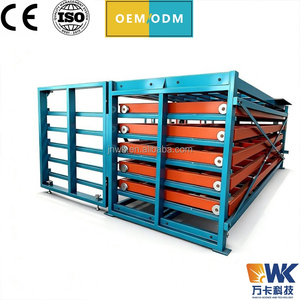
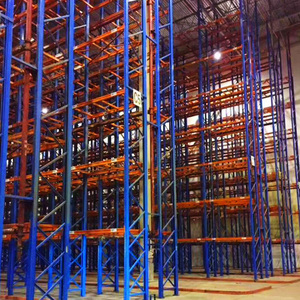
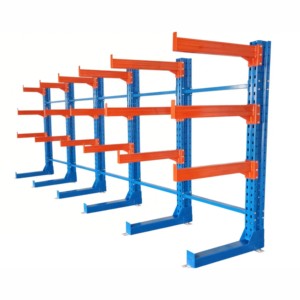
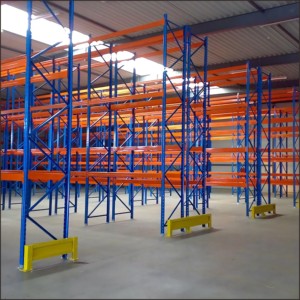
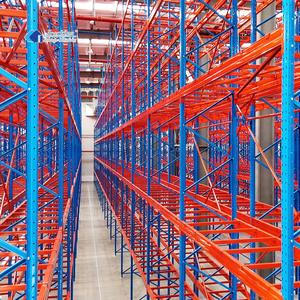
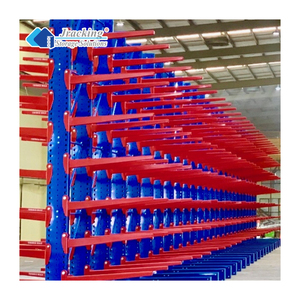
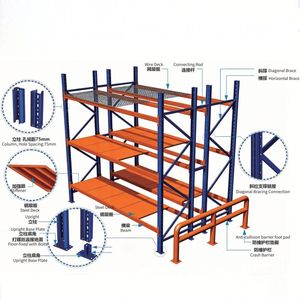
Engineering Comparison Matrix: Selecting the Ideal Industrial Racking Profile
Modern industrial fulfillment facilities cannot rely on a one-size-fits-all rack layout. Structural integrity requires balancing dynamic fork-truck impact tolerances, seismic ground acceleration parameters, and cycle-time velocity metrics. Use this engineering selection rubric when evaluating operational load parameters:
| Storage Topology | Structural Profile | Typical Payload / Level | Space Utilization | Handling Throughput & Accessibility |
|---|---|---|---|---|
| Standard Teardrop Selective | Roll-formed high-tensile steel | 1,000 – 3,500 kg | Baseline (Aisles 3.2m - 3.8m) | 100% Selective, High-Velocity Picking |
| Heavy-Duty Structural Steel | Hot-rolled C-Channel steel | 3,000 – 5,000+ kg | Moderate (Impact Deflective) | Freezer & Heavy Manufacturing Environments |
| Very Narrow Aisle (VNA) | Precision roll-formed & keyed | 1,500 – 3,000 kg | High (+45% Cubic Capacity) | Wire-guided/Rail-guided Turret Truck Handling |
| Dynamic Gravity / Push-Back | Structural channel with nested carts | 1,000 – 2,500 kg | Ultra-Dense (Depth 2 to 6 deep) | FIFO / LIFO Automated Gravity Consolidation |
| Adjustable Arm Cantilever | Structural column & pinned arms | 500 – 4,000 kg / arm | Unobstructed Linear Open Bay | Pipes, Tubing, Timber, and Sheet Metals |
Future Procurement Trends in Industrial Storage (2025–2030)
Strategic capital expenditure decisions in supply chain warehousing have evolved beyond basic cost-per-pallet position. Enterprise procurement teams are recalibrating their Request for Proposal (RFP) criteria toward total cost of lifecycle resilience, regional regulatory assurance, and seamless compatibility with intralogistics robotics.
Integration with Autonomous Mobile Robots (AMRs)
Traditional rack design assumed human-operated counterbalanced lift trucks. Next-generation procurement specs demand bottom horizontal clear clearances, floor-level barcode guidance integration, and ultra-flat floor tolerance alignment accommodating AMRs and automated shuttles without snag risk.
Seismic Base Isolation and Advanced FEA Modeling
With seismic activity threats across North America and global rim regions, structural engineers now mandate finite element analysis (FEA) compliant with IBC, ASCE 7-22, and CSA W47.1 standards. Demand has surged for elastomeric seismic base dampers that reduce earthquake shock transferred to the racking superstructure.
Decarbonization & Circular Steel Sourcing
Global carbon border adjustments and corporate ESG commitments drive tier-1 logistics hubs to audit the carbon intensity of structural steel coils. Procurement protocols prioritize electric arc furnace (EAF) steel sourcing, clean powder-coating formulations, and recyclable modular designs that retain high secondary resale values.
Emerging Structural Innovations & Manufacturing Developments
The manufacturing floor of heavy-duty storage infrastructure has transitioned from generic welding shops to robotics-driven fabrication lines. Below are the key engineering distinctions that differentiate world-class rack manufacturers from commodity producers:
Multi-Bend Cold-Formed Column Geometry
By engineering continuous 6-bend and 8-bend profiles along upright columns, structural engineers maximize the moment of inertia without increasing gross steel tare weight. This yield-strength optimization provides superior resistance to lateral forklift torsional twisting.
Hybrid Thermoplastic Impact Shielding
Instead of rigid sacrificial steel angle guards that transfer collision energy directly into floor concrete anchor bolts, innovative systems deploy composite rubber-armored metal column shields that absorb up to 85% of kinetic energy before reaching the structural steel column.
Automated Laser-Cut Precision Slotting
Tolerances in tall-bay (over 12 meters) installations require millimeter-accurate beam pin registration. CNC robotic punch presses guarantee beam lock connectors engage flush against the upright wall, eliminating beam detachment risks under dynamic seismic loading.
Why Global Operations Partner With Our Industrial Manufacturing Facility
With more than eight decades of steel fabrication heritage, our engineering facility delivers mission-critical racking solutions anchored by verified technical credentials, North American engineering compliance, and complete in-house control from raw steel slitting to continuous automated finishing:
Triple RMI R-Mark Accredited
We are among the elite manufacturers globally holding certified R-Mark credentials spanning Manufacturer, System Design, and Installation verification, rigorously adhering to ANSI MH16.1 specifications.
CSA W47.1 Division 3 Certified Welding
Our AWS and CWB-certified fusion welding protocols are fully authorized under CSA W47.1, enabling seamless permitting and compliance across challenging Canadian and North American cross-border installations.
Engineered American Steel Mill Coils
We source prime, certified high-strength steel coils with complete metallurgical traceability, providing guaranteed minimum yield strength from 50,000 to 65,000 PSI to resist catastrophic structural buckling.
Turnkey PE Stamped Calculations
Every facility layout is modeled by certified application engineers. We provide site-specific structural load calculations with Professional Engineer (PE) stamps accepted by local building and municipal permit authorities.
Automated Anti-Corrosion Electrostatic Lines
Multi-stage chemical pre-treatment and thermal cured powder coating provide exceptional salt-spray and moisture resistance, making our racking ideal for ambient distribution, refrigerated units, and outdoor timber yards.
Dedicated Quick-Ship Stocking Infrastructure
Strategic stocking hubs allow direct dispatch of standardized selective frames, structural channel beams, row spacers, and wire decking to mitigate supply chain disruption for critical facility move-in schedules.
Industrial Racking Procurement FAQ
Detailed answers to critical technical and logistical questions asked by warehouse project managers and facility procurement leads.