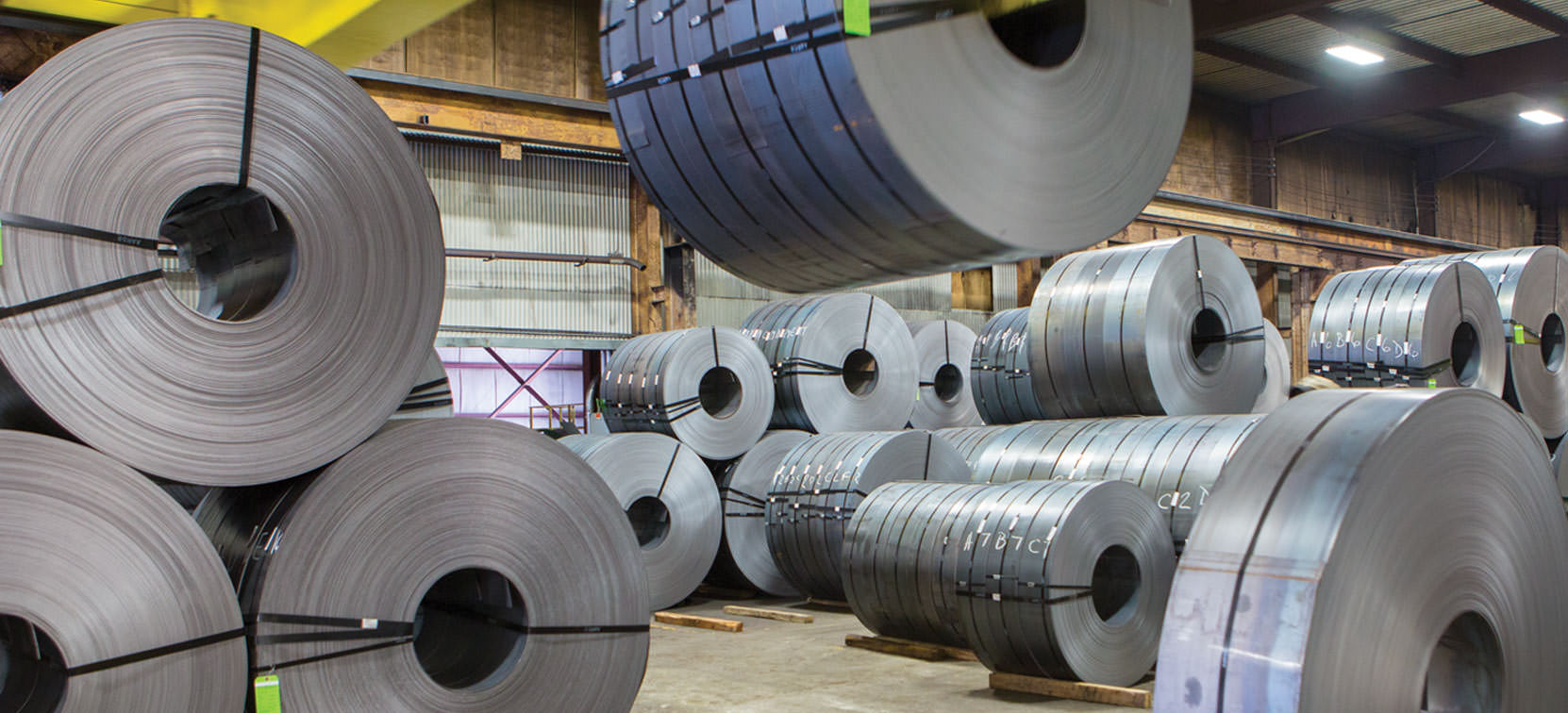
American high-strength steel coil rolls used for precision cold-formed steel racking fabrication at Ridg-U-Rak
ANSI MH16.1 Compliant · American Steel

Cold-Formed Steel Racking: Engineering, Seismic Safety & Global Procurement Architecture

Everything enterprise logistics planners, structural engineers, and facility directors need to evaluate, specify, and procure roll-formed storage rack infrastructure.

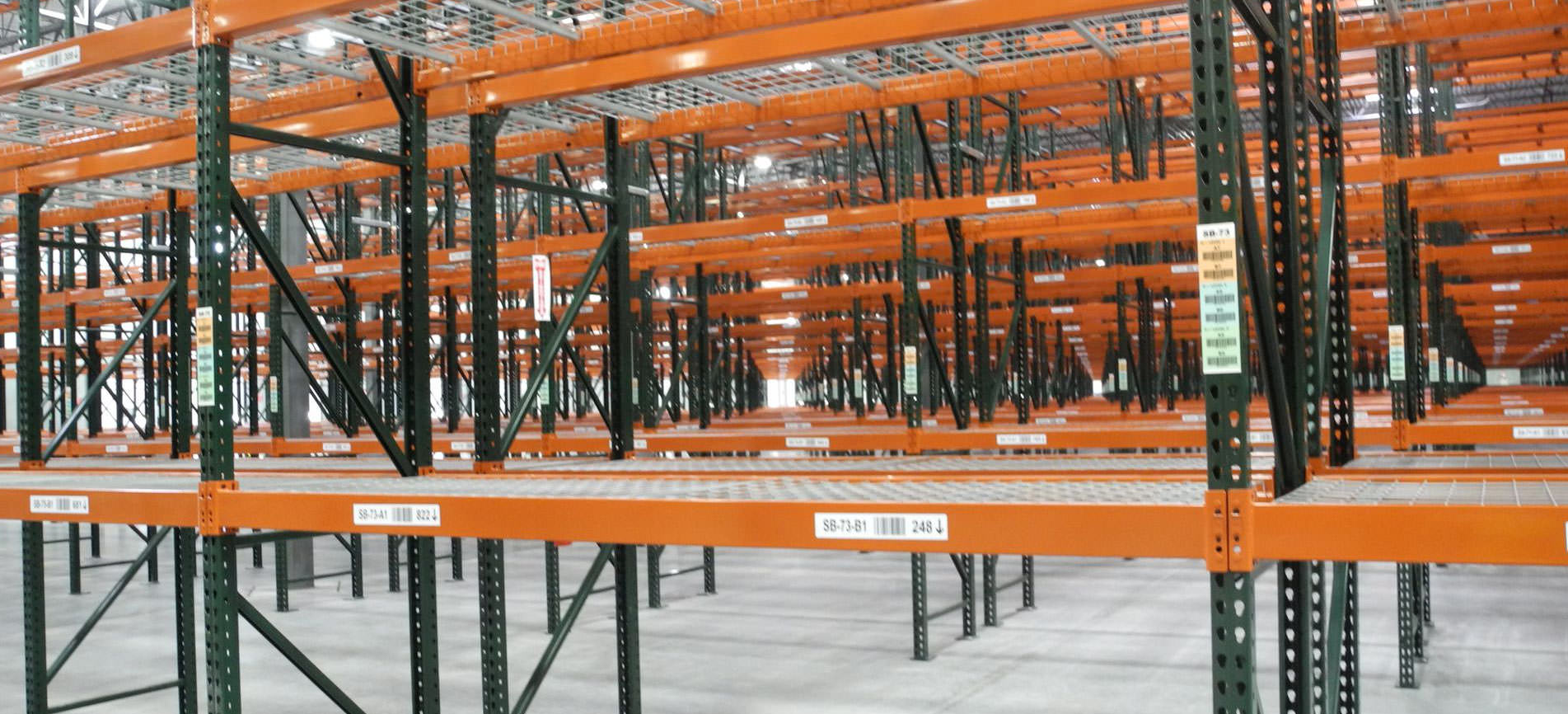
RMI R-Mark certified cold-formed steel selective teardrop pallet rack in a high-cube fulfillment center
RMI R-Mark Manufacturer certification for cold-formed steel racking RMI R-Mark System certification for cold-formed steel racking RMI R-Mark Installation certification for industrial rack systems

North America's Triple R-Mark Authority

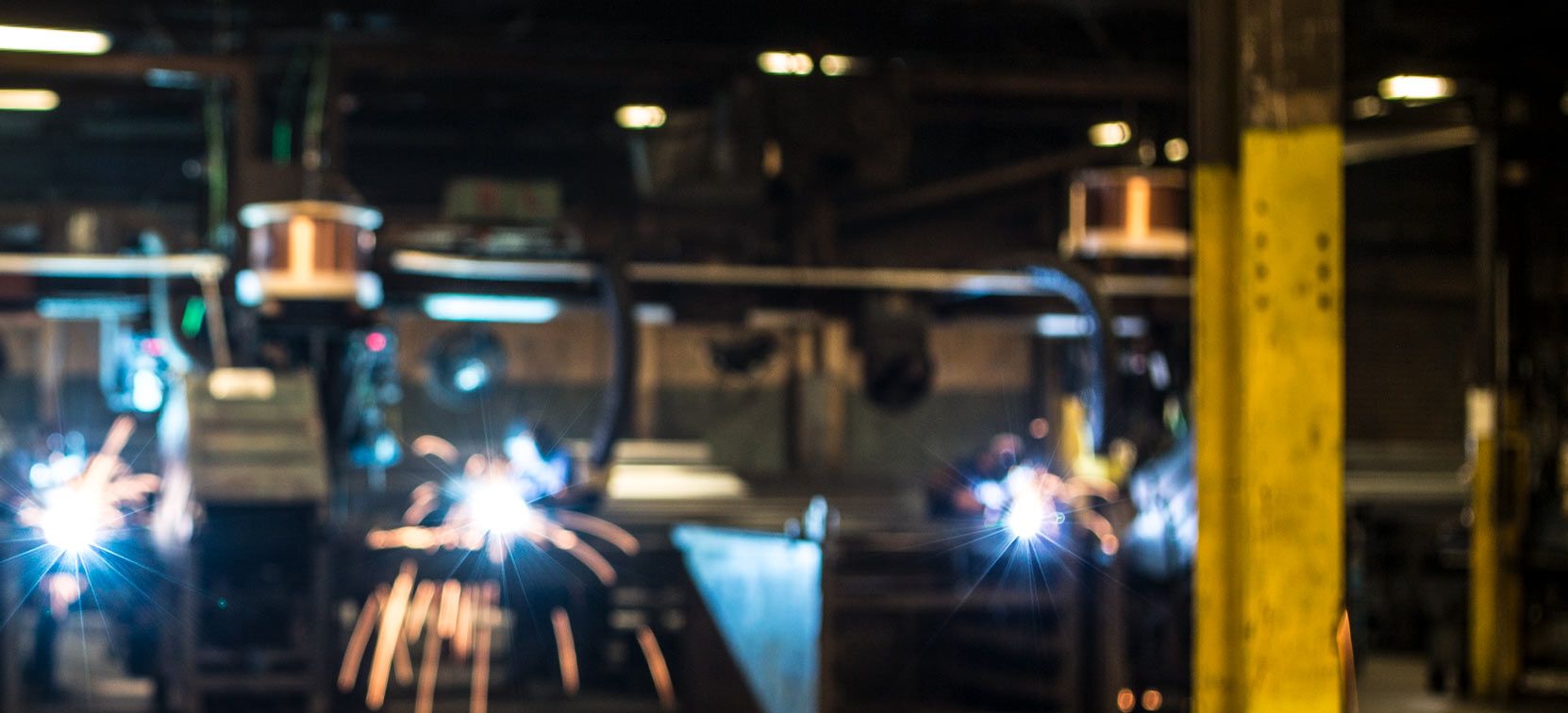
AWS and CWB certified welder assembling upright trusses for heavy-duty storage racks

Precision Cold-Roll Forming & Robotic Fusion Welding

“Cold-formed steel racking balances structural weight efficiency with immense moment resistance when engineered with precision corner radii and controlled yield steel.” Engineering Council · Ridg-U-Rak Storage Systems Inc.
Automated Intralogistics Ready

Engineered for ASRS & High-Cube Density

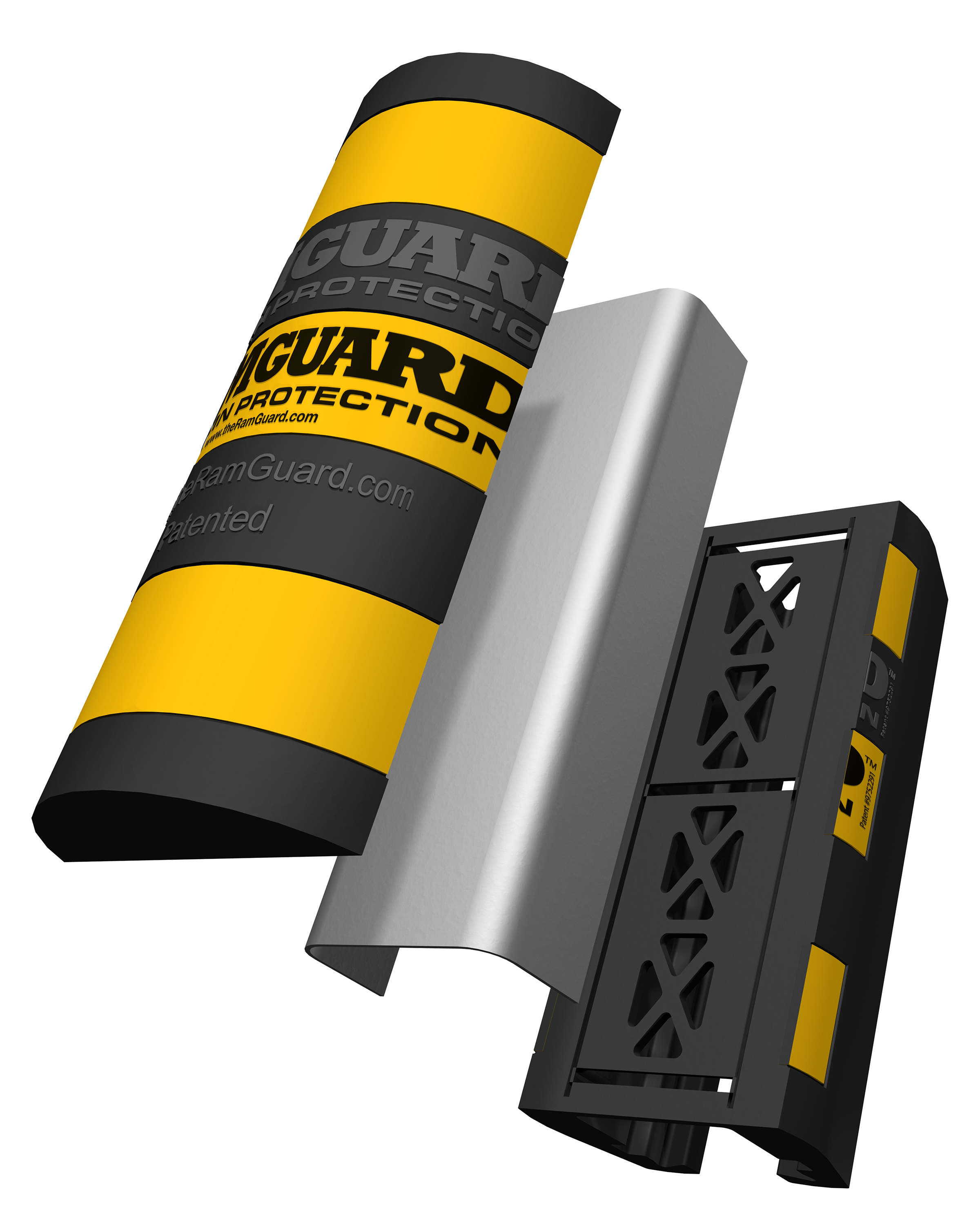
RAMGuard column protector guarding cold-formed steel racking upright column
Patented Upright Defense

Mitigate Cold-Formed Impact with RAMGuard

Deflect forklift outrigger collisions and safeguard thin-walled structural members from local torsional buckling.

Need Technical Stamped Calculations for Cold-Formed Steel Racking?

Connect immediately with licensed professional structural engineers at Ridg-U-Rak Storage Systems Inc. for ANSI MH16.1 and AISI S100 submittals.

Contact Us
Structural Engineering Authority

Cold-Formed Steel Racking: Material Science Meets High-Yield Distribution

Cold-formed steel racking (also widely recognized as roll-formed pallet racking) represents the undisputed backbone of modern omnichannel fulfillment and commercial warehousing across the globe. Manufactured by taking flat sheets of high-strength structural grade steel coils and shaping them at ambient room temperature through progressive roller dies, cold-formed steel racking achieves an unmatched strength-to-weight ratio. As distribution facilities expand vertically to heights exceeding 40 feet to accommodate automated guided vehicles (AGVs) and autonomous mobile robots (AMRs), procurement decision-makers require deep structural clarity regarding cold-formed load mechanisms, elastic buckling thresholds, connector rigidity, and localized stress distribution.

At Ridg-U-Rak Storage Systems Inc., our cold-formed engineering is executed in North East, Pennsylvania, utilizing domestic American coil certified for consistent chemistry and minimum specified yield points up to 55,000 PSI. Through our 80-year heritage and holding the industry's inaugural triple RMI R-Mark accreditations (Manufacturer, System, and Installation), we translate complex structural member behavior into dependable, seismically validated logistics hubs.

80+
Years of Cold-Formed Innovation
55 ksi
High-Yield Certified US Steel
3×
RMI R-Mark Accreditations
CSA
W47.1 Div. 3 Fusion Certified
System Architecture & Selection

Cold-Formed Steel Racking Product Recommendations

Engineered roll-formed geometries tailored to unit loads, dynamic throughput, seismic design categories, and vertical storage optimization.

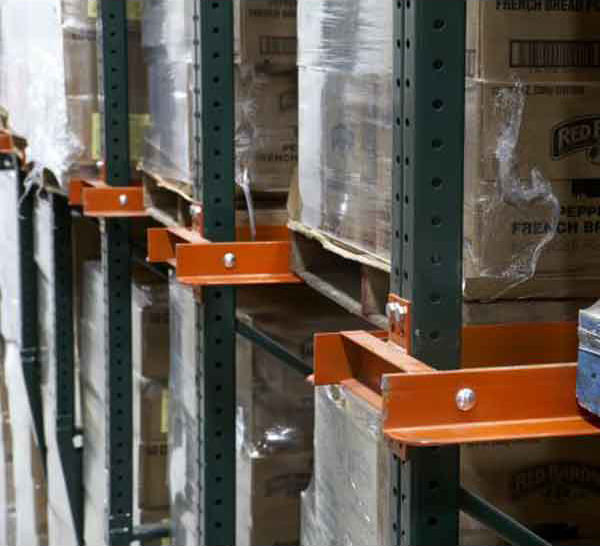
Cold-formed teardrop pallet rack uprights with orange step beams

Teardrop Cold-Formed Rack

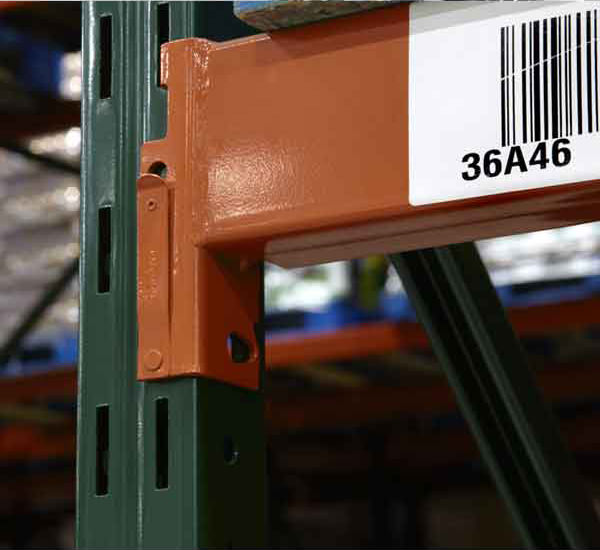
The universal standard in American warehousing. Features roll-formed columns with 2-inch vertical increments and boltless beam-to-column connections. Ideal for selective distribution centers requiring rapid beam relocation, inventory versatility, and cross-compatibility with legacy infrastructure.

Contact Us
Patented six-bend cold-formed slotted pallet rack profile

Patented 6-Bend Slotted Rack

Engineered with proprietary 6-bend roll-formed upright geometry that creates supplementary return flanges. This roll-formed cold work delivers significantly increased sectional properties, resisting torsional warping and lateral-torsional buckling far beyond standard open C-channels.

Contact Us
Very narrow aisle cold-formed steel racking with turret truck guidance

VNA High-Bay Roll-Formed Rack

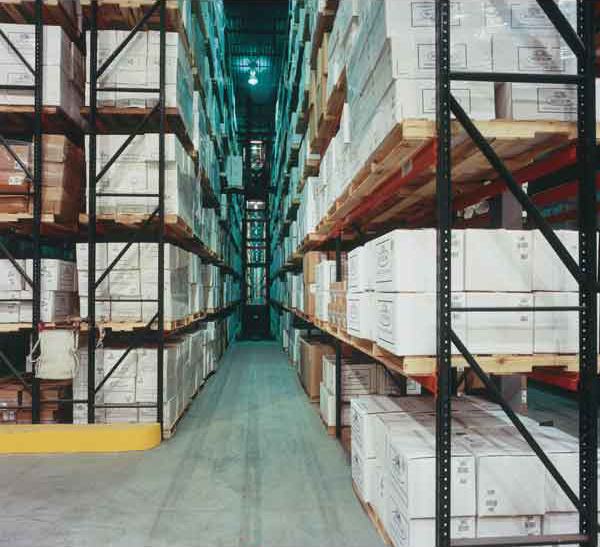
Optimized for tight-tolerance turret truck and wire-guided mobile mast operation up to 45 feet. Cold-formed manufacturing tolerances ensure strict beam levelness, minimum sway under deflection limits, and 100% pallet accessibility with aisle clearances as narrow as 66 inches.

Contact Us
Dynamic push back cold-formed pallet rack system with nested inclined carts

Push-Back Cold-Formed Systems

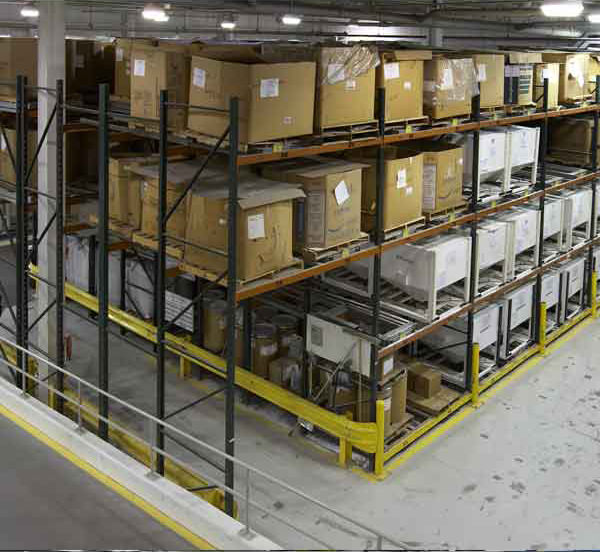
Roll-formed structural frames integrated with heavy-gauge carrier carriages and nested rail channels. Provides 2- to 6-deep high-density Last-In, First-Out (LIFO) storage while isolating dynamic rolling shocks through specially reinforced cold-formed front step beams.

Contact Us
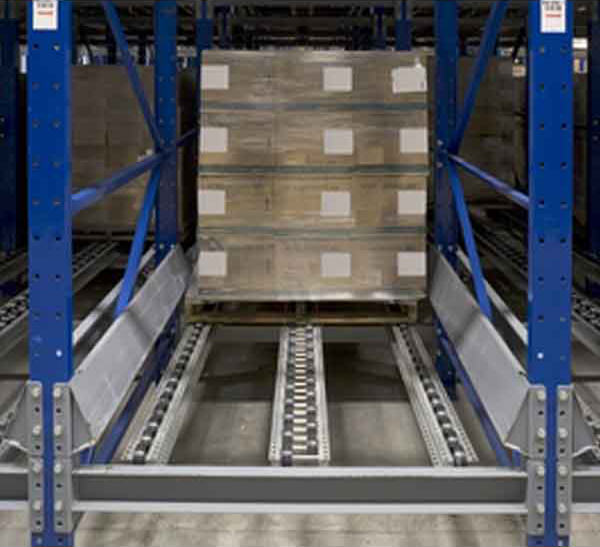
Gravity flow cold-formed steel racking with dynamic roller tracks

Pallet Flow & FIFO Roll-Formed

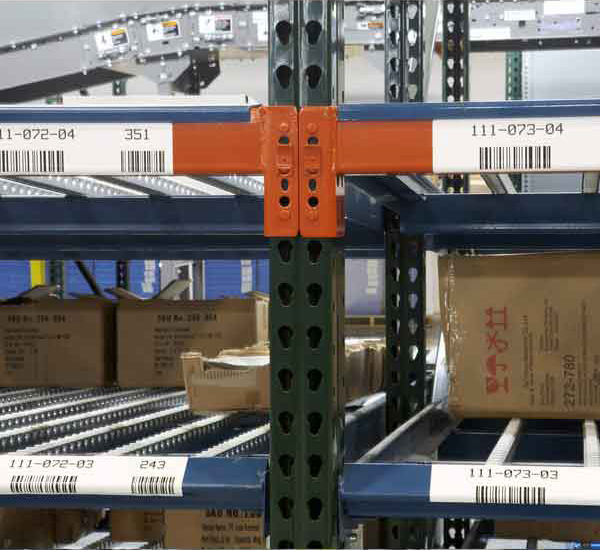
Engineered for high-throughput First-In, First-Out (FIFO) cold storage and grocery logistics. Uses cold-formed steel uprights paired with customized pitch brackets and speed controllers to handle heavy pallet flows under strict fire sprinkler flue clearances.

Contact Us
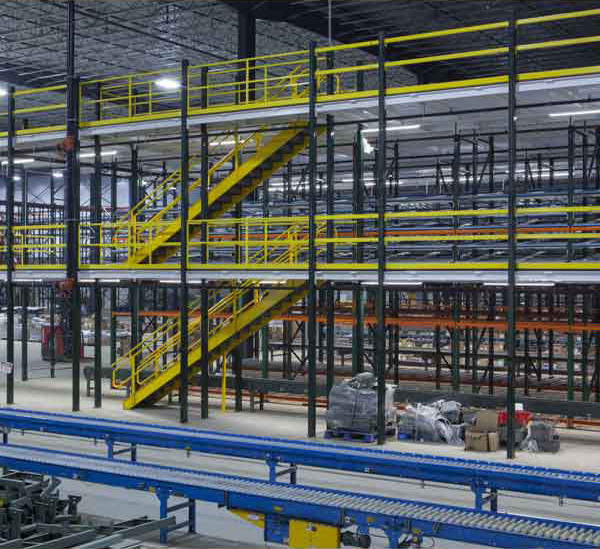
Multi-tier pick module engineered with cold-formed steel uprights and mezzanine flooring

Multi-Level Pick Modules

Engineered multi-tier fulfillment platforms that integrate roll-formed upright trusses with cold-formed C-section joists and bar grating. Delivers exceptionally low slab dead-load while sustaining heavy concentrated live loads from carton conveyors and manual picking personnel.

Contact Us
High-density drive-in pallet racking manufactured from roll-formed cold steel

Drive-In Cold-Formed Racking

Eliminates operating aisles by allowing lift trucks to drive directly into deep storage bays. Cold-formed cant-leg upright bases and heavy gauge formed support rails maximize horizontal space efficiency for large SKU volumes in temperature-controlled spaces.

Contact Us
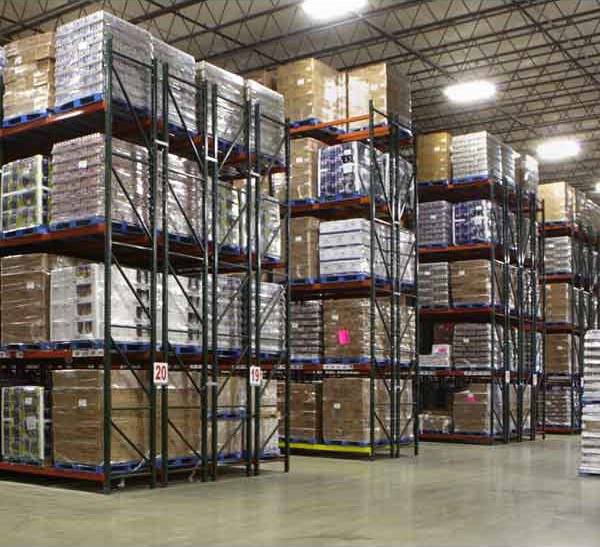
Double deep reach cold-formed steel racking rows

Double Deep Roll-Formed Rack

Stores pallets two rows deep utilizing deep-reach pantograph trucks. Cold-formed roll tooling allows accurate placement of row spacers, cross-ties, and offset frame bracing to disperse lateral forces generated during high-reach insertion and retraction cycles.

Contact Us
Material Science Comparison

Cold-Formed vs. Hot-Rolled Structural Steel Racking

An objective engineering matrix comparing cold-formed (roll-formed) steel profiles against traditional hot-rolled structural steel channels across structural, operational, and financial dimensions.

Design & Procurement Factor Cold-Formed Steel Racking (Roll-Formed) Hot-Rolled Structural Steel Racking Procurement Evaluation Priority
Material Production Process Continuous roll forming of cold high-yield coiled steel (50,000–55,000 PSI) with cold strain-hardening at bend radii. Hot extrusion from billets at molten temperatures (~2,000°F) producing C-channels with thick flanges (typically A36 steel). Weight Efficiency
Strength-to-Weight Ratio Extremely high. Complex profiles and stiffener ribs maximize sectional moment of inertia while minimizing total steel tonnage. Lower. Excess structural dead-load required to achieve comparable flexural rigidity, increasing foundation burden. Foundation Savings
Initial Capital Outlay & Freight Significantly lower (25%–40% cost reduction). Compact nested shipping maximizes trailer cube and weight thresholds. Substantially higher freight tonnage costs and higher raw material per-pound market premiums. Capex Optimization
Adjustability & Modularity Instant adjustment via punch patterns (teardrop/slotted) on 2-inch centers without hand tools or bolt disassembly. Bolted connections require structural ratcheting, high labor hours, and potential re-drilling for beam repositioning. Operational Agility
Impact Resistance (Forklift Collisions) Susceptible to localized flange/web crippling under severe unshielded collisions; mitigated with column guards like RAMGuard. High intrinsic impact resilience due to thick structural flanges (up to 1/4" or 5/16"), ideal for aggressive freezer aisles. Aisle Protection Need
Seismic Performance (ASCE 7 / IBC) Lower self-weight drastically reduces inertial ground-acceleration base shear (V = Cs × W). High structural ductility. Higher structural mass attracts higher base shear forces, necessitating larger floor anchors and heavier floor slabs. Seismic Ductility
Dimensional Accuracy & Tolerances Laser-guided roll forming maintains precise tolerances (±0.015"), vital for robotic automated storage (ASRS). Hot-rolled thermal cooling introduces camber, sweep, and dimensional variance requiring shimming and site adjustments. Automation Alignment

Engineering Notice: Cold-formed steel racking design must account for local buckling, distortional buckling, and flexural-torsional buckling modes per AISI S100 and ANSI MH16.1. Ridg-U-Rak engineers conduct progressive load-testing to substantiate all certified load table limits.

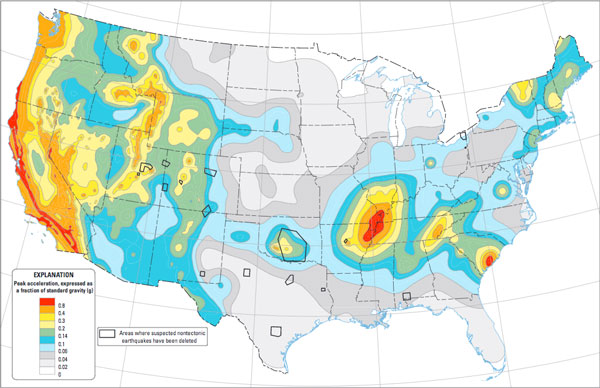
United States seismic zone acceleration map for pallet racking engineering
Seismic Structural Superiority

Engineered Seismic Performance for Cold-Formed Racking

Seismic site categorization (Design Categories A through F) dictates structural frame diagonal bracing, base plate thickness, and floor anchoring geometry. Because cold-formed steel racking reduces dead load compared to structural channels, it naturally experiences lower lateral kinetic forces during an earthquake.

For high-risk zones across California, the Pacific Northwest, British Columbia, and the New Madrid fault line, Ridg-U-Rak Storage Systems Inc. integrates the patented Pellegrino Seismic Base Isolation System. This engineering breakthrough isolates the cold-formed superstructure from destructive ground motions, keeping warehouse operations secure.

  • Full conformity with IBC, ASCE 7-16/22, and National Building Code of Canada (NBC)
  • Eliminates localized column buckling through dynamic base shear dissipation
  • PE-stamped calculations provided across all 50 states and Canadian provinces
Corporate Engineering Leadership

Why Specifiers Partner with Ridg-U-Rak Storage Systems Inc.

Proven operational advantages delivered through over eight decades of dedicated domestic cold-formed manufacturing.

North America's 1st Triple R-Mark Manufacturer

Ridg-U-Rak was the first rack builder to secure complete RMI R-Mark certifications across Manufacturer, System, and Installation classifications, verifying stringent ANSI MH16.1 compliance.

Canadian CWB CSA W47.1 Division 3 Certified

Fully certified through the Canadian Welding Bureau for steel fusion welding, providing certified compliance for warehouse projects across Ontario, Quebec, British Columbia, and Alberta.

100% Certified American Steel Coils

Every cold-formed upright and beam is formed at our North East, Pennsylvania production facilities using American-melted steel with documented metallurgical mill certifications.

Strategic Quick-Ship Stocking Hubs

Extensive distribution inventories staged in Minnesota, New York, New Jersey, Pennsylvania, Indiana, and Puerto Rico ensure immediate availability of standard teardrop racking components.

In-House Application Engineering Teams

Licensed professional structural engineers customize every cold-formed rack bay, addressing clear heights, slab capacities, fork vehicle turning radiuses, and ESFR sprinkler flue spaces.

Dedicated Regional Engineering Support

Our expansive North American network of factory-trained distributors and regional sales managers provides turnkey design, permitting assistance, and ongoing rack safety inspection services.

RMI R-Mark cold-formed steel manufacturer certification seal RMI R-Mark cold-formed steel system certification seal RMI R-Mark cold-formed steel installation certification seal

Independent RMI Certification Audits

Ensure your storage system passes building inspection seamlessly. Ridg-U-Rak Storage Systems Inc. holds all three R-Mark engineering certifications.

Contact Us
Knowledge Base & FAQ

Cold-Formed Steel Racking: Procurement & Technical Questions

Direct answers to the most frequent structural and procurement questions posed by warehouse operations directors, facility executives, and structural consultants.

What exactly is cold-formed steel racking and how is it manufactured?

Cold-formed steel racking (frequently referred to as roll-formed racking) is manufactured by taking coiled structural steel sheets at room temperature and feeding them through a series of progressive rolling dies. Each roll pass incrementally bends the steel sheet into complex profile geometries—such as teardrop uprights, return-flange open channels, or step beams—without requiring molten heat. This cold working process increases the yield point of the steel at the corner bends (strain hardening), allowing lighter-gauge components to achieve structural load capacities comparable to hot-rolled channel steel while significantly reducing overall structural weight.

What engineering standards govern cold-formed steel rack design in North America?

In the United States, cold-formed steel racking is engineered primarily to ANSI MH16.1 (Specification for the Design, Testing and Utilization of Industrial Steel Storage Racks), published by the Rack Manufacturers Institute (RMI) and recognized by the International Building Code (IBC). ANSI MH16.1 directly references AISI S100 (North American Specification for the Design of Cold-Formed Steel Structural Members) for calculating effective section properties, taking into account local, distortional, and flexural-torsional buckling. In Canada, systems must also comply with CSA S136, the National Building Code of Canada (NBC), and welding standards such as CSA W47.1 Division 3 held by Ridg-U-Rak Storage Systems Inc.

How does cold-formed steel racking handle heavy warehouse forklift impacts?

Because cold-formed steel uses thin-walled sections (typically between 14-gauge and 10-gauge steel), concentrated horizontal impacts from forklift forks or chassis outriggers can cause localized web crippling or buckling if columns are left unprotected. To mitigate impact vulnerabilities, Ridg-U-Rak engineers recommend heavy-gauge internal column inserts, welded base reinforcement deflectors, and patented RAMGuard rubber-armored metal column shields that absorb dynamic shock without transferring damage into the cold-formed upright truss.

Why choose cold-formed steel racking over hot-rolled structural steel?

Cold-formed steel racking offers three decisive advantages for standard ambient, retail, and dry distribution facilities: (1) Lower Total Capital Cost: Roll-formed manufacturing uses less raw steel weight per pallet position, resulting in 20% to 40% lower material costs and drastically reduced freight expenses. (2) Adjustability: Boltless pin/hook connectors allow operators to reconfigure beam elevations quickly on 2-inch centers without structural unbolting. (3) Reduced Slab Load: Lower structural dead-weight minimizes the shear demands placed on warehouse concrete floors and foundation footings.

Can cold-formed steel racking be installed in high-seismic risk regions?

Yes. Cold-formed steel racking exhibits strong ductility and energy dissipation under cyclical seismic forces. Because seismic ground forces are proportional to total system weight (F = m × a), the lighter dead-load of cold-formed steel reduces base shear demand compared to heavy structural steel racks. When paired with Ridg-U-Rak's Pellegrino Seismic Base Isolation System, cold-formed racking can be safely deployed in high-acceleration Seismic Design Categories (D, E, and F) while protecting inventory from collapse.

What is RMI R-Mark certification and why should buyers insist upon it?

The RMI R-Mark is an independent quality assurance credential verifying that a manufacturer's cold-formed rack calculations, physical stub-column testing, beam-connector cyclical tests, and manufacturing quality controls rigorously adhere to ANSI MH16.1. Ridg-U-Rak Storage Systems Inc. was the first manufacturer in North America to achieve all three R-Mark certifications: Manufacturer, System, and Installation. Specifying R-Mark certified racking streamlines local municipal permitting, satisfies insurance underwriters, and guarantees structural integrity.

How does cold-formed racking support automated warehousing systems (ASRS)?

Robotic storage systems, AGVs, and high-bay AS/RS cranes require precise tolerances for clear aisle spacing, plumbline plumbness, and beam levelness under maximum load deflection. Cold-formed roll tooling allows Ridg-U-Rak to produce uprights and roll-formed box beams with tight dimensional tolerances (±0.015-inch), eliminating the surface irregularities and variable cambers commonly associated with hot-rolled structural channels.
Direct Consultation

Ready to Engineer Your Cold-Formed Racking Solution?

Collaborate directly with the application engineering group at Ridg-U-Rak Storage Systems Inc. Receive custom CAD layouts, ANSI MH16.1 stamped structural calculations, seismic risk assessments, and rapid project quotes.