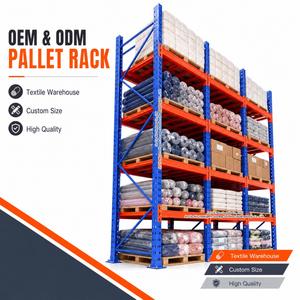
80+
Years Engineering Racks
3×
RMI R-Mark Certified
CWB
CSA W47.1 Div. 3 Welding
100%
High-Tensile Certified Steel
Heavy-Duty Warehouse Catalog
Industrial Pallet Racking & Roller Flow Systems
Precision-rolled structural and teardrop profiles engineered for high throughput, seamless FIFO inventory control, and resilient operation under high humidity and maritime conditions.
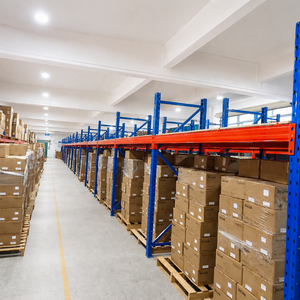
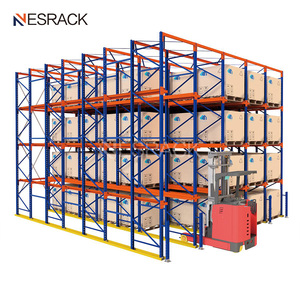
High Density LIFO
Cold Storage Ready
Steel Drive-In High Density Storage Pallet Racking
Inspect System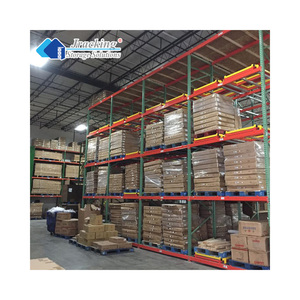
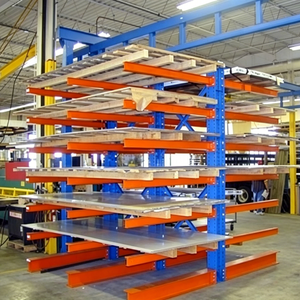
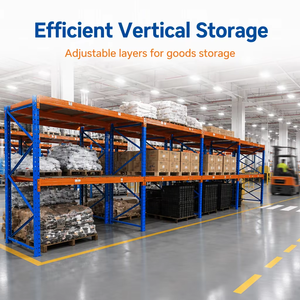
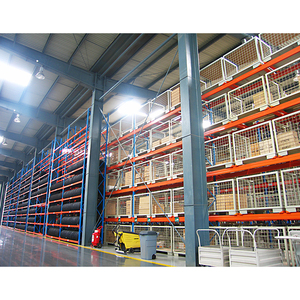
Long Load Profiles
Timber & Steel Bar
Multi-Layer Cantilever Heavy Duty Storage System
Inspect System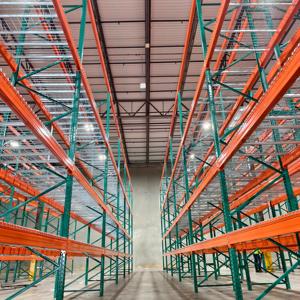
Engineering Overview: High-Throughput Roller Racking for Grenada's Supply Chain
In modern Caribbean distribution, supply chain operators face unique operational constraints: premium industrial square footage, aggressive tropical ambient humidity, coastal salt-air exposure, and reliance on intermittent container ship calls at the Port of St. George's. As a premier original equipment manufacturer (OEM) and global wholesale exporter, we engineer custom dynamic roller racking systems (also designated as gravity flow rack, live pallet storage, and carton roller tracks) built specifically to resolve these logistical hurdles.
Roller racking relies on inclined wheel or roller beds set inside dedicated structural or roll-formed steel upright bays. Palletized loads are loaded from the rear replenishment aisle and travel smoothly down a calibrated 2.5% to 3.5% gradient powered purely by gravitational force. Speed controllers, centrifugal brake rollers, and heavy-duty entry guides ensure that dynamic freight moves steadily without human or forklift transit inside the storage lane, arriving gently at the front unloading face for instantaneous First-In, First-Out (FIFO) order picking.
Key Technical Advantages of OEM Dynamic Roller Storage
Compared to conventional selective racking requiring wide driving aisles for reach trucks, dynamic roller systems consolidate storage footprints by up to 65%. This efficiency enables Grenadian enterprises—ranging from commercial cold stores and bonded port warehouses to beverage distributors and agricultural exporters—to maximize cubic warehouse volume without cost-prohibitive facility expansions.
Autonomous FIFO Flow
Strict rotation safeguards perishable foods, medical supplies, and FMCG consignments from obsolescence or expiration, automatically shifting aged pallet lots to picking faces.
Zero Energy Consumption
Operates entirely on passive gravity kinematics. Eliminates continuous electrical power demands in regions facing high commercial energy tariffs across the Windward Islands.
C5-M Anti-Corrosion
Hot-dip galvanization (HDG) and marine-grade epoxy powder systems prevent rust and surface pitting caused by saline airborne particles along coastal warehouse bays.
Localized Industrial Applications Across the Isle of Spice
Grenada's expanding economy relies on key foundational sectors: agricultural production (nutmeg, cocoa, cinnamon, organic fruits), regional maritime commerce, international tourism hospitality, and brewing/distilling operations. Each of these operational ecosystems introduces distinct pallet interface criteria, cycle times, and climatic challenges that standard light-duty racking cannot safely withstand.
Agri-Export & Nutmeg Storage
High-density gravity roller lanes support bulk storage of cured nutmeg bags, raw cocoa beans, and value-added spices awaiting export containerization at St. George’s port terminal, eliminating carton floor dampness.
Distilleries & Beverage Hubs
Designed for extreme dead-load capacities (exceeding 1,500 kg per pallet position), allowing local rum producers and beverage bottlers to safely accumulate finished palletized goods in continuous push-back or gravity lanes.
Resort & Cold-Chain Logistics
Grand Anse and St. David resort hospitality distribution networks utilize zinc-electroplated roller tracks inside blast freezers (-25°C) and chillers, maximizing throughput of premium seafood and chilled provisions.
Engineering Matrix: OEM Roller Racking Technical Specifications
Our heavy-duty dynamic storage systems are customized according to structural engineering calculations complying with ANSI MH16.1 (Specification for the Design, Testing and Utilization of Industrial Steel Storage Racks) and CSA Standard W47.1 Division 3 structural steel welding qualifications.
| System Attribute | Roll-Formed Teardrop Format | Structural Channel C-Profile | Grenada Compliance Target |
|---|---|---|---|
| Primary Steel Grade | ASTM A1011 / Q355B Cold-Formed Strip | ASTM A36 / Q235B Structural Hot-Rolled | Certified Mill Test Reports (MTRs) |
| Lane Capacities | Up to 1,200 kg / pallet position | Up to 2,200 kg / pallet position | Tested with safety factor ≥ 1.95 |
| Roller Track Pitch | Calculated gradient: 2.8% to 3.5% | Calculated gradient: 3.0% to 4.0% | Adjustable slope brackets |
| Braking Architecture | Centrifugal internal brake rollers | External twin-action brake rollers | Speed maintained < 0.3 m/sec |
| Corrosion Barrier | Electrostatic Powder (60-80μm) | Hot-Dip Galvanized (ISO 1461, ≥85μm) | High Marine Saline / ISO 12944 C5 |
| Seismic & Wind Rating | Seismic Design Category C/D | High-Risk Base Plate Isolation | Compliant with IBC & CUBiC codes |
| Quality Standards | RMI R-Mark | CSA W47.1 Div 3 | Independent 3rd-Party Audited |
Note: Lane slope, roller diameter (50mm vs. 60mm vs. 76mm), roller wall thickness (1.5mm to 3.2mm), and brake frequency are custom-engineered based on the physical deflection profiles of customer wooden, plastic, or metal skids.
Logistics Modernization Trends Shaping Warehousing in Grenada
The logistics landscape in the South-Eastern Caribbean is experiencing a decisive transformation driven by strategic infrastructure modernizations and shifting supply chain methodologies:
Port St. George Expansion
Investments in container handling facilities at Grenada's commercial maritime terminal demand rapid offloading and intermediate staging. Modern logistics parks are transitioning from block stacking to compact gravity flow racks to cycle import containers faster.
E-Commerce & Retail Velocity
Urban retail distributors throughout St. George's, Gouyave, and Grenville are shifting from slow manual pallet retrieval to high-density carton flow pick modules to fulfill omni-channel grocery and hardware orders on tight schedules.
Structural Climate Resilience
With seasonal tropical storm patterns and regional seismic exposure across the Lesser Antilles, structural engineers in Grenada mandate anchored base plate assemblies and braced frames that prevent warehouse structural collapse during catastrophic events.
Manufacturing Authority & OEM Advantages
With more than 80 years of specialized manufacturing pedigree, our facilities deliver world-class engineering precision. We hold triple RMI R-Mark certifications (Manufacturer, System, and Installation), alongside Canadian Welding Bureau CSA Standard W47.1 Division 3 certification. Every beam, column, roller assembly, and seismic anchor is manufactured under rigorous ISO 9001 quality management protocols.
Certified Structural Steel
Built from high-tensile solid steel profiles with structural channel upright options that resist direct forklift impact far better than thin commercial racking.
Full Seismic Base Engineering
Configured with heavy-duty footplates and certified anchoring configurations tested to absorb dynamic seismic energy without catastrophic shearing.
Custom Ocean Container Stowing
Components are modularly nested, bundled, and moisture-sealed for 20ft and 40ft High Cube containers, minimizing freight volume and preventing transit damage during Atlantic shipment.
Direct Factory Technical Support
Full CAD layout designs, load calculation sheets, installation guides, and complete stamped engineering documentation provided for streamlined municipal permitting in Grenada.
Plan Your Warehouse Racking Project in Grenada
Send your building dimensions, clear ceiling heights, and pallet load specifications. Our engineering team will produce an optimized CAD layout and turnkey export quotation delivered directly to your project desk.
Procurement & Engineering Guidance
Frequently Asked Questions for Grenadian Importers
Critical answers concerning import procedures, structural specifications, coastal corrosion protection, and on-site assembly across Grenada.
How are shipping, freight forwarders, and CIF handled into St. George's?
We provide full CIF (Cost, Insurance, and Freight) shipping terms to the Port of St. George's, Grenada. All beams, frames, and roller rails are banded, corner-protected, and packed into standardized 20GP or 40HQ ocean shipping containers with detailed container stuffing plans, making customs clearance straightforward for your local broker.
How does dynamic roller racking withstand tropical heat and salt spray?
For installations in Grenada's marine tropical climate, we offer hot-dip galvanized (HDG) steel rollers, sealed precision stainless ball bearings, and frames finished with heavy zinc phosphate priming followed by architectural polyester powder coatings to completely resist coastal salt air corrosion and pitting.
What happens if standard wooden pallets have bottom board defects?
Gravity flow roller racking relies on uniform contact with the roller track. If your inventory uses varied, broken, or multi-directional wooden pallets, we customize the roller geometry (triple track lines, heavy-gauge full-width galvanized steel rollers, or slave pallet plastic runner plates) and incorporate calibrated centrifugal brake rollers to prevent lane jams.
Are your systems compliant with Caribbean seismic and wind codes?
Yes. Our designs are engineered according to ANSI MH16.1 specifications and can be matched against the Caribbean Uniform Building Code (CUBiC) and IBC standards. We supply enlarged seismic footplates, heavy-gauge anchors, and cross-bay portal bracing designed specifically for the geotechnical and seismic conditions of your building site.
Can local mechanical contractors in Grenada assemble these systems?
Yes. Every shipment includes step-by-step assembly drawings, piece-marked component labels matching the engineering layout, torque guidelines for anchor bolts, and factory assembly instructions. We also provide remote video engineering support to assist your local installation team or facility maintenance crew throughout the build.
What is the typical production and shipping turnaround time?
Standard OEM manufacturing lead time ranges from 3 to 5 weeks depending on custom color selections, structural options, and lane lengths. Ocean transit time from our deepwater container terminal ports to the Port of St. George's typically runs 20 to 28 days, allowing complete project completion within 8 to 10 weeks from drawing sign-off.