Precision Gravity Flow Engineering for Alberta's Supply Chain
Edmonton represents Northern Alberta's core multi-modal warehousing epicenter. From the Nisku industrial corridor to Acheson, heavy-duty First-In, First-Out (FIFO) gravity racking systems are critical to handling cold storage perishables, chemical manufacturing inventory, and oilfield equipment distribution. Sourcing directly from certified factory engineers guarantees compliance with Canadian CSA W47.1 welding divisions, Alberta Building Code regulations, and strict ANSI MH16.1 standards.
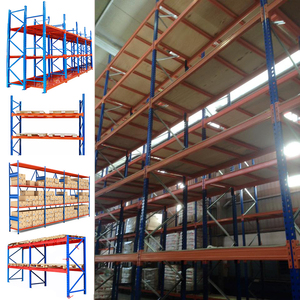
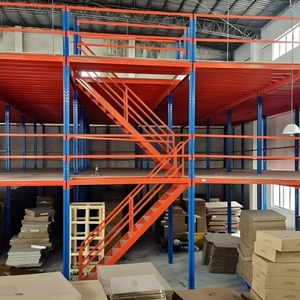
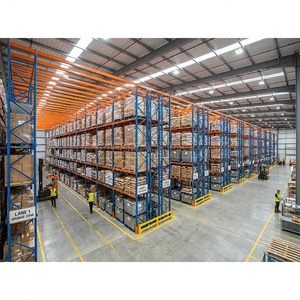
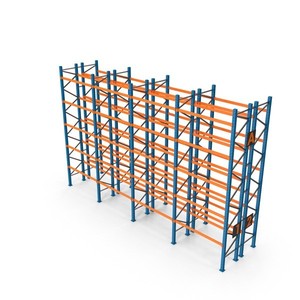
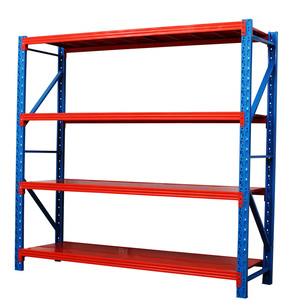
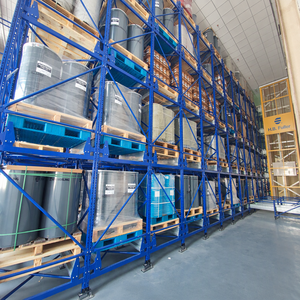
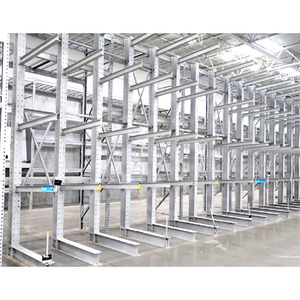
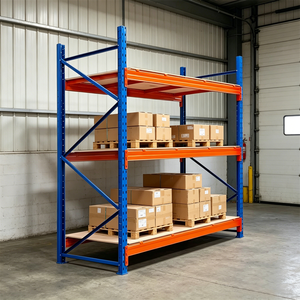
Featured Heavy-Duty Racking Systems Ready for Deployment
Precision-fabricated warehouse components designed for deep-lane pallet flow, automated shuttle execution, structural durability, and high product rotation across Edmonton, Leduc, and Parkland County facilities.
Where FIFO Pallet Flow Drives Efficiency in Edmonton
Edmonton sits at the critical gateway connecting North American supply lines to Northern Alberta energy corridors, the Northwest Territories, and the Alaska Highway. High-velocity FIFO systems unlock operational performance across several distinct regional sectors.
Sub-Zero Cold Chain & Agri-Food (Acheson / Leduc)
Greater Edmonton hosts some of Western Canada’s largest refrigerated and frozen food distribution terminals. In sub-zero cold chain facilities, cubic air volume is extremely expensive to chill. FIFO gravity flow systems condense footprint requirements by up to 50% while guaranteeing that date-sensitive dairy, meat, and packaged perishables rotate naturally without manual stock auditing. Our systems utilize custom low-temperature bearing greases rated down to -35°C to avoid frozen track stalling.
Energy Sector & Chemical Storage (Nisku / Strathcona)
Nisku Industrial Park and Strathcona County handle thousands of pallets of polymer resin, specialized lubricants, drilling additives, and chemical surfactants. Chemical formulations often possess strict shelf lives and batch expiration cycles. Heavy-duty structural FIFO systems guarantee strict batch rotation, preventing chemical settling or shelf expiration while handling concentrated structural pallet loads exceeding 1,500 kg (3,300 lbs) per pallet footprint.
Fast-Moving E-Commerce Hubs (Northwest Edmonton)
Distribution centers clustered near St. Albert Trail, Yellowhead Highway, and Anthony Henday Drive require rapid replenishment cycles. High-velocity FIFO carton flow pick modules and pallet dynamic lanes separate loading forklift aisles from order picking aisles, removing forklift-pedestrian interference and accelerating pick line velocity by up to 40% during peak consumer delivery surges.
Structural Rigidity for Alberta Building Code (ABC) & CSA Compliance
Procuring industrial racking in Edmonton requires compliance beyond basic roll-forming specifications. Racking systems are classified as structural systems under the Alberta Building Code (ABC) and require certified baseplate anchor engineering, strict seismic categorization, and CSA S16 steel design standard adherence. Our factories operate certified under CSA Standard W47.1 Division 3 for steel fusion welding through the Canadian Welding Bureau (CWB), backed by ANSI MH16.1 RMI R-Mark certified manufacturing.
Get CatalogEmerging Warehouse Trends Shaping Edmonton Industrial Storage
Market dynamics in Central and Northern Alberta are shifting rapidly due to rising industrial lease rates, automation adoption, and energy transition demands.
Surging Floor Space Valuations
Industrial real estate lease rates across Edmonton and Strathcona County have reached historic plateaus. Logistics operators can no longer justify wide aisles that dedicate 60% of floor plates to lift truck travel. Dynamic FIFO gravity flow and high-density pallet systems convert conventional aisle waste into productive cubic storage, enabling operations to double capacity without leasing additional acreage or relocating to outer townships.
Hybrid Semi-Automation Integration
As warehouse operators navigate labour availability fluctuations across the Prairies, systems are shifting toward hybrid automation. Modern FIFO racking is frequently paired with automated guided vehicles (AGVs) or radio shuttle vehicles on dedicated channels. This eliminates physical lift-truck entry into storage rack tunnels, cutting aisle transit time and virtually eliminating accidental racking upright impacts.
Severe Temperature Impact Resilience
Warehouses in Edmonton experience extreme winter drafts from dock doors dropping interior temps below -20°C. Standard commercial thin-gauge cold-formed uprights can experience structural embrittlement under heavy repetitive impacts. Wholesalers and factory specifiers are shifting heavily toward thick-gauge structural C-channels with high-impact rubber-armored base column guards (like RAMGuard) to ensure lifelong operational durability.
Comparing FIFO Pallet Flow Against Alternative Storage Systems
Make data-backed decisions based on storage density, SKU accessibility, forklift cycle times, and throughput requirements.
| Storage System | Inventory Rotation | Cubic Density | Picking Throughput | Primary Industrial Use-Case |
|---|---|---|---|---|
| FIFO Gravity Pallet Flow | Strict FIFO | Very High (2 to 20 Deep) | Exceptional (Dedicated Pick Face) | Cold Storage Perishables, Pharmaceuticals, High-Turn Goods |
| Push Back Racking | LIFO Only | High (2 to 6 Deep) | Moderate (Single Aisle In/Out) | Medium Rotation SKUs with Multiple Pallets per Item |
| Drive-In Storage Racking | LIFO Only | Maximum (Up to 10 Deep) | Slow (Forklift Drives Inside Rack) | Bulk Commodity Raw Materials, Large Batch Manufacturing |
| Standard Selective Racking | Any (Manual) | Low (Aisle Dependent) | High (100% Pallet Accessibility) | General Distribution, High SKU Diversification Warehouses |
| 4-Way Radio Shuttle ASRS | FIFO & LIFO Flexible | Ultra High (Deepest Density) | Continuous Automated Flow | High-Volume Fulfillment Hubs, Lights-Out Warehouses |
Engineering Authority, Structural Safety, and Direct Wholesale Value
We combine over 80 years of American and Canadian manufacturing excellence with specialized regional engineering support for facilities across Edmonton and Western Canada.
Triple R-Mark & CSA W47.1 Certified
We are among the select manufacturers in North America to achieve comprehensive RMI R-Mark certifications spanning Manufacturer, System, and Installation. Holding Canadian Welding Bureau (CWB) certification under CSA W47.1 Division 3 guarantees our steel welds satisfy Canadian municipal permitting without structural re-testing delays.
North American Steel Sourcing
Every frame, beam, brake roller, and flow lane is rolled from tested North American high-tensile steel. We refuse lower-grade off-spec imports that exhibit inconsistent wall thickness or tensile variance. Our engineering stamps and certified load plaques withstand rigorous OHS Alberta occupational inspections.
Dynamic Testing & Speed Control
Pallet flow requires fine-tuned dynamics. We test our centrifugal brake rollers and speed controllers with your exact pallet profiles (wood GMA, plastic, steel runner) and actual operational weight spectrums to eliminate runaway pallets, crooked tracking, or lane lock-up.
Frequently Asked Questions by Edmonton Warehouse Buyers
Real-world answers covering Alberta building permits, structural engineering, cold-storage mechanics, and maintenance.
Do FIFO pallet flow racks in Edmonton require Alberta Building Code permits and engineering stamps?
Yes. The City of Edmonton, Strathcona County, and Parkland County safety codes offices classify industrial steel storage racks as structures subject to the Alberta Building Code (ABC). Racking systems exceeding 8 feet (2.44m) in beam height or carrying heavy dynamic loads require a formal development permit and building permit.
Submittals must include stamped structural layout drawings and engineering capacity calculations prepared by a Professional Engineer (P.Eng.) licensed with APEGA (Association of Professional Engineers and Geoscientists of Alberta). Our engineering team delivers full stamped documentation aligned with ABC and ANSI MH16.1 specifications.
How does the Edmonton winter climate affect gravity flow roller mechanisms?
Standard commercial gravity rollers utilize petroleum-based grease bearings that thicken or freeze when warehouse temperatures drop near 0°C to -30°C (common in unheated staging docks or sub-zero freezer warehouses). When grease freezes, roller resistance increases exponentially, causing pallets to hang up mid-lane.
For Edmonton and Northern Alberta installations, we equip gravity flow lanes with sealed, low-friction synthetic low-temperature bearing assemblies rated for continuous duty down to -35°C, ensuring consistent rolling speed regardless of external winter temperatures.
What is the difference between teardrop roll-formed and structural channel FIFO racking?
Teardrop roll-formed racking utilizes high-strength steel coil shaped into an open upright with punch holes. It is cost-effective, quick to install, and easily adjusted on 2-inch increments. However, in high-throughput distribution environments where heavy forklift traffic is continuous, upright columns are vulnerable to impact damage.
Structural channel pallet racking is fabricated from hot-rolled C-channel structural steel with solid bolted connections. It offers significantly higher impact resistance, thicker steel flanges, and longer operating lifespans. We highly recommend structural steel frames for bottom-level flow entries in busy Edmonton cross-docks and cold storage facilities.
How do speed controllers manage deep-lane pallet velocity?
In deep FIFO lanes (ranging from 4 to 20 pallets deep), a 2,500-pound pallet rolling down a 3/8-inch per foot slope will build dangerous kinetic velocity without regulation. We integrate centrifugal brake rollers spaced at calculated intervals throughout the lane.
These internally geared braking devices exert dynamic resistance proportionate to pallet velocity: the faster a pallet attempts to roll, the more braking resistance the centrifugal shoe generates. This keeps the pallet gliding at a controlled walking pace (approx. 20-25 feet per minute) and prevents damaging impacts at the discharge stop face.
Can our existing wooden GMA pallets work on your gravity flow lanes?
Yes, standard 48x40-inch GMA wooden pallets function reliably provided bottom bottom boards are intact and free of split or missing deckboards. For operations utilizing varied pallet materials—including CHEP, PECO, perimeter base, plastic pallets, or steel skid tubs—we customize roller spacing, use full-width steel roller tracks, or incorporate dual split-roller configurations to ensure smooth conveying.
What is the typical factory order to installation lead time for Alberta projects?
Standard quick-ship components (standard frames, step beams, column protectors, wire decks) are dispatched rapidly through our stocking distributor networks. Custom-engineered deep-lane FIFO gravity flow systems, which require lane slope profiling, brake roller calculation, and certified APEGA engineering stamps, generally take 6 to 10 weeks from approved CAD layout to freight delivery at your Edmonton job site.
Plan Your Edmonton Facility Layout Today
Connect directly with our engineering sales specialists. Receive customized lane calculations, capacity specifications, CAD space planning, and complete wholesale pricing.