Industrial Storage Systems & High-Density Racks
Tested cold-formed and structural channel rack solutions built to ANSI MH16.1 specifications, designed to optimize square-footage across Columbus micro-fulfillment centers, e-commerce nodes, and manufacturing facilities.
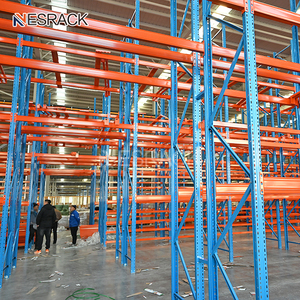
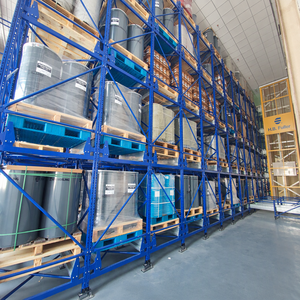
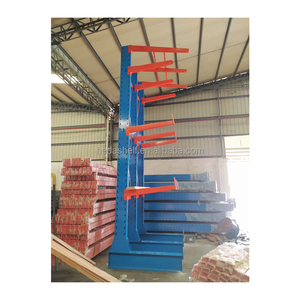
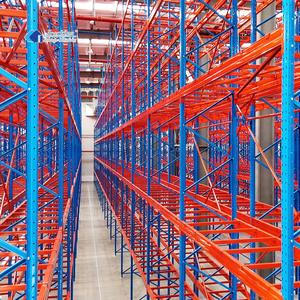
Engineering High-Yield Small Warehouses Across Columbus, Ohio
The Columbus metropolitan industrial submarket—spanning Rickenbacker International Airport, Groveport, Obetz, Plain City, and New Albany—is historically known for mega-scale, 500,000+ sq. ft. logistics boxes. However, the seismic shift toward regionalized e-commerce fulfillment, specialized automotive Tier-1 manufacturing, and the monumental Silicon Heartland semiconductor supply chain has caused an acute deficit in small-to-medium-bay industrial space (warehouses ranging from 8,000 to 50,000 sq. ft.).
Operating a small industrial footprint in Central Ohio presents distinct structural and economic challenges. When industrial lease rates in Franklinton, Hilliard, and Grandview Heights hit historical highs, expanding footprint horizontally is commercially inviable. Operators must solve clear-height constraints, awkward column configurations, and strict Franklin County / City of Columbus municipal building code enforcement. As an authoritative OEM/ODM storage rack manufacturer with more than 80 years of engineering lineage, our mission is to deliver structural, teardrop, and engineered dynamic racking systems calculated explicitly for the compact industrial envelope.
Localized Micro-Hub Application Scenarios in Central Ohio
Standard off-the-shelf distributor catalog racking is frequently inadequate for the specific dimensional profiles and regulatory thresholds demanded by modern Columbus businesses. Our OEM/ODM factory capacity allows us to manufacture bespoke structural channel and cold-rolled configurations engineered for exact applications:
New Albany Semiconductor Ancillary Warehousing
Fabrication tool suppliers and sub-assembly cleanroom vendors servicing Intel’s mega-fab require vibration-resistant, heavy-duty structural steel racking with clean epoxy-coated powder finishes that minimize particulate generation while holding high-density crated components.
Rickenbacker Micro-Fulfillment & 3PL Buffers
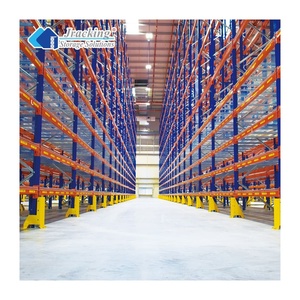
Last-mile postal carriers and fast-moving omnichannel brands operating out of Groveport and Lockbourne utilize our OEM narrow-aisle (VNA) selective systems integrated with carton flow and multi-tier pick modules to satisfy same-day delivery SLAs across the I-270 outerbelt.
Marysville-Columbus Automotive Supply Corridors
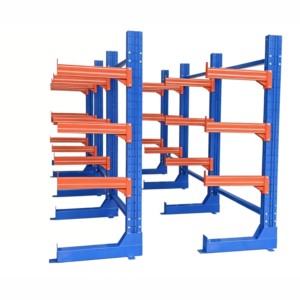
Tier-1 and Tier-2 suppliers along the US-33 corridor handling heavy automotive stampings, engines, and harness reels leverage custom-drilled cantilever systems and reinforced slotted uprights designed to resist recurring high-frequency forklift impact.
Material Specifications: Roll-Formed Teardrop vs. Hot-Rolled Structural Channel
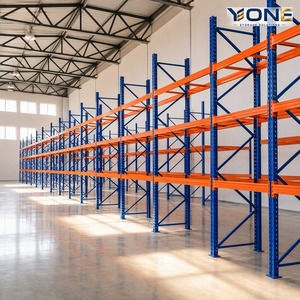
When selecting small warehouse racking systems, Columbus operations managers frequently debate between roll-formed teardrop configurations and structural C-channel steel. The determination must balance initial capital expenditure with fork truck impact frequency, seismic base-plate engineering, and internal building slab capacities.
| Engineering Criteria | Roll-Formed Teardrop (OEM Cold-Rolled) | Structural C-Channel Steel |
|---|---|---|
| Steel Formulation | High-tensile Q235B cold-rolled steel, closed or open-back tubular roll profiles. | Hot-rolled structural C-channel steel (ASTM A36 equivalent), heavy-gauge web and flange. |
| Impact Resilience | Moderate. Ideal when paired with RAMGuard or steel post protectors in medium-traffic bays. | Extreme. Highly resistant to direct forklift mast and outrigger collisions. |
| Adjustability | Tool-Free. 2-inch vertical increments with automatic spring safety locking pins. | Bolted connection with Grade-5 hardware; rigid adjustments on 3-inch or 4-inch hole centers. |
| Weight per Foot | Optimized load-to-weight ratio. Minimal dead-load stress on existing 5-inch concrete slabs. | Significantly heavier dead-weight; requires precise anchor pull-out verification on slab. |
| Target Deployment | Retail staging, clean tech, fast-turn consumer goods, third-party logistics buffers. | Freezer/cold storage, heavy metal fabrications, heavy manufacturing staging aisles. |
Local Columbus Permitting, IBC Fire Codes & Seismic Considerations
One of the most frequent stumbling blocks for small warehouse managers in Columbus is navigating the City of Columbus Department of Building and Zoning Services (BZS) and the Division of Fire. Even for small warehouses, the erection of any pallet rack exceeding 8 feet in top-shelf height is legally classified as an interior storage structure requiring plan review, high-piled combustible storage permitting, and stamped engineering calculations.
Columbus sits within a relatively low-to-moderate seismic hazard zone according to USGS coordinates; however, seismic design category (SDC) B and soil site class ratings must still be structurally accounted for in anchor embedment depth and baseplate sizing. Furthermore, the 2021 Ohio Building Code (incorporating IBC standards) stipulates rigid criteria for longitudinal and transverse flue spaces:
- Transverse Flue Spaces: A 3-inch minimum continuous clearance between pallets must be preserved to facilitate early heat detection and activation of ESFR (Early Suppression, Fast Response) fire sprinkler heads.
- Longitudinal Flue Spaces: Back-to-back rack rows require rigid 6-inch row spacers engineered to prevent inventory from bridging and blocking the vertical discharge channel of overhead fire suppression systems.
- Base Plate Anchor Embedment: Small industrial facilities often feature older 4-to-5-inch non-reinforced concrete floor slabs. Our OEM engineering department custom-calculates base-plate surface areas and multi-hole anchoring patterns to ensure code compliance without exceeding slab shear capabilities.
Why Partner with Us for Custom OEM/ODM Racking
Over 80 years of engineering integrity, backed by triple RMI R-Mark certifications and comprehensive custom metal fabrication pipelines designed for rigorous industrial duty.
Triple RMI R-Mark Certified
We are among the select global manufacturers holding independent RMI R-Mark certifications across all three categories: Manufacturer, System, and Installation. Every beam, column, and weldment rigorously aligns with ANSI MH16.1 specifications.
AWS & CSA W47.1 Fusion Welding
All load-bearing upright assemblies and beam end-connector welds are executed by certified AWS craftsmen and conform to CSA Standard W47.1 Division 3 standards, ensuring flawless penetration and structural reliability under maximum designated static capacities.
Full Turnkey OEM/ODM Engineering
From initial DWG/BIM footprint modeling to structural PE stamps, we provide complete ODM/OEM customization. Our automated roll-forming and CNC laser-cutting lines adapt to non-standard upright depths, custom beam lengths, and bespoke wire mesh or bar grating needs.
Accelerated Midwest Logistics
With stocking hubs strategically situated throughout the Great Lakes and Midwest logistics corridors, standard teardrop uprights, beams, and pallet support bars can be dispatched rapidly to Columbus project sites, dramatically compressing setup timelines.
Patented Impact & Column Protection
We supply specialized accessories including our patented RAMGuard steel-reinforced rubber column protectors, row-end heavy barrier guards, and drop-in safety crossbars designed to mitigate severe warehouse equipment collisions.
Rigorous Structural Calculation Deliverables
Every OEM project is supported with complete structural capacity placards, anchor bolt pull-out calculations, and certified engineering drawings needed for immediate submission to municipal building and fire safety officials.
Frequently Asked Questions & Procurement Answers
Key technical, structural, and regulatory queries commonly raised by warehouse operations teams in Columbus and Central Ohio.
What building permits are required for installing pallet racking in Columbus, Ohio? +
How do I select between standard Teardrop versus Slotted or Structural racks for my small facility? +
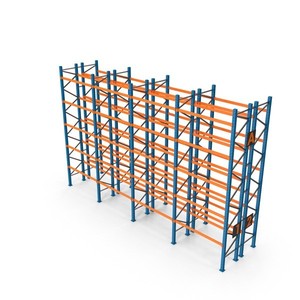
Can our existing concrete warehouse floor slab support 5-layer heavy-duty racking? +
What is the lead time for OEM/ODM custom dimensions and custom powder coating? +
How does the Silicon Heartland expansion in New Albany affect warehouse rack standards? +
Are load capacity plaques legally required on racking in Ohio? +
Future-Proofing Central Ohio Warehousing: Four Key Growth Trends
As the Columbus industrial corridor continues to expand into a premier inland freight and technology capital, warehouse owners and system designers must evaluate long-term trends shaping the next decade of material handling operations:
Vertical Space Optimization
With industrial land around Dublin, Gahanna, and Westerville becoming scarce, small operators are moving away from traditional 12-foot forklift clear spans toward 24-to-30-foot narrow-aisle (VNA) systems and reach-truck configurations, doubling pallet positions per square foot.
Integration of Modular ASRS & 4-Way Shuttles
Small warehouses can no longer afford wide, dedicated forklift aisles. The rapid adoption of modular 4-way pallet shuttle systems allows ultra-dense storage depth (4 to 10 pallets deep), increasing cube utilization by up to 60% compared to standard selective setups.
Hybrid Pallet & Pick-Module Architecture
Driven by e-commerce returns and regional parcel fulfillment, facilities are combining ground-level order-picking carton flow tracks with top-level bulk selective storage pallets, maximizing picker efficiency within tight urban industrial footprints.
Ready to Optimize Your Columbus Warehouse Layout?
Connect directly with our senior application engineers. We provide CAD facility layout evaluations, custom OEM/ODM racking specifications, and code-compliant load calculations tailored to your exact facility dimensions.
Inquire Now