Precision Storage Solutions Engineered for Peak Warehousing Efficiency
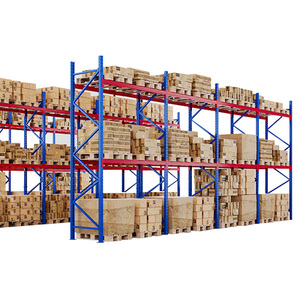
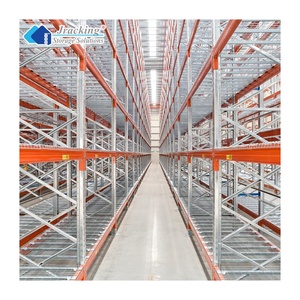
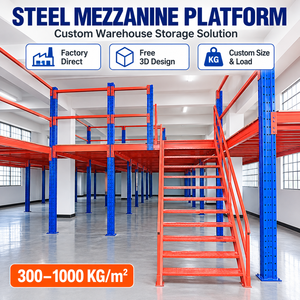
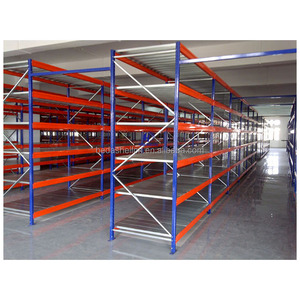
In addition to heavy-gauge custom rack row spacers, our industrial manufacturing lines produce full-scale structural, roll-formed, and dynamic storage configurations certified under North American safety benchmarks.
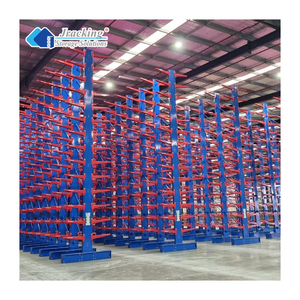
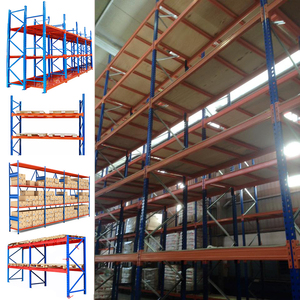
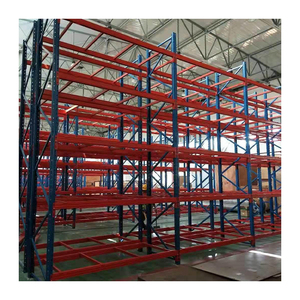
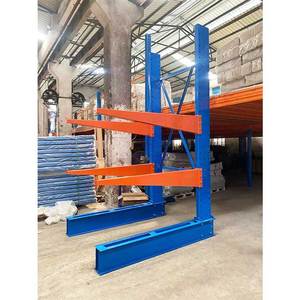
The Structural Mechanics of Row Spacers in High-Bay Storage Racks
In modern industrial storage design, pallet rack row spacers are frequently mischaracterized as mere installation conveniences used to set spacing between back-to-back rack runs. Structurally, row spacers serve as vital transverse load-distributing diaphragms that significantly reduce the effective unbraced length along the cross-aisle direction (down-aisle vs. cross-aisle stability).
Under the Rack Manufacturers Institute (RMI) ANSI MH16.1 Specification for the Design, Testing, and Utilization of Industrial Steel Storage Racks, back-to-back rows tied together via engineered row spacers exhibit combined moment-of-inertia characteristics. By rigidly coupling adjacent upright frames at designated panel points (adjacent to node points and horizontal struts), row spacers elevate the critical Euler buckling limit of slender columns.
Slenderness Ratio (λ = KL/r) Mitigation
When forklift impact forces, asymmetrical pallet loading, or seismic accelerations impart overturning moments, correctly torqued steel row spacers equalize localized displacements across both frames. This prevents isolated torsional buckle and guarantees that height-to-depth ratios exceeding 6:1 (requiring top ties or special base anchor calcs per IBC Section 2209.1) retain structural equilibrium.
Essential Engineering Roles of Row Spacers
-
✓
Flue Space Maintenance (NFPA 13 Standard): Maintains a continuous, clear 6-inch or 8-inch longitudinal flue aperture necessary for early overhead ESFR fire sprinkler penetration.
-
✓
Cross-Aisle Frame Coupling: Links twin upright frames into a rigid structural truss, increasing resisting moment against accidental forklift outrigger bumps.
-
✓
Pallet Overhang Clearance: Prevents standardized 48x40 pallets (which overhang beams by 3 inches front and back) from contacting the opposing load behind them.
-
✓
Building Permit & IBC Compliance: Fulfills Oklahoma City fire marshal requirements and IBC high-piled combustible storage clearance mandates.
Technical Specifications: Heavy-Duty Industrial Row Spacers
Engineered to bolt securely into standard teardrop punchings, structural C-channels, or universal slotted columns without compromising column wall tensile integrity.
| Spacer Model / Series | Standard Flue Gap Span | Material Gauge / Type | Connection Architecture | Sprinkler / Flue Compliance |
|---|---|---|---|---|
| RS-HD-06 (Standard Teardrop) | 6.00 in (152 mm) | 11-Gauge (0.1196") Q235 / ASTM A1011 | Grade 5 Structural Bolts w/ Flange Locknuts | NFPA 13 Compliant (Standard 40x48 Loads) |
| RS-HD-08 (Extended Flue) | 8.00 in (203 mm) | 10-Gauge (0.1345") Structural Steel | Dual-Point Upright Flange Mount | Recommended for 4" Overhangs or Wire Mesh Backstops |
| RS-HD-12 (Pallet Clearance) | 12.00 in (305 mm) | 10-Gauge Box-Channel Reinforced | Through-Bolt or Clamping Plate Assembly | Required for In-Rack Sprinkler Riser Clearance |
| RS-STR-18 (Heavy Structural) | 18.00 in (457 mm) | Structural C3x4.1 Hot-Rolled Channel | A325 High-Strength Structural Bolts | Heavy Industrial, Oilfield Pipe & Aerospace Parts |
| RS-SEIS-24 (Oklahoma Custom) | 24.00 in (610 mm) | Structural C-Beam w/ Gusset Welds | 4-Hole Moment-Resisting Node Fixture | Seismic Design Category C & Building Column Enclosure |
Oklahoma City Industrial Market: Strategic Applications & Facility Scenarios
Oklahoma City occupies a commanding logistical geography at the intersection of three major transcontinental Interstate arteries: I-35, I-40, and I-44. Anchored by the Will Rogers World Airport cargo corridor, Tinker Air Force Base logistics operations, and the bustling industrial parks across West OKC, Moore, Norman, and Edmond, material handling infrastructure in OKC must operate under demanding environmental and load conditions.
Aerospace & Defense Distribution (Tinker AFB Corridors)
OKC is home to the world's premier aerospace maintenance, repair, and overhaul (MRO) hubs. Warehouses servicing aerospace components require specialized cantilever and heavy-duty structural pallet racks equipped with precision row spacers to house oversized turbine crates, tooling jigs, and aviation airframes while ensuring total aisle alignment.
Energy, Oilfield Supply & Heavy Equipment (Mid-Continent Basin)
Oilfield services based in Oklahoma City handle substantial dead-load storage: casing pipe, valves, drilling assemblies, and pump hardware. For structural channel racking, our heavy structural C3-gauge row spacers secure uprights subjected to severe dynamic impact and vibration during heavy forklift manipulation.
Mega E-Commerce & 3PL Fulfillment (I-40 / I-35 Crossroads)
With massive fulfillment facilities spanning South and West OKC, high-velocity picking demands uncompromised sprinkler flue continuity. Our 6-inch and 8-inch certified row spacers lock high-bay teardrop systems into laser-straight longitudinal runs, preventing rack "creep" and passing fire inspections on the first walkthrough.
Evolving Warehouse Trends in Oklahoma City & Municipal Mandates
The Greater Oklahoma City industrial real estate market has experienced rapid absorption of Class A warehouse space exceeding 32-foot and 36-foot clear heights. These modern footprints demand advanced engineering vigilance for storage racks:
- Oklahoma City Fire Marshal Flue Space Audits: High-piled combustible storage permits in OKC rigorously audit NFPA 13 longitudinal and transverse flue spaces. A misaligned rack row caused by undersized row spacers risks immediate red-tagging and suspension of occupancy permits.
- Seismic Design Category Assignment: While historically stable, regions of Central Oklahoma require seismic analysis under the International Building Code (IBC) and ASCE 7-16. Depending on the soil class and geographic proximity to active geological faults, storage racks must resist base shear with engineered anchoring and row-spacer frame tying.
- High-Torque Wind Uplift & Slab Deflection: Oklahoma's extreme atmospheric phenomena—including severe tornadic pressure differentials—demand maximum lateral rigidity across connected building and rack modules to withstand slab micro-deflections.
By specifying factory-stamped, precision-welded row spacers, warehouse operators in OKC eliminate row distortion and ensure perpetual life-cycle performance.
Oklahoma City Project Checklist: Storage Racking
Guarantee a minimum 6-inch net unobstructed longitudinal flue space from pallet edge to pallet edge (typically requiring 8-inch or 10-inch row spacers for pallets with 3-inch overhang).
Per RMI guidelines, install row spacers at the second horizontal beam elevation, top beam elevation, and at intermediate intervals not exceeding 8 to 10 vertical feet.
Never bolt spacers onto unbraced column spans; affix row spacers adjacent to upright horizontal or diagonal frame brace node points for optimal load transfer.
Utilize Grade 5 serrated flange hex hardware or zinc-plated structural assemblies to prevent loosening under heavy warehouse vibration.
Why Logistics Giants Specify Our Storage & Spacing Hardware
With more than 80 years of specialized manufacturing experience, our production capabilities deliver unmatched structural integrity, complete certification rigor, and rapid logistical dispatch throughout North America and the Oklahoma market.
100% Certified American Steel
Forged from high-tensile mill-certified steel. No repurposed scrap or low-ductility alloys; exceptional yield strength engineered to resist dynamic forklift loads.
RMI R-Mark Certified
Industry-leading certification covering Manufacturer, System, and Installation. Full ANSI MH16.1 design validation backed by third-party testing.
CSA W47.1 & AWS Certified
Master welders certified under AWS D1.1 and CSA Standard W47.1 Division 3. Precision robotic and manual seam welds that eliminate weld detachment hazards.
Rapid Regional Delivery
Strategically routed freight lines servicing Oklahoma City, Tulsa, Dallas-Fort Worth, and the greater central corridor with rapid turnaround stock.
Frequently Asked Questions: Pallet Rack Row Spacers in Oklahoma City
Key technical insights addressing local fire codes, installation calculations, and rack integrity questions from Oklahoma warehouse directors and supply chain engineers.
Q How do I determine the correct row spacer length for my OKC warehouse?
Spacer length is dictated by your pallet dimensions and required longitudinal flue space. Standard GMA pallets are 48 inches deep. In a 42-inch deep upright frame, the pallet overhangs front and rear by 3 inches. To maintain a code-mandated 6-inch net flue gap between pallet loads, you must utilize at least an 8-inch to 12-inch row spacer (6" required flue + 6" total overhang clearance = 12" spacer recommended for heavy applications).
Q How many row spacers are required per back-to-back upright pair?
Under RMI specifications, row spacers should be positioned vertically at structural node elevations. For frames up to 16 feet high, a minimum of two row spacers is standard (one at the lowest beam elevation and one near the top). For frames between 20 to 30 feet tall, three to four row spacers are required, evenly spaced and never placed more than 8 to 10 feet apart vertically.
Q Are your row spacers compatible with existing teardrop and structural racks?
Yes. Our precision manufacturing features universal teardrop hook/bolt assemblies, slotted column backer plates, and pre-drilled structural channel connections compatible with all standard brands including Ridg-U-Rak, Interlake, Speedrack, teardrop clones, and heavy-duty structural C-channel systems.
Q What are the Oklahoma City Fire Department regulations regarding longitudinal flue spaces?
The Oklahoma City Fire Marshal enforces NFPA 13 and the International Fire Code (IFC). In facilities with ESFR overhead sprinklers, a continuous, clear vertical flue space of at least 6 inches (152 mm) is mandatory from floor to ceiling. If pallet overhang causes racks to impinge upon this flue opening, the facility will fail life safety inspections. Factory-installed row spacers serve as the certified mechanical proof of permanent flue alignment.
Q Can row spacers prevent rack collapse during a seismic or tornado event?
While no building component can withstand a direct tornado strike, row spacers mechanically unite separate single rows into double-deep monolithic structures. This significantly widens the effective footing baseline, dramatically improving the rack's resistance to overturning moments, wind-induced slab tremors, and horizontal seismic shear forces.
Q Do row spacers need to be welded or bolted?
RMI recommends high-tensile bolted connections (typically Grade 5 or ASTM A325 fasteners with serrated flange locknuts). Bolted row spacers allow for micro-adjustability, frame dampening, and rapid reconfigurability during tenant repositioning, whereas welded connections can concentrate stresses at column perforations.
Ready to Optimize Your Oklahoma City Warehouse Infrastructure?
Consult with our senior material handling engineers today. Receive certified AutoCAD layout reviews, flue space calculations, custom gauge row spacer quotations, and competitive dispatch schedules tailored for your facility.