Heavy-Duty Storage Systems for Puebla Warehouses
From radio shuttle lanes to heavy-duty selective frameworks, explore our certified structural racking platforms designed for rapid distribution across Cuautlancingo, San Martín Texmelucan, and Tehuacán.
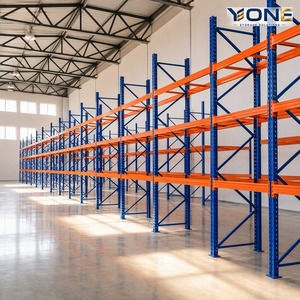
Heavy Duty Selective Steel Pallet Racking Q235B
View Specifications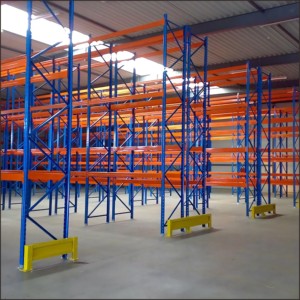
HONGYUN 6-Meter 5-Layer Anti-Rust Industrial Shelving
View Specifications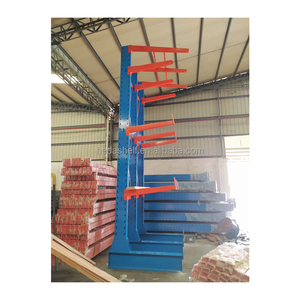
Heavy Duty Cantilever Racking System Solution
View Specifications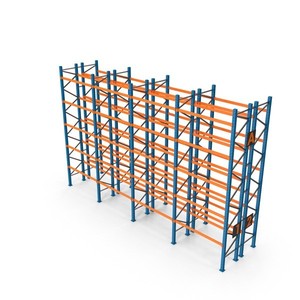
One-Stop Turnkey Steel Racking Layout Solution
View Specifications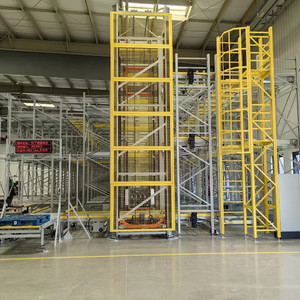
Advanced Pallet Rack with Integrated Conveying System
View Specifications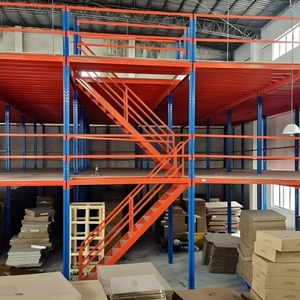
Heavy Duty Mezzanine Floor & Multi-Tier Platform
View Specifications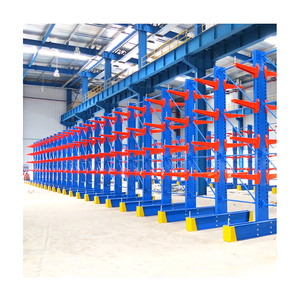
Jracking Heavy Duty Wire Decking Storage Rack
View Specifications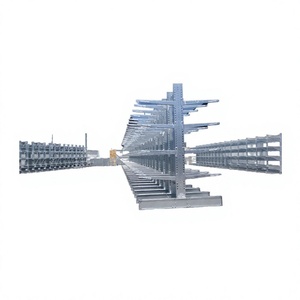
Industrial Heavy Duty Orange-Blue Cantilever Steel Rack
View SpecificationsEngineering Shuttle Pallet Racking for Puebla’s Industrial Real Estate Landscape
The industrial corridor of Puebla—anchored by the Metropolitan Zone of Puebla-Tlaxcala, Parque Industrial FINSA, and the Chachapa-Amozoc logistics corridor—is undergoing an unprecedented transformation driven by nearshoring investments. With land availability tightening and lease rates for prime Class-A industrial properties rising, warehouse managers can no longer afford the floor space wastage inherent to standard selective racking. Shuttle Pallet Racking systems have emerged as the definitive engineering solution, combining the ultra-high density of drive-in racking with the operational throughput and safety of full semi-automation.
As a global direct-manufacturer exporter and wholesale distributor, our radio shuttle systems deploy independently powered motorized robotic shuttles along specialized galvanized rails within deep storage lanes (up to 40 pallets deep). Unlike conventional drive-in systems where forklift operators must physically enter dangerous racking tunnels—increasing frame impact risk, damaging uprights, and drastically extending cycle times—shuttle pallet racking consolidates all material movement to the front aisle face. The forklift driver positions the pallet on the rail head, commands the shuttle via an industrial wireless handheld RF controller or integrated Warehouse Management System (WMS), and the automated cart glides smoothly beneath the pallet to lift, transport, and deposit it at the deepest available position.
Architectural Rigidity and Material Science: Q235B vs. Q355 High-Tensile Steel
Operating high-density shuttle racking in Central Mexico requires meticulous attention to metallurgical integrity. Puebla's proximity to active volcanic systems (Popocatépetl) and regional fault lines means warehouses must comply with rigorous Mexican seismic codes (CFE MDOC and NTC-RCDF). A rack failure in a 12-meter-high installation storing thousands of metric tons is catastrophic. We engineer our upright columns, guide rails, and load-bearing beams with certified hot-rolled and cold-formed structural steel profiles:
- Structural Column Profiles: Roll-formed from premium certified steel, engineered with continuous omega profiles featuring a minimum of 8 reverse-bends to maximize torsion resistance under asymmetric seismic shockwaves.
- Dual-Function Shuttle Railing: Cold-formed 2.5mm to 3.0mm galvanized steel tracks that simultaneously guide the polyurethane wheels of the robotic shuttle and securely support the 1,500 kg static pallet footprint without local track deflection.
- Precision Baseplates & Anchor Chemistry: Heavy-gauge seismic footplates paired with high-tensile chemical wedge anchors designed to absorb shear and uplift tension loads dynamically, meeting both RMI (Rack Manufacturers Institute) and Mexican building safety mandates.
LIFO & FIFO Configurable
Easily switch between First-In, First-Out (FIFO) for perishable agri-food batches and Last-In, First-Out (LIFO) for standardized automotive assemblies.
LiFePO4 Lithium Powered
Equipped with thermal-regulated lithium iron phosphate power cells delivering 8 to 10 hours of non-stop operation, with hot-swap capabilities under 60 seconds.
Multi-Sensor Failsafes
Integrated laser scanners, deceleration sensors, obstacle arrestors, and anti-slip track detectors guarantee zero collision rates during rapid lane transfers.
Technical Performance Matrix: Shuttle vs. Alternative High-Density Systems
Procurement directors and supply chain engineers evaluating capital investments across Puebla can review the operational performance and economic metrics below:
| Performance Indicator | Radio Shuttle Racking | Drive-In Pallet Racking | Push-Back Cart Racking | Standard Selective Racking |
|---|---|---|---|---|
| Volumetric Space Utilization | 80% – 88% (Ultra High) | 65% – 75% (High) | 60% – 70% (Medium) | 35% – 45% (Low) |
| Aisle Pallet Handling Speed | Fast (<35 sec per lane transit) | Very Slow (Forklift drives in) | Moderate (Gravity assisted) | High (Immediate access) |
| Rack Frame Impact Vulnerability | Extremely Low (Forklift stays in aisle) | Critical (High collision frequency) | Low | Moderate |
| Operational Logic | Both FIFO & LIFO Supported | LIFO Only (FIFO requires 2 aisles) | LIFO Only | 100% Selective Access |
| Maximum Practical Storage Depth | Up to 40 Pallets Deep | 8 – 10 Pallets Deep | 4 – 6 Pallets Deep | 1 – 2 Pallets Deep |
| Cold Storage Operating Range | Down to -30°C with Cold-Rated Motors | Down to -30°C (Slow forklift travel) | Down to -20°C (Risk of cart icing) | All Temperatures |
Design Your Custom Puebla Warehouse Racking Layout
Direct export wholesale pricing, structural seismic calculations stamped to Mexican norms, and complete DDP/CIF Veracruz logistics coordination. Speak directly with our project engineering department today.
Puebla Regional Industry Profiles & Specialized Storage Applications
The state of Puebla occupies a pivotal strategic junction along Mexico’s National Freight Highway 150D, linking the industrial manufacturing centers of Mexico City and the Bajío with the Atlantic maritime gateway at Port of Veracruz. Over the past decade, logistics investments have concentrated into distinct core verticals, each demanding customized racking configurations.
1. Automotive OEM & Tier-1 Manufacturing (Cuautlancingo & San José Chiapa Hubs)
Surrounding the massive assembly plants of Volkswagen de México and Audi México, an extensive network of Tier-1 and Tier-2 suppliers operates under rigid Just-In-Time (JIT) and Just-In-Sequence (JIS) mandates. Component stamping facilities, wiring harness plants, and injection molding operations generate high-volume batches of standardized stillages and automotive metal bins. Traditional selective racking consumes far too much floor space, whereas drive-in systems lack the pallet retrieval speed required to prevent line-side replenishment bottlenecks.
Our shuttle pallet racking integrates seamlessly with heavy-duty automotive containers up to 1,500 kg per position. By organizing entire lanes according to specific automotive part families (e.g., bumper facias, chassis sub-frames, transmission castings), Tier-1 plants achieve continuous buffer staging without fear of forklift frame strikes damaging fragile, painted, or precision-machined auto components.
2. Cold Chain Distribution & Agro-Processing (Tehuacán & Huejotzingo)
Puebla’s agricultural belt and food processing corridors—famous for poultry production in Tehuacán, processed snacks, and vegetable packaging—face escalating refrigeration utility costs. In refrigerated and blast-freezer facilities operating between 0°C and -28°C, every cubic meter of conditioned air represents ongoing operational expenditure. Standard selective aisles waste up to 60% of refrigerated cube volume on forklift travel corridors.
Deploying cold-store-engineered radio shuttle racking condenses refrigerated storage footprints by more than 50%. Our shuttle systems are fabricated with low-temperature synthetic lubricants, hermetically sealed IP65 electrical circuits, and internal battery heating elements that prevent lithium capacity loss in sub-zero environments. Furthermore, because the shuttle operates in FIFO mode, food manufacturers retain strict expiration date lot control, drastically reducing product spoilage.
3. Retail, Apparel, and FMCG Central Distribution Centers (FINSA & Chachapa)
Puebla’s central geographic proximity enables retailers and consumer packaged goods (FMCG) wholesalers to supply Puebla City, Tlaxcala, Veracruz, and Southern Mexico from single centralized distribution hubs. These facilities handle heavy seasonal volume surges. Shuttle racking allows operators to run high-density buffering near shipping docks, where automated shuttles pre-stage outbound delivery pallets overnight without requiring a fleet of active forklifts.
Macro Trends Shaping Warehousing Infrastructure Across Puebla
The ongoing nearshoring wave into Mexico, accelerated by the USMCA (T-MEC) trade framework, has driven warehouse vacancy rates in Puebla down below 3%. Multinational manufacturers relocating operations from East Asia require facilities that match international Industry 4.0 automation benchmarks while remaining financially agile.
Nearshoring Pressure on Cubic Footprint Optimization
Historically, developers in Central Mexico expanded warehouses horizontally when storage limits were reached. Today, industrial land acquisition costs in established zones like Cuautlancingo have made horizontal expansion economically unviable. Companies must capitalize on vertical clear heights of 10 to 14 meters. Shuttle racking provides the structural bridge between legacy manual warehousing and capital-intensive multi-million-dollar AS/RS stacker crane systems, yielding 80% of the operational density benefits at less than one-third of the capital expenditure.
Labor Ergonomics, Safety Protocols, and NOM-006-STPS Compliance
Mexican labor safety regulations—notably NOM-006-STPS-2014 regarding the management and storage of materials—are enforcing stringent workplace safety standards across national industrial parks. Traditional drive-in racking is notoriously dangerous, accounting for a high percentage of forklift-to-column collisions and operator entrapment hazards. The radio shuttle architecture eliminates forklift transit within storage tunnels entirely, safeguarding operating personnel, avoiding expensive structural repairs, and keeping insurance premiums at baseline levels.
Direct Factory Exporter Advantages: Why Puebla Wholesalers Partner with Us
Sourcing heavy-duty industrial racking from our international manufacturing complex provides Mexican enterprises, engineering contractors, and material handling distributors with uncompromised manufacturing standards, transparent engineering support, and unbeatable factory-direct economics.
RMI & ISO Structural Compliance
Every frame assembly is validated per ANSI MH16.1 specifications and finite element stress analysis (FEA), ensuring complete structural safety under cyclic peak loading.
Direct Port of Veracruz Route
Direct sea-freight corridors into the Port of Veracruz allow rapid overland customs clearance and transit to Puebla industrial sites within 48 to 72 hours of port discharge.
Turnkey AutoCAD & BIM Support
Full 3D layout simulation, column-to-sprinkler coordination, flue space alignment, and certified anchorage documentation supplied for municipal building permits.
Whether you require a standard 500-pallet buffer installation or an enterprise-scale 15,000-pallet logistics platform, our production lines handle continuous coil-stamping, precision robotic welding, automated 12-stage pre-treatment, and high-adhesion electrostatic powder coating with consistent dimensional precision.
Frequently Asked Questions: Purchasing Pallet Racking in Puebla
Real-world insights for warehouse managers, industrial procurement buyers, and plant directors operating in the Mexican market.
Puebla falls within Mexican Seismic Zones B and C (moderate to high acceleration). Our structural engineers calculate upright column dimensions, cross-bracing frequency, and baseplate thickness in strict accordance with the CFE Seismic Manual (Manual de Diseño de Obras Civiles) and ANSI MH16.1. We supply stamped calculations to ensure compliance with municipal Protección Civil requirements.
Our shuttles are engineered to handle the standard Mexican GMA pallet (48" x 40" / 1200 x 1000 mm), European Euro-pallets (1200 x 800 mm), and custom automotive wire cages or steel stillages up to 1,500 kg per pallet position. Optical pallet sensors dynamically detect varying bottom board orientations.
We offer flexible Incoterms including FOB, CIF Veracruz, and complete DDP (Delivered Duty Paid) to your warehouse dock in Puebla. We coordinate shipping lines directly into the Port of Veracruz, where customs brokers manage Mexican tariff classifications (fracción arancelaria) and dispatch flatbeds along Highway 150D straight to your facility.
Shuttle carts are designed for heavy industrial use with brushless DC motors, hardened polyurethane drive wheels, and sealed bearings requiring minimal maintenance. We provide complete maintenance manuals, essential spare parts kits (sensors, batteries, rollers), and remote diagnostic support to ensure 99.8% equipment availability.
Yes. We supply a specialized Cold-Store Edition built for temperatures as low as -30°C. This version includes heated internal electronics compartments, cold-grade LiFePO4 battery chemistry, stainless steel fastener assemblies, and low-temperature track friction treatments to eliminate wheel spin caused by ambient humidity freezing.
The system is completely modular. You can start with a basic shuttle racking framework and a minimum number of shuttle units (e.g., 2 shuttles servicing 12 lanes), and scale capacity simply by adding additional shuttle carts into the aisles as your hourly pallet retrieval volume ramps up.
Request Full Engineering Drawings & Wholesale Pricing for Puebla
Connect with our technical sales division to receive 2D/3D AutoCAD layout proposals, load-capacity certificates, and project quotation timelines tailored to your facility.