Jracking Heavy Duty Warehouse Cantilever Storage Rack for Supermarkets
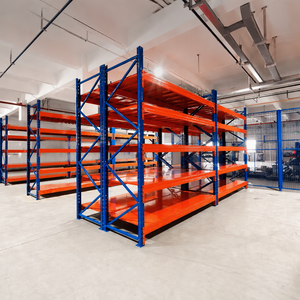
Unobstructed clear-span linear storage engineered for building supplies, PVC piping, timber, and retail warehouse backrooms.
View Technical SpecsPrecision-fabricated selective, cantilever, narrow-aisle, and dynamic gravity roller flow racking systems engineered to ANSI MH16.1 specifications and pre-configured for Caribbean maritime consolidation.
Unobstructed clear-span linear storage engineered for building supplies, PVC piping, timber, and retail warehouse backrooms.
View Technical Specs
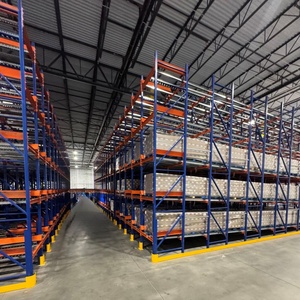
Heavy-gauge upright columns with high-yield load beams built for port container de-stuffing and palletized distribution.
View Technical Specs
Precision-inclined roller tracks with automatic speed controllers ensuring controlled FIFO rotation for date-sensitive inventory.
View Technical Specs
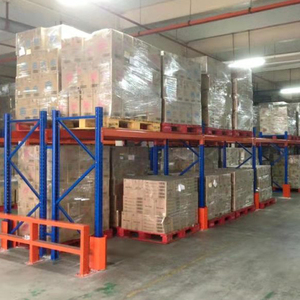
100% selective beam access accommodating varying pallet heights, custom bay dimensions, and multi-tier mezzanine pick paths.
View Technical Specs
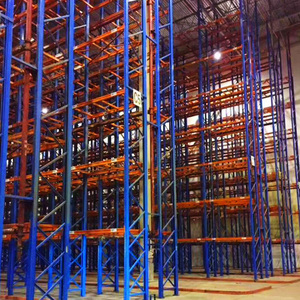
Heavy profile upright frames optimized for high-density warehouse storage of commercial beverages, machinery, and raw supplies.
View Technical Specs
Versatile post and beam configurations designed for dynamic warehouse configurations and seasonal bulk storage surge capacity.
View Technical Specs
Standard North American teardrop pattern with patented locking pins for rapid, secure assembly and seismic anchoring.
View Technical Specs
Commonwealth standard pitch configuration engineered to integrate seamlessly with Caribbean legacy storage layouts.
View Technical SpecsIn supply chain networks serving Castries and the wider Lesser Antilles, physical footprint scarcity is a primary cost driver. A **Roller Racking System** (commonly classified in material handling engineering as *Gravity Pallet Flow* or *Dynamic Live Storage*) fundamentally alters warehouse throughput economics. Rather than utilizing static selective aisles that dedicate up to 60% of floor volume strictly to forklift thoroughfares, dynamic roller racking channels pallets down inclined wheel tracks using natural gravitational force.
The core mechanism involves precision-pitched wheel tracks engineered at a slope ranging from 3.5% to 4.5% (approx. 7/16-inch to 1/2-inch per foot), determined precisely by pallet composition (hardwood, virgin polymer, or corrugated skids). Each flow lane is structurally stabilized with centrifugal speed controllers (brake rollers) placed at calculated intervals. These speed controllers govern pallet velocity to an OSHA-compliant threshold not exceeding 0.3 meters per second (60 feet per minute), avoiding load jarring and structural fatigue.
At the discharge face, advanced automatic pallet separators mechanically isolate the lead pallet from the hydrostatic queue pressure of the trailing pallets behind it. This safety mechanism guarantees that when a forklift operator in a Castries terminal docks their tines into the front pallet, zero back-pressure transfers to the lift truck mast, completely preventing runaway load incidents and structural deflection.
| System Architecture | Flow Principle | Floor Space Utilization | Forklift Aisle Demand | ANSI MH16.1 Deflection Ratio | Ideal Castries Application |
|---|---|---|---|---|---|
| Roller Racking (Gravity Pallet Flow) | FIFO (First-In, First-Out) | Up to 85% Density | 2 Aisles (Charge & Pick Face) | L/180 or L/240 Under Maximum Dynamic Load | Cold Stores, Port Container Consolidations, Food & Beverage Wholesale |
| Push-Back Cart Racking | LIFO (Last-In, First-Out) | Up to 70% Density | 1 Operating Aisle per Bay Group | L/180 Standard Compliance | Medium-turnover multi-pallet SKU buffering in Cul de Sac industrial parks |
| Standard Selective Teardrop | Random Access | 40% to 50% Density | Aisle Required Every Single Rack Row | L/180 Roll-Formed Deflection | General retail spare parts, low-velocity SKU staging, hardware showrooms |
| Drive-In / Drive-Through | LIFO or FIFO | Up to 75% Density | Shared Truck Entry Corridors | Engineered Structural Channel Steel | Homogeneous bulk seasonal agricultural exports and dry beverage blocks |
*Note: Structural capacities, frame depths (ranging from 2-deep to 20-deep roller lanes), and base isolation systems are custom engineered under ANSI MH16.1-2021 and local seismic requirements (Saint Lucia IBC Seismic Zone Category D equivalent).
From deepwater port deconsolidation to steep-incline island geography, explore how dynamic roller racking and heavy-duty structural steel solve Saint Lucia's distinct warehousing bottlenecks.
Port Castries handles the lion's share of Saint Lucia’s break-bulk and containerized cargo under the Saint Lucia Air and Sea Ports Authority (SLASPA). Cargo freight stations and bonded customs warehouses along the harbor require rapid turnaround for Full Container Loads (FCL) and Less than Container Loads (LCL). By deploying 4-deep to 8-deep roller racking systems, logistics operators achieve seamless FIFO deconsolidation directly from port discharge, cutting staging floor footprint and accelerating customs clearance turnover.
Situated immediately south of the capital, the Cul de Sac Valley serves as Saint Lucia's primary light-industrial, energy, and distribution zone. Industrial suppliers in Cul de Sac handle heavy mechanical components, electrical infrastructure, and drum storage. Here, structural steel pallet racks fabricated from hot-rolled American structural channel (ASTM A36/A572) provide essential torsional rigidity and forklift impact resistance, outlasting fragile roll-formed racks when heavy commercial vehicles maneuver in restricted turn bays.
The commercial arteries connecting Castries to Marisule, Rodney Bay, and northern tourist hubs concentrate high-velocity supermarket distribution centers and hospitality suppliers. Chilled and refrigerated warehouse cubic space commands exceptional power costs due to island energy tariffs. Gravity roller flow racking maximizes volumetric storage density inside blast freezers and cold rooms by eliminating redundant aisles, reducing thermal loss and optimizing energy expenditure per metric ton of stored perishable poultry, dairy, and produce.
Industrial procurement managers in Castries face environmental and geopolitical realities distinct from continental mainland operations. Racking systems engineered for the Eastern Caribbean must withstand intense tropical maritime conditions, complex seismic hazard zones, and severe wind uplift forces during the Atlantic hurricane season.
Saint Lucia’s ambient atmosphere falls under ISO 12944 C4 to C5-M (Marine Coastal) atmospheric corrosivity categories. Standard commercial powder coating degrades rapidly when salt-laden coastal humidity penetrates micro-fissures. Our roller tracks and upright frames are engineered with premium hot-dip galvanized (HDG) steel per ASTM A123 or dual-layer thermoset epoxy powder coatings. Sealed stainless-steel precision ball bearings within roller channels prevent internal moisture freeze-up and rust seizing.
Positioned along the Lesser Antilles volcanic subduction zone, Castries is prone to seismic excitation. Warehouses must comply with the Caribbean Uniform Building Code (CUBiC) and IBC Seismic Design Category D. Our engineered installations leverage heavy base plates, seismic wedge anchors, and our proprietary Pellegrino Seismic Base Isolation System, which decouples ground tremors from the superstructural uprights, dissipating shock wave acceleration and preventing dynamic collapse.
Rising electrical and diesel costs in Castries drive warehouse directors toward zero-power automation. Gravity roller racking utilizes kinetic gravitational potential energy rather than robotic shuttles requiring complex software maintenance and uninterrupted high-voltage grids. A gravity flow system reduces internal forklift transit travel distance by up to 45%, slashing battery replacement cycles, diesel consumption, and carbon footprints across island distribution networks.
Backed by more than eight decades of heavy manufacturing integrity, our facilities engineer and ship certified storage solutions compliant with the world's most rigorous building and material handling standards.
The industry benchmark. Independently certified across Manufacturer, System, and Installation tiers per ANSI MH16.1 specifications.
Fabricated using heavy-gauge, domestic high-yield structural steel providing superior moment-resisting capacity over thin cold-rolled imports.
Certified in Division 3 fusion welding by the Canadian Welding Bureau (CWB) and American Welding Society (AWS) veteran fabricators.
Patented Rubber Armored Metal column protectors engineered to deflect multi-directional outrigger and forklift impacts at vulnerable corners.
Every racking layout destined for Castries includes structural engineer-stamped calculations, load application plaques, comprehensive anchor bolt pull-out certifications, and full maritime ocean container lashing diagrams ensuring damage-free transit through Port Castries.
Essential guidance addressing shipping logistics, customs documentation, structural engineering compliance, and live roller maintenance in Saint Lucia.
All racking upright frames, load beams, dynamic roller beds, and pallet separators are custom crated, bundled, and ocean-lashed into 20-foot and 40-foot High-Cube (HC) ISO sea containers. We coordinate direct maritime bill of lading (BOL) shipping from East Coast USA and international manufacturing ports directly to the Port of Castries (handled via SLASPA). Frames are flat-packed or pre-welded depending on site installation constraints, and roller tracks are strapped with heavy-duty desiccants to eliminate condensation and oxidation during equatorial maritime shipping.
Our structural engineering department produces comprehensive site-specific calculations conforming to ANSI MH16.1, the International Building Code (IBC 2021/2024), and the Caribbean Uniform Building Code (CUBiC). Calculations account for local slab thickness, 28-day concrete compressive strength (f'c), seismic spectral acceleration values (Ss and S1 for Saint Lucia), and wind load structural tie-downs. We provide sealed engineering packages, anchor bolt shear/pullout verification, and certified load capacity plaques that mount directly to the rack faces for Saint Lucia Fire and Labor Department workplace compliance audits.
Yes. Caribbean distribution facilities routinely encounter mixed pallet streams, including standard North American GMA pallets (48" x 40"), European Euro pallets (1200mm x 800mm), plastic export pallets, and heavier rental CHEP blocks. We engineer roller lane track widths, wheel spacing, and roller density (staggered triple-track or full-width steel rollers) to ensure stable bottom-board contact regardless of pallet geometry. For pallets with cracked or missing bottom runners, we incorporate heavy-duty full-width galvanized steel rollers with external flange guides.
Standard steel bearings will rapidly seize when exposed to Castries' maritime sea breezes. To guarantee continuous operational longevity, our gravity roller tracks feature zinc-chromated or hot-dip galvanized steel roller tubes fitted with permanently sealed, greased, labyrinth-shielded ball bearings. Internal speed controller brake drums are enclosed in corrosion-resistant die-cast aluminum or brass enclosures. Routine preventative maintenance requires only periodic visual inspections and vacuum cleaning of accumulated pallet debris—no ongoing liquid lubrication or pressurized greasing is required.
Teardrop racking utilizes cold-rolled steel columns with boltless beam-to-frame connectors, offering exceptional layout flexibility, lower initial material expense, and fast reconfiguration. Structural racking uses hot-rolled structural steel channels (ASTM A36) with heavy bolted connections. For high-throughput transit warehouses in Port Castries or operations using heavy reach trucks in tight spaces, structural steel offers vastly superior resistance to forklift impact, torsion, and seismic torsional warping, significantly lowering total cost of ownership over a 20-year operational lifecycle.
Absolutely. Our roller racking systems frequently integrate as the dynamic core of multi-level order fulfillment pick modules. In such layouts, full pallet loads are loaded at the upper rear mezzanine level via forklift or vertical reciprocating conveyor (VRC), gravity-fed to pick fronts, and broken down into carton-picking lanes or conveyor take-away belts, optimizing e-commerce, pharmaceutical, and retail grocery fulfillment across Saint Lucia.
Connect directly with our senior logistics applications engineers for custom warehouse CAD layouts, seismic capacity calculations, and factory-direct wholesale pricing for containerized shipment to Saint Lucia.