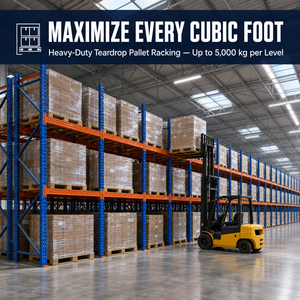
Large Scale E-Commerce Logistics Warehouse Pallet Racking System
Customized high-load conventional heavy-duty pallet rack engineered specifically for rapid fulfillment centers and automated order picking.
Send an InquiryEngineered for immediate integration across Greater Boston distribution networks, refrigerated cold-storage hubs, and high-throughput intermodal shipping operations.
Customized high-load conventional heavy-duty pallet rack engineered specifically for rapid fulfillment centers and automated order picking.
Send an Inquiry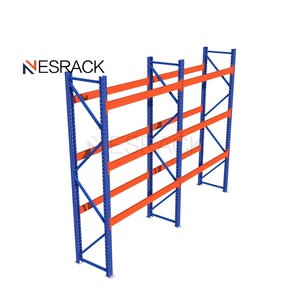
Standardized teardrop configuration with 100% immediate pallet selectivity, roll-formed columns, and high-tensile steel construction.
Send an Inquiry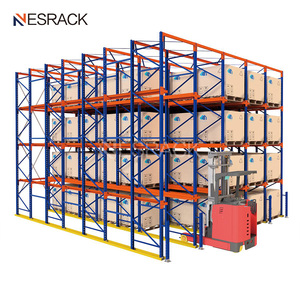
High-density multi-lane storage designed to eliminate operational aisles for bulk cold-storage and uniform SKU warehousing.
Send an Inquiry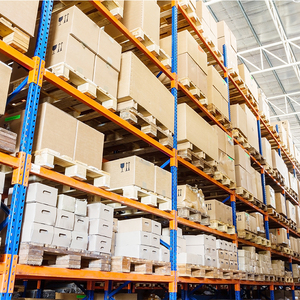
Specialized cylindrical product support cradle systems crafted for textile rolls, polymer spools, and industrial coils.
Send an Inquiry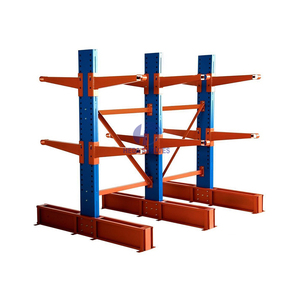
Open-front unobstructed load capacity engineered for architectural timber, structural steel channels, extrusions, and piping.
Send an Inquiry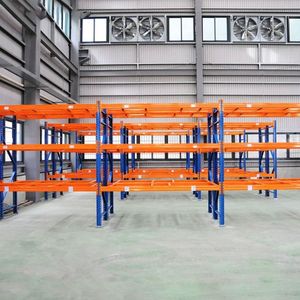
Reinforced beam profiles with welded step details, engineered to secure heavy distribution loads and prevent deflection under cyclic strain.
Send an Inquiry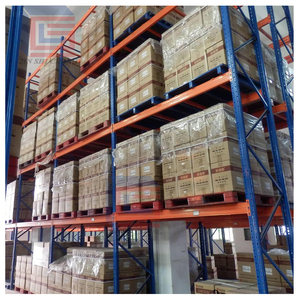
Robust modular racking for distribution centers, manufacturing staging yards, and freight handling warehouses requiring quick assembly.
Send an Inquiry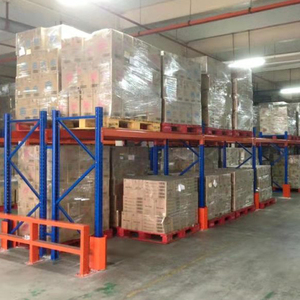
High-tensile engineered upright frames and precision-slotted connectors delivering certified 1300KG to 1400KG per shelf capacity.
Send an InquiryAn engineering analysis of floor-load limits, fire flue compliance, seismic categorization, and cold chain optimization throughout the I-95, I-495, and Route 128 industrial corridors.
Boston's metropolitan logistics infill is characterized by legacy industrial masonry footprints with restrictive clear-heights (16 to 24 ft) and irregular column spacing. Our teardrop shelving configurations utilize high-moment capacity uprights to maximize vertical density while accommodating tight column grids in Waltham, Woburn, and Quincy facilities.
The outer loop surrounding Marlborough, Worcester, and Taunton hosts high-throughput regional fulfillment nodes. Our heavy-duty selective teardrop racks and pick-module structures integrate seamlessly with autonomous mobile robots (AMRs), wire-guided narrow-aisle (VNA) equipment, and multi-tier mezzanine conveyors.
With massive container flows through Conley Marine Terminal, intermodal logistics facilities require immediate teardrop compatibility to match international standard ISO maritime pallet footprints and domestic GMA 48x40 pallets, backed by full container-load (FCL) export packaging designed to eliminate maritime transit corrosion.
Comprehensive compliance comparison covering 780 CMR (Massachusetts State Building Code), NFPA 13 sprinkler clearances, and RMI ANSI MH16.1 guidelines.
| Evaluation Parameter | Export Technical Standard | Massachusetts Regulatory Impact (780 CMR) | Boston Facility Advantage |
|---|---|---|---|
| Steel Grade & Yield Strength | Certified 50,000+ PSI Yield Steel | Exceeds cold-formed structural integrity criteria | Max Span Loading |
| Seismic Design Category | IBC / ASCE 7-22 Site Class B-D | Complies with Boston Seismic Category B requirements | Permit Expedited |
| Welding Certification | CSA W47.1 Div. 3 & AWS D1.1 | Certified structural beam-to-connector welds | Zero Fatigue Failure |
| Flue Space Compliance | NFPA 13 Systematic Transverse Offsets | Pre-aligned longitudinal row-spacer connections | Code Ready |
| Impact Resistance | RAMGuard Armor Column Protection Compatible | Mitigates high-frequency forklift collision citations | Extended Lifespan |
Direct-from-manufacturer precision, triple RMI R-Mark credentials, and end-to-end export quality control.
We are distinguished by verified compliance across all three RMI disciplines: Manufacturer, System, and Installation. Every teardrop upright and roll-formed step beam adheres strictly to ANSI MH16.1 specifications, providing certified engineering safety margins that pass rigorous Boston municipal inspections.
Beyond our heavy domestic presence, our factory holds Division 3 CSA Standard W47.1 certification for fusion welding through the Canadian Welding Bureau. This dual-market validation guarantees our metallurgical bonding and structural cold-formed forming techniques meet the strictest cold-region engineering thresholds.
Exporting to Boston and the broader Northeast corridor is backed by strategically placed stocking hubs. We provide prompt delivery for fast warehouse retrofits, complete with container-optimized loading protocols, heavy export strapping, and seaworthy moisture barriers for international shipments.
Authoritative answers on municipal approvals, seismic calculations, teardrop compatibility, and shipping timelines to Massachusetts.
Connect with our senior logistics engineers today. We supply certified ANSI MH16.1 calculations, custom teardrop layout drawings, and prompt export quotes tailored to your exact floor plan.
Send an Inquiry